Where modification and increased capacity are needed, ecological health, safety, and efficient transport should not be seen as mutually exclusive goals. Understanding roadside environments, how they interface with adjoining lands, and how to minimize environmental impacts has become a key focus of the Federal Highway Administration (Fekaris 2006). Given political will and proper levels of attention, integration of environmental concerns with transportation can result in significant gains.
Roadside Revegetation: An Integrated Approach to Establishing Native Plants
Property Values and Noise
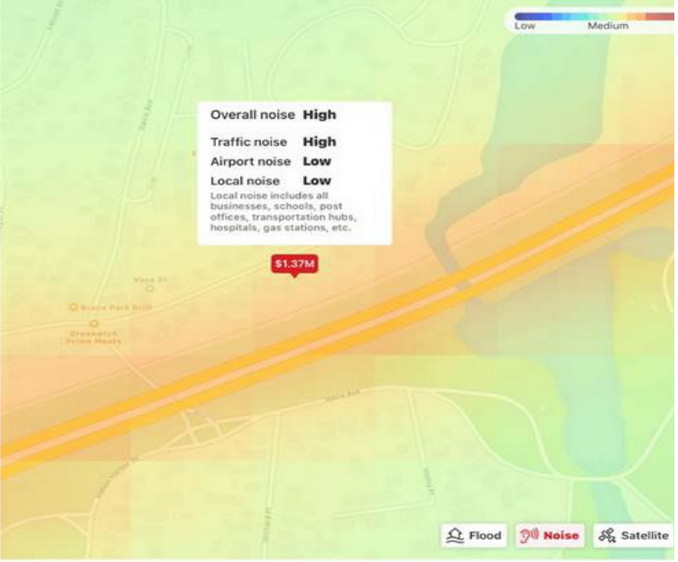
With recent CTDOT clear cutting, many Town residents have expressed their dissatisfaction at the increased noise they have experienced due to Right-of-Way (ROW) tree removal in the transportation corridors. Last March, Realtor.com added a Noise Level feature with a Noise Map which actually defines Traffic Noise, Airport Noise, and Local Noise. A Bruce Park Avenue home that borders the railroad tracks and I-95, indicates Overall noise High and Traffic Noise High. These ratings devalue property and can be found along all the properties that border the ROW’s, both north and south of the highway and railroad.
There are various methods of noise abatement and this project may require sound barriers, combining hardscape and greenscape solutions. We need to take a multilayered approach in Connecticut to increase the benefits of a “No-Net-Loss” healthy natural roadside environment. A reforestation plan should be completed before work on I-95 can begin, to ensure the plans are consistent with Connecticut’s current environmental goals and standards. The Federal Highway Administration Revegetation manual notes: “As roads are modified or updated section by section, a tremendous opportunity presents itself to remedy the oversights of the past, mitigating environmental impacts and improving conditions for healthy ecosystems.”
Why isn’t CTDOT following the FHWA guidance? Imagine what could be achieved if CTDOT and the Town worked together along our transportation corridors. Resilient urban forests and traveler safety are not mutually exclusive!
CTDOT surprised everyone with the visionary and efficient approach they took when installing a new Stamford bridge at Exit 9. After preliminary work, the actual bridge was successfully installed over seven lanes of I-95
highway in just a few weeks. CTDOT has shown that visionary projects are possible. The Greenwich Tree Conservancy encourages CTDOT to continue on this visionary path that prepares CT for the future.
Greenwich is the Gateway to Connecticut. CTDOT has a responsibility to do no further harm, to mitigate the damage that has been done, and to work with the Town of Greenwich and other community stakeholders.
Connecticut is filled with beauty, let travelers see trees and vegetation that store carbon, clean our air, provide flood control, and provide food and respite for migrating birds. Let us work together to make the Greenwich Gateway beautiful again! We would appreciate a response to our concerns.
Respectfully submitted by,
Francia Alvarez – Advocacy Chair
JoAnn Messina – Executive Director
Greenwich Tree Conservancy