Tuesday’s Greenwich Planning & Zoning meeting featured a proposed zoning map amendment that came with a colorful map of Greenwich.
The proposal stemmed from a recently passed housing legislation in Connecticut, “An Act Concerning Housing Growth.”
House Bill 8002 is the bill number, but it was officially signed into law during last October as Public Act No. 25-1.
Initially Governor Lamont vetoed the first iteration of the bill, HB 5002 after opposition protested that it was an “urban model” written for cities without consideration of all towns – especially because it prohibited parking requirements for smaller developments.
At the time, Lamont said, “We can do better. We will do better.”
Earlier this month P&Z commission chair Margarita Alban addressed the Retired Men’s Association and described the legislative process resulting in No. 25-1 as “not very transparent.”
“It finally hit the floor and we saw it 4 hours – maybe a day before – the bill was 107 pages long and we didn’t have a chance to weigh in on how this addresses what towns’ concerns had been,” Alban told the RMA. “There is a sentiment that CT hasn’t grown its housing because of NIMBY, so there was a bit of resistance to public input.”
Alban explained that some specific provisions from the bill will go into effect July 1, 2026 including no minimum off-street parking mandates for residential developments with fewer than 16 units.
In addition, towns are required to allow 2-9 unit middle housing developments such as duplexes, triplexes, townhouses and cottage clusters in commercially zoned areas, without requiring a public hearing or special exception permit. The new process is called Summary Review.
Still, Alban said the commission will always ask for public comment.
 Subscribe to the GFP daily newsletter.
As for developments of 16 or fewer units and off-street parking requirements, the bill includes a small tool for municipalities to protect congested areas: mitigation districts.
Enter the colorful map.
The law allows towns to establish up to two “Conservation and Traffic Mitigation Districts.”
That is a mouthful, but essentially it means towns can create an overlay zone where they can review and require limited on-site parking for developments with 16 or fewer units.
This was the subject of the text amendment proposed by Greenwich P&Z staff on Tuesday night.
P&Z town planner Patrick LaRow and staff created the proposed map of all the streets and parcels where P&Z can require off-street parking.
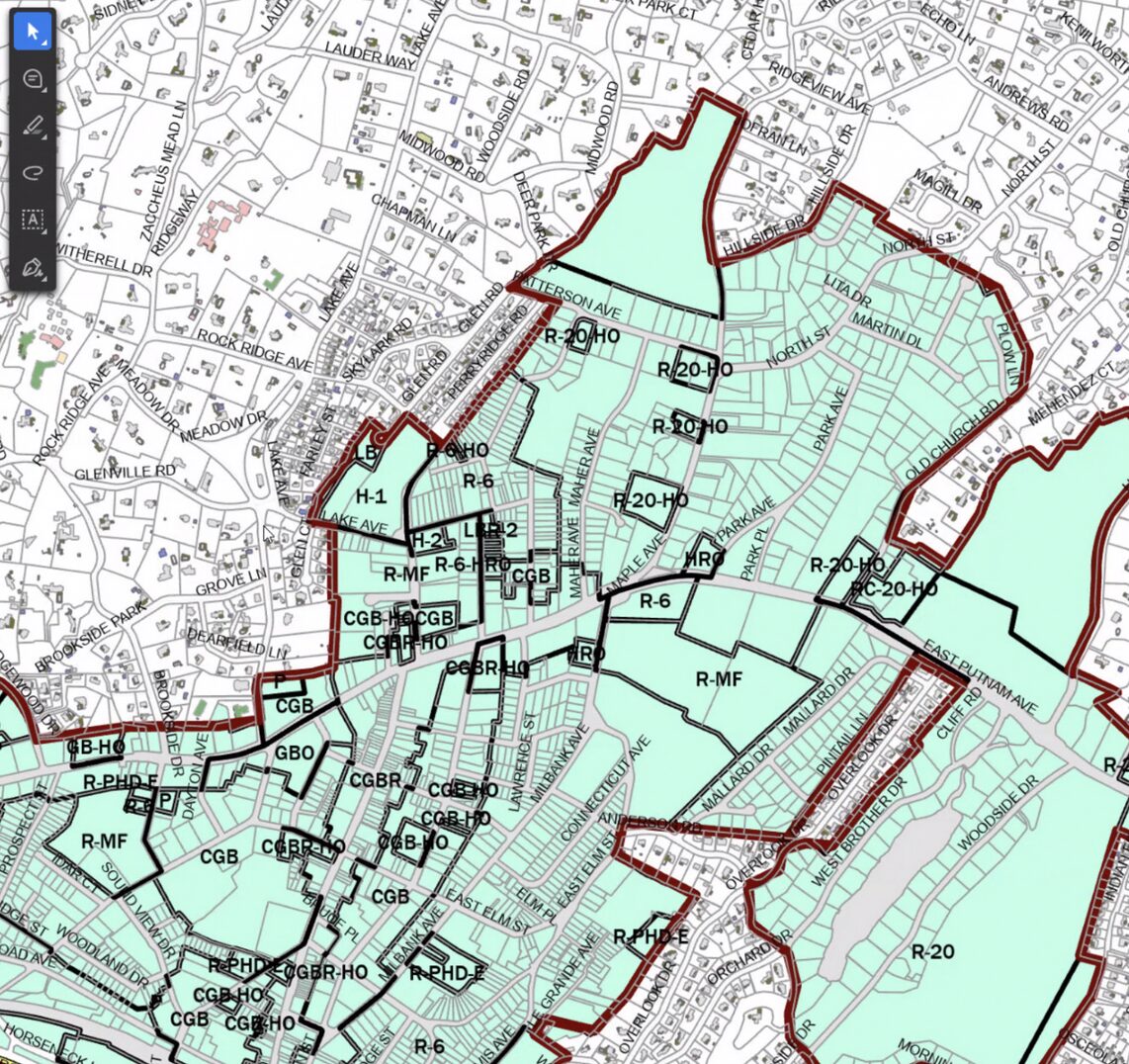
Enlarged portion of the Conservation and Traffic Mitigation District featuring downtown.
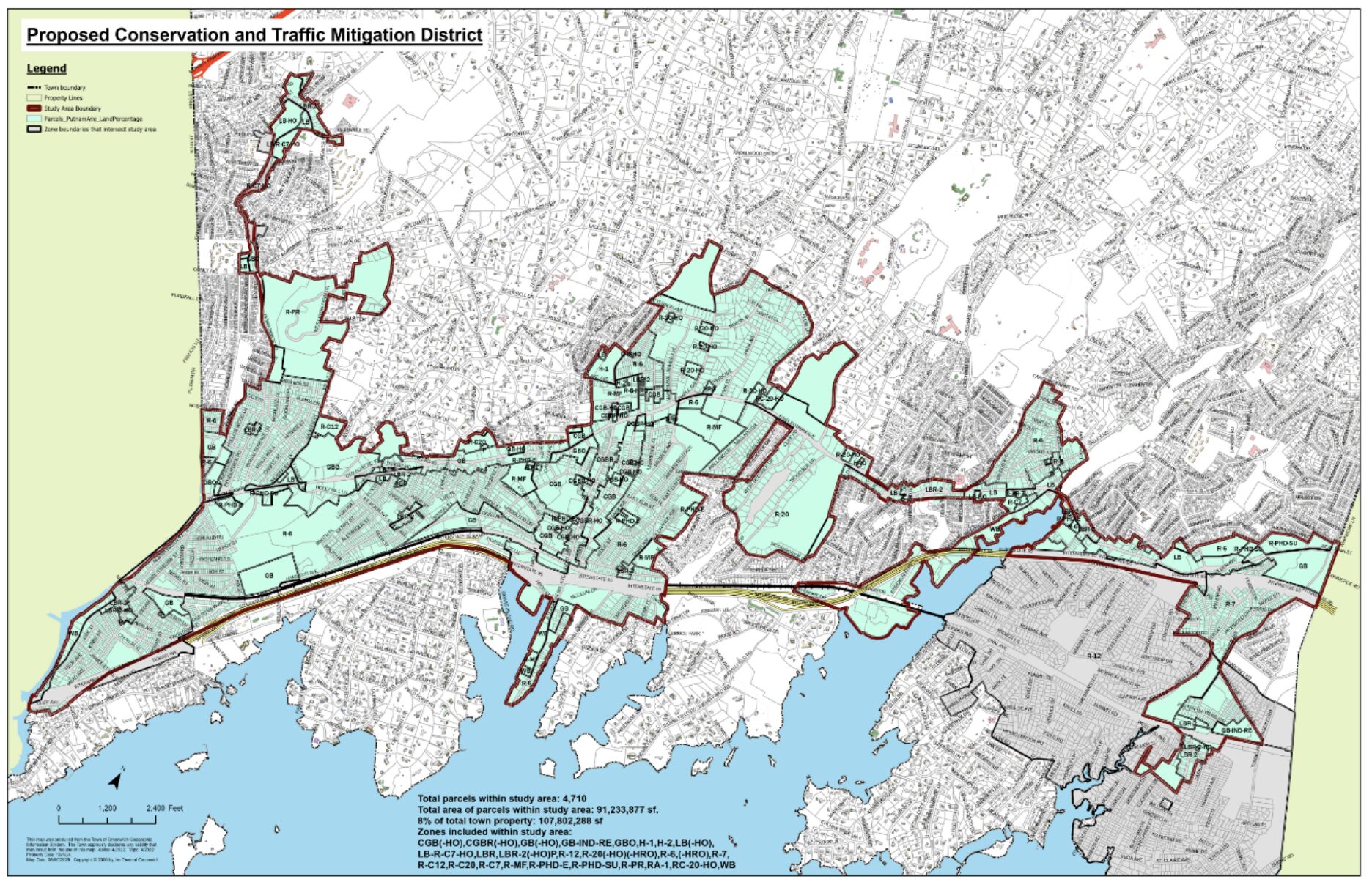
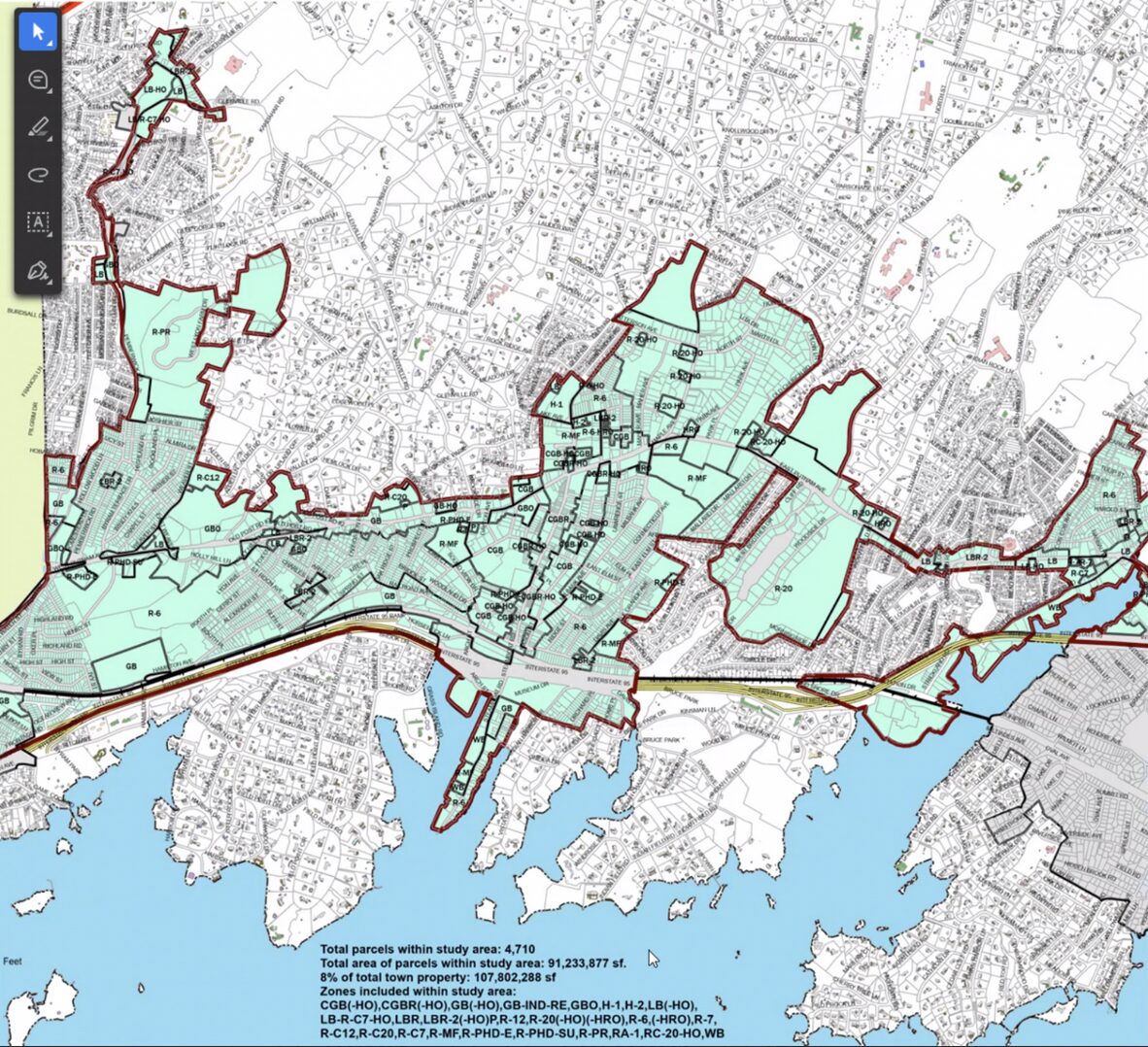
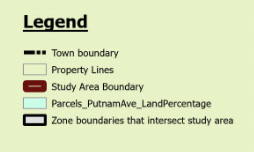
The new state law’s language allows the town to create two areas – they can be contiguous – each not exceeding 4% – for a total of 8% of the Town’s total land area.
The green portions of the map above are less than 8% (roughly 6.8%) of what is allowed: 107 million sq ft.
The proposed area is 91 million sq ft, or roughly 2,094 acres.
The map suggested by staff to the commission is comprised of 4,710 parcels centered around Putnam Ave (US Route 1), Pemberwick Road, River Road in Cos Cob and Sound Beach Avenue.
These areas of town have issues including coastal flooding, roadway elevations, and emergency access.
They include narrow historic roadways, flood-prone streets, areas adjacent to coastal resources or within flood prone areas, areas with limited opportunities for roadway widening, and areas with significant existing parking and circulation demands.
Last January Greenwich got a taste of what can happen on roads like Hamilton Avenue after a heavy snow storm and cars on the street became a problem.
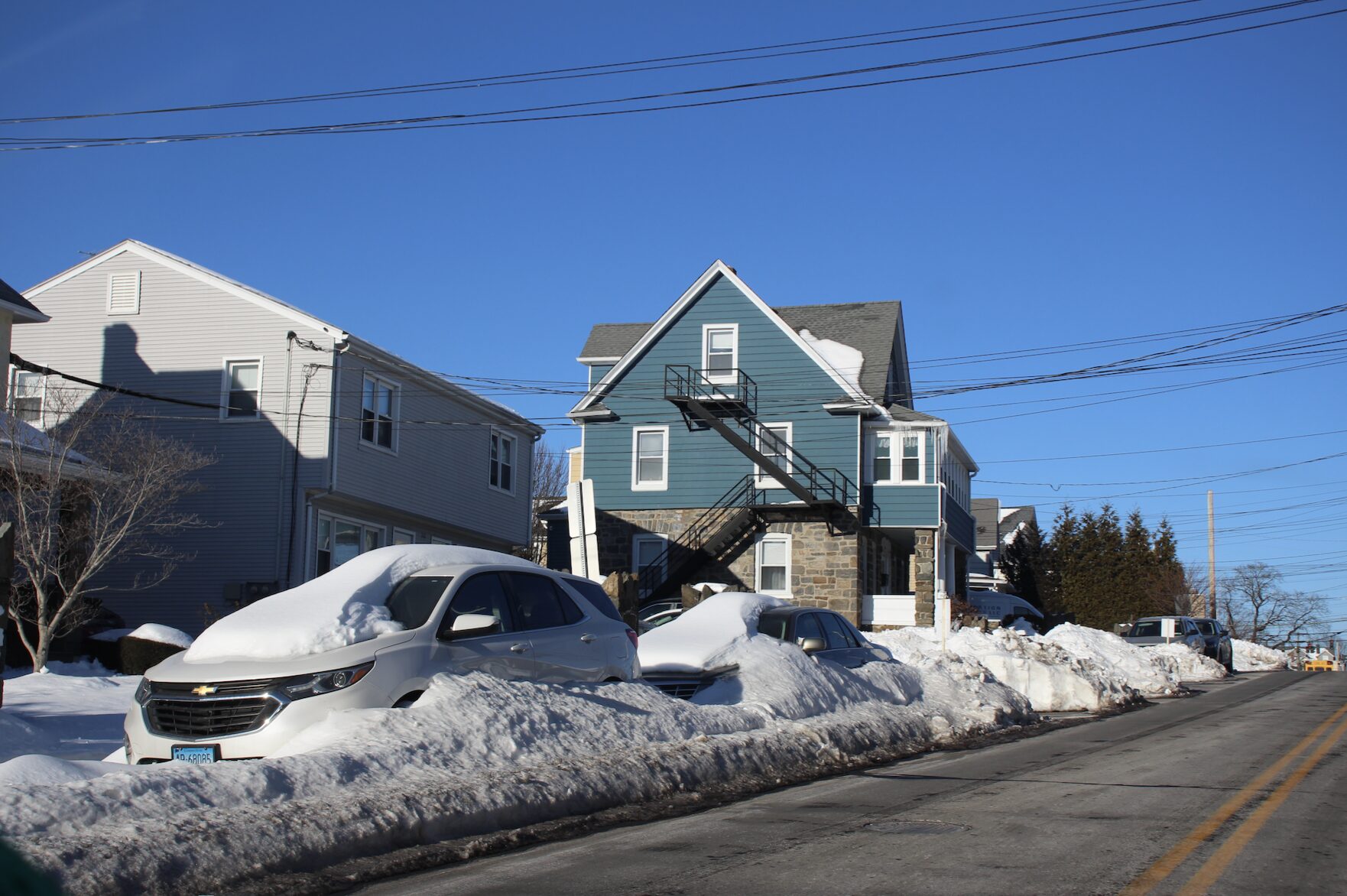
Cars buried in snow on Hamilton Avenue. Friday, Jan 30, 2025 Photo: Leslie Yager
“With this district we have the opportunity to examine and require some off-street parking – one per single bedroom, two for every two bedroom and larger, or the number as done by their parking assessment, whichever is less,” LaRow said.
While the green area in the map appears large, the map doesn’t show all of Greenwich. (The image cuts off below the Merritt Parkway.)
Commissioner Mary Jenkins suggested adding the area around Greenwich Hospital to the map. She cited concerns about access to the hospital, and existing concerns about level of parking and circulation.
“I would really love to see Dearfield and possibly lower Lake Avenue covered by this, simply because the traffic on Lake Ave and Dearfield is already significant.”
Ms Alban noted that there are times when the library runs out of parking during some events, and based on the Smilow Cancer Center application, the commission became aware that parking at the hospital is tight.
“We know when we have these uses that can generate a heavy parking and traffic demand – and if something came in under redevelopment, we would have an issue,” Alban said.
Mr. LaRow said there were areas included in the draft mitigation district that could be eliminated in order to add others.
“We could do a little bit of horsetrading,” he said, adding that he had not included streets including Skylark behind the hospital because they are zoned single family and the potential for them to be redeveloped was less than other zones that allow it as of right.
“Thank goodness the Connecticut Council of Small Towns (COST) and two prominent COG heads were in the working group to revise the bill,” Alban said, noting Betsy Gara is the leader of COST.
The commission did not vote on the map amendment. They will amend it to reflect the addition of the hospital area first.
From there P&Z staff will file the map amendment with the state OPM.
Housing Growth Plan
As for the that Public Act No. 25-1, Greenwich, along with all 169 municipalities in Connecticut, will be required by June 2029 to submit to Hartford a “housing growth plan” based on targets provided by the state to the regional Councils of Government and then allocated to each of their member towns.
The plan should identify the developable land in town, though “developable” has yet to be defined by the state.
At her RMA talk on June 10, Ms Alban said the planning region that Greenwich is part of may be required to add 40,000 units.
Greenwich is included in the region includes Stamford, Danbury and Norwalk – cities that have all reached their affordable housing targets and are more densely developed.
“The one piece of good news is they can’t require any town to have more than 20% affordable housing. We (Greenwich) only have 6% now. The state target right now is 10% under CGS 8-30g, which was not amended by the new law. The new additional requirements will exist alongside that law.”