This week the YWCA Greenwich’s Harmony Project hosted Cheyenne Wilson, an author, registered nurse, and survivor for a discussion to mark sexual assault awareness month.
Wilson’s mission is to raise awareness about the reality of sexual assault, eliminate the stigma associated with being a victim, and make lasting changes in the justice and health care systems.
In writing her book, “We Are the Evidence,” she said the title stemmed from reporting her assault and going to court after some time had passed.
In digging for evidence to use in court, she realized a jury would need to hear from both her and people close to her about how she had changed as a result of the crime.
“At the end of the day, what it boiled down to is I am the evidence, my trauma is the evidence. I am not the same person. I found something empowering in that.”
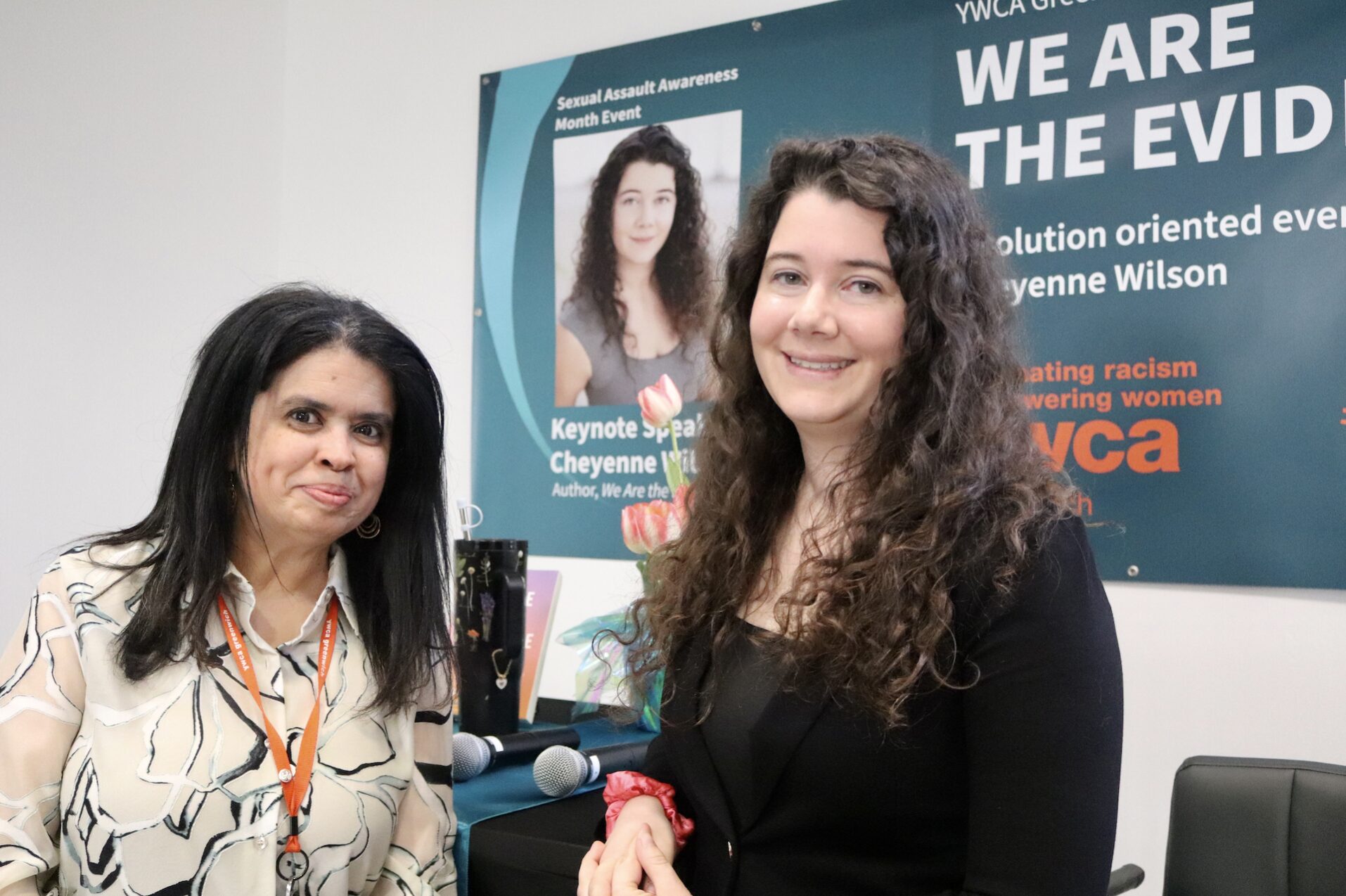
Jacqueline Collazo, Director of Harmony Project at the YWCA Greenwich with keynote speaker, Cheyenne Wilson, author of “We Are the Evidence.” April 20, 2026 Photo: Leslie Yager
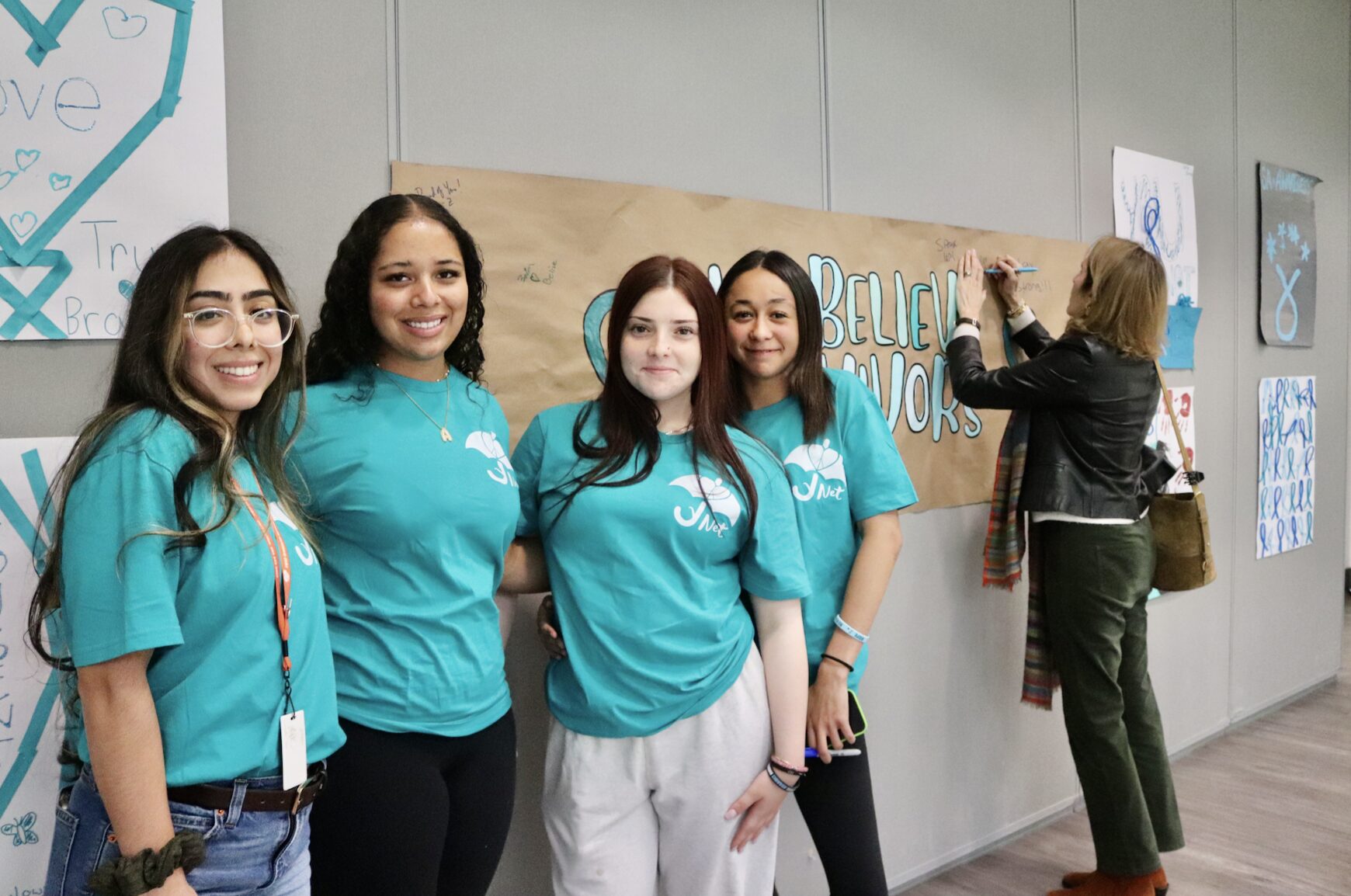
Artwork on display from students in YNET, a program that works to prevent teen dating violence and promote healthy relationships through peer education. Left to right: Prevention Coordinator for Harmony Project, Valentina Ramirez; with students Ariana Thompson, Lia Nastahowski and Rayne Williams. April 20, 2026 Photo: Leslie Yager
Wilson shared her journey as a survivor, how it led to writing her book, and collaborating with 24 experts in the process.
She elaborated on challenges to survivors including myths about consent, false reporting, and victim blaming.
“The myths persist because they make us feel safe,” she said, citing examples including the myth that most perpetrators of sexual assault are strangers, when most are actually known to the victim or are loved ones. There is also a myth that the victim is somehow responsible for having walked alone at night, been drinking or not dressing conservatively enough.
And there is the myth that real victims always fight back or scream, when in reality many victims “freeze” in response to assault.
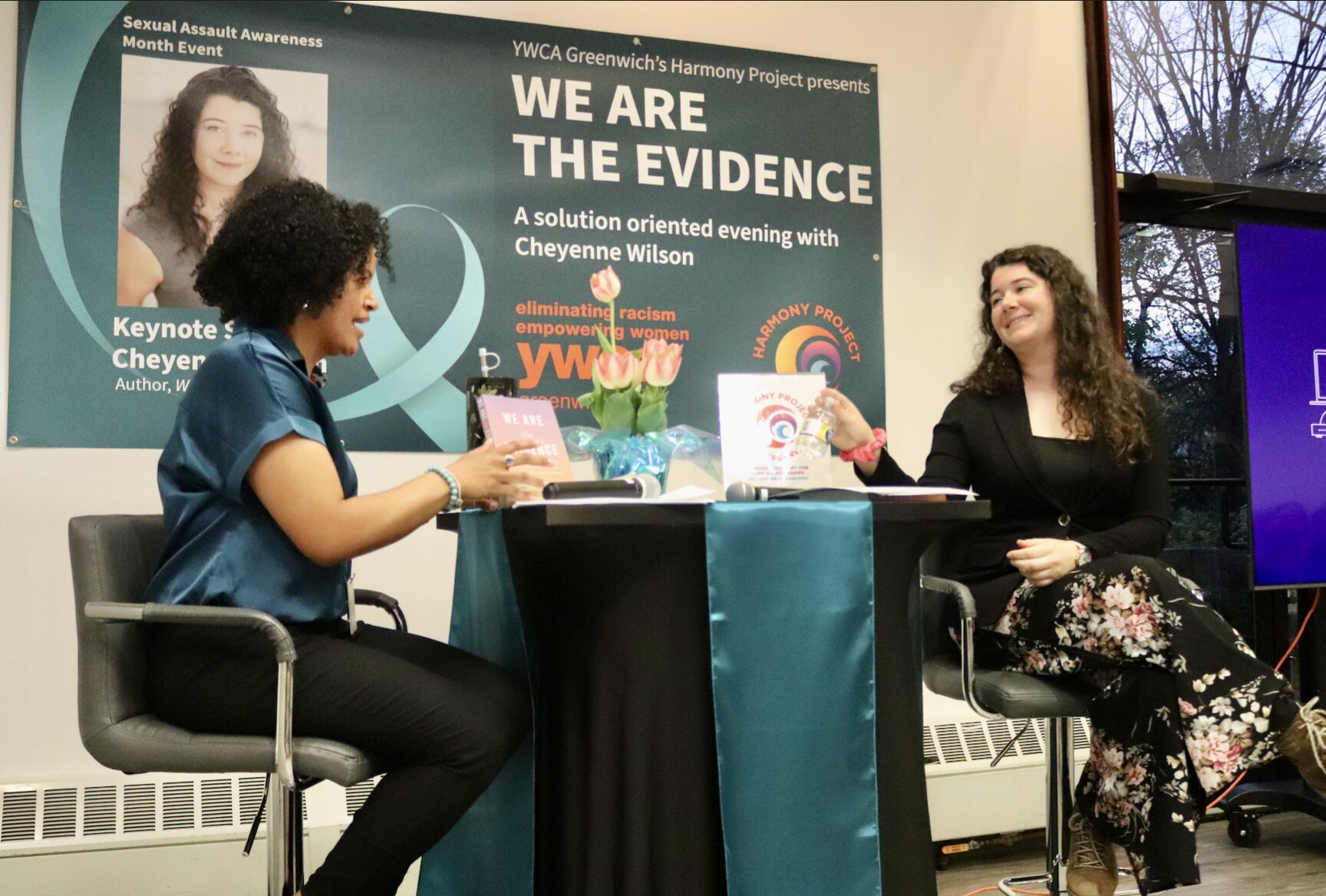
Jessie DiMuzio, Director of Programs for the Harmony Project with keynote speaker Cheyenne Wilson, author of “We Are the Evidence.” April 20, 2026 Photo: Leslie Yager
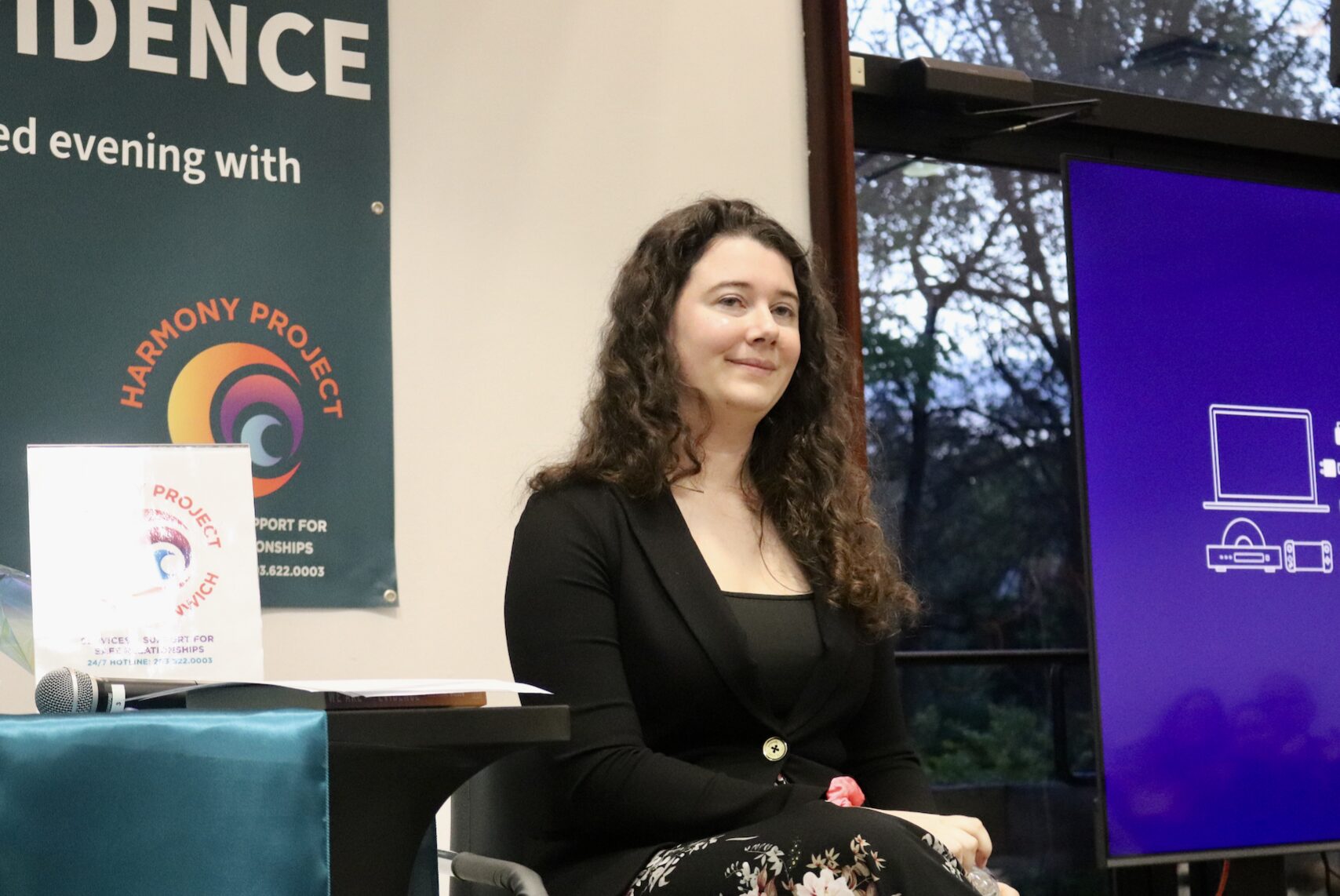
Keynote speaker, Cheyenne Wilson, author of “We Are the Evidence.” April 20, 2026 Photo: Leslie Yager
She explained that survivors of sexual assault often do not report their incidents or delay reporting, and that is a reflection of their trauma response.
“Trauma responses vary,” Wilson said. “You don’t get to choose your response.”
She explained that in the moment of an assault, trauma mechanisms range from fight to flight or freeze. Some, she said may “flop,” or “fawn,” which she means involuntarily responding by appeasing or playing along to keep an abuser happy. The latter, in which a person manages the threat by complying, sadly is often stigmatized, despite being a survival mechanism.
In her own case, she detailed her delayed legal response, her experience in court where there were many procedural delays, and her disappointment in not winning a guilty verdict.
“Most survivors are not going to get any form of justice,” she said. “For me, justice is having a community, and taking it day by day.”
She also talked about resources available during a person’s healing journey, and how in her own case she found phone hotlines provided comfort because the person on the other end of the line believed her.
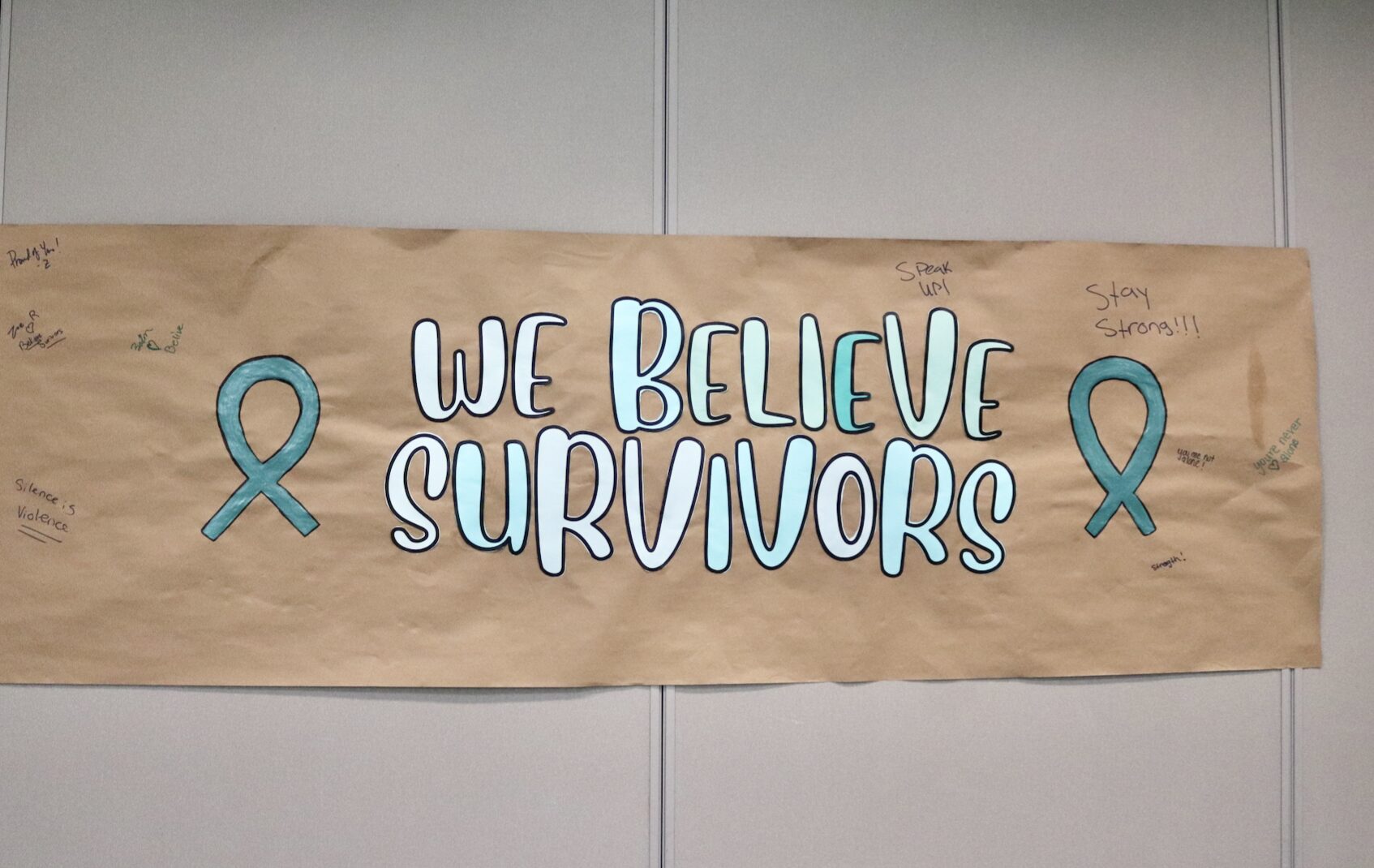
Guests signed a banner that said “We Believe Survivors” created by members of YNET, a student led club at Greenwich High School that is facilitated by the YWCA. The club is dedicated to preventing teen dating violence and promoting healthy relationship education. April 20, 2026 Photo: Leslie Yager
Delayed reporting
In Connecticut, sexual assault evidence collection (forensic exam) should ideally occur within 120 hours of the incident. Also, victims have up to 60 days for anonymous evidence storage before deciding to report to police.
“Delayed reporting gets used against people all the time, Wilson said. “But I wanted to hold the person accountable.”
And despite the negative court verdict, she said justice and healing were two separate processes.
She said survivors must be able to make their own choice about how to proceed, and that people supporting a survivor should avoid open-ended questions and rushing the person to make major decisions.
“If you’re supporting a survivor, never push anything on them. You can give them many options. You can ask if they want help accessing something and say you’ll be there with them whatever they decide. But it is not appropriate to say, ‘You have to report. What if they do it to someone else?’ That is not on the survivor. If that person chooses to harm more people, that is on them.”
In response to an audience question about supporting a survivor, Wilson talked about restoring a sense of control.
“It’s uncomfortable to acknowledge that someone chose to hurt you,” she said. “Sometimes that feels worse than the shame. Trying to work with a professional is important, but that shame and blame is not on you. They chose to hurt you and I’m really sorry they chose to hurt you.”
Along the way Wilson said she also found relief in getting creative, having busy hands and taking up knitting.
“Take small steps – that one-day-at-a-time, again, that’s where hotlines were so useful and helpful for me – to hear someone who doesn’t even know me, who could be states away say, ‘I believe you,’ and, ‘Let’s have a goal of taking a shower today.’ We’re not going to heal overnight. Sometimes a victory is getting out of bed that day, or feeding yourself. And that’s okay.”
Wilson said sexual assault can often feel to a survivor that it defines them, but it is important to move forward one day at a time, and use the resources the person is comfortable with.
“That sexual assault is not who you are. It’s not your life. It is one chapter,” she said. “A healing journey is messy, and winds and twists. But there are wonderful moments too – some of my best friends I’ve met through this community of survivors that no one wants to be part of, but once you’re there everyone wants to help you.”
Wilson said she was surprised when she realized her rapist took away her enjoyment of public speaking.
“Because I didn’t want to be seen any more. That requires too much vulnerability. Every time I show up to an event like this, it is pushing back and reclaiming a piece of myself.”
Wilson said she was grateful to the YWCA and The Harmony Project.
“It’s not often that survivors are given a platform,” she said to a round of applause.
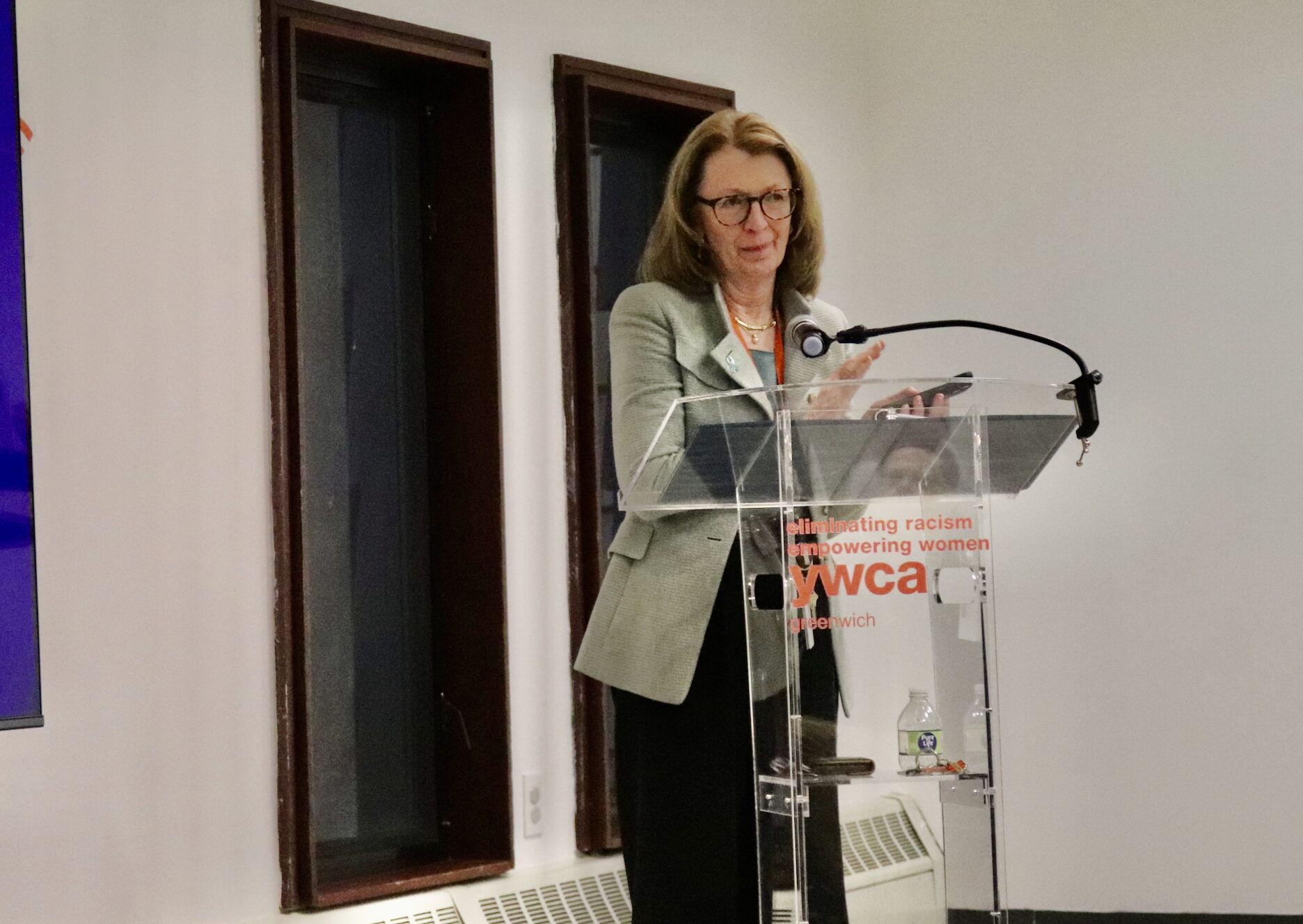
YWCA Greenwich President and CEO Mary Lee Kiernan greeted guests at The Harmony Project event to mark Sexual Assault Awareness Month in Greenwich. April 20, 2026 Photo: Leslie Yager
YWCA Greenwich President and CEO Mary Lee Kiernan described the Harmony Project staff as resilient, courageous, and committed.
“More and more, we are seeing not only stand alone sexual assault, but this overlap of sexual assault and domestic violence in this community,” she said. “We are seeing it in ongoing abuse and sexual violence. We are seeing it in co-habiting and family relationships.”
Wilson recommended RAINN – short for Rape, Abuse & Incest National Network, the largest anti-sexual violence organization in the US – and their hotline. People can call, chat online or text to connect with a real, live person who’s trained to help.
Wilson’s book, We Are the Evidence, is also a resource offering immediate and long-term support for navigating the aftermath of sexual assault. It covers legal, emotional and healing processes with expert advice and survivor stories.
You can purchase We Are the Evidence online from Amazon.