At Wednesday’s Historic District Commission’s meeting there was a chance for public comment on the proposed demolition of 2 Greenwich Avenue, a historic building at the intersection of Putnam Avenue.
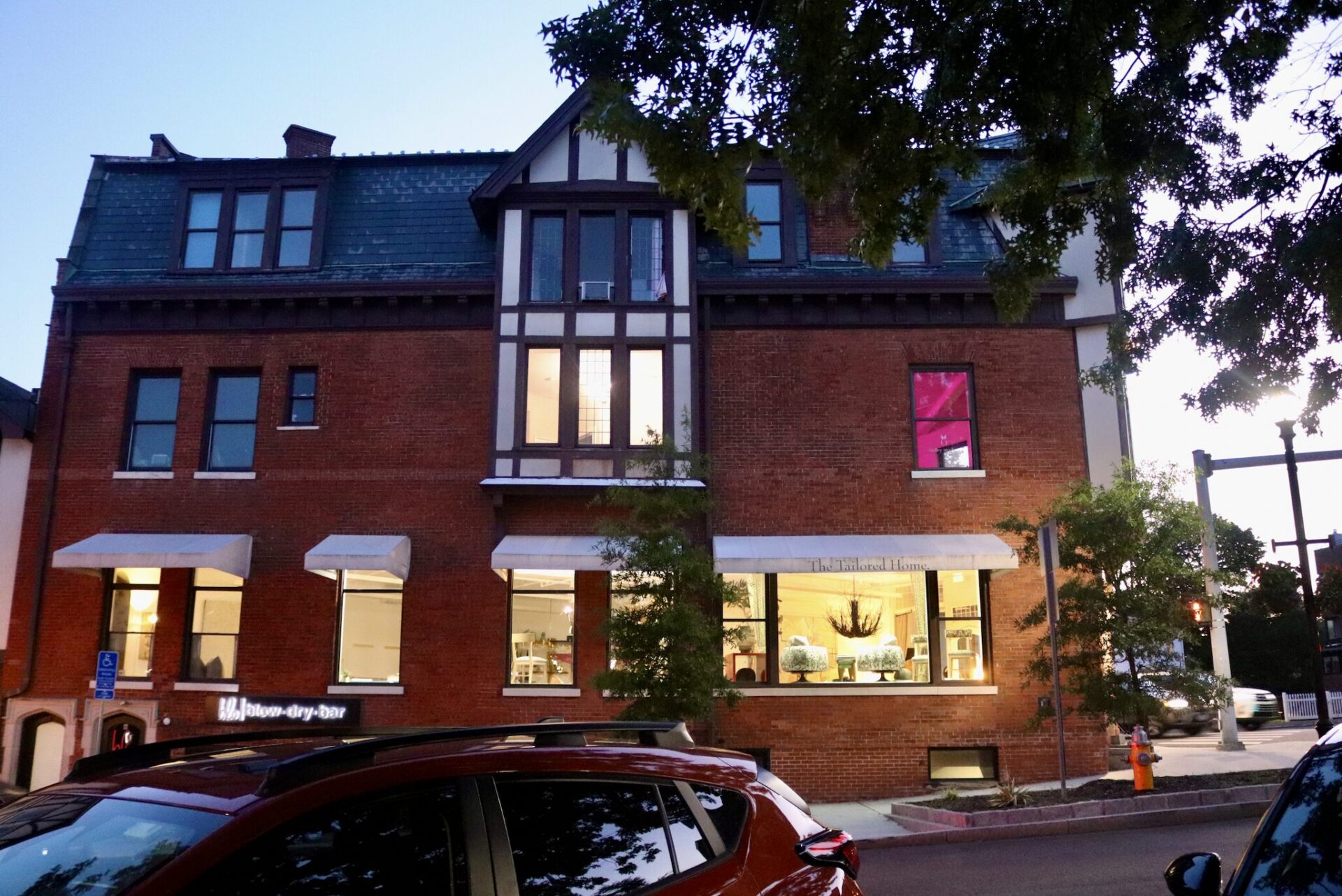
Since the owners of 2 Greenwich Ave, who also own 10 Greenwich Ave and 10-12 West Putnam Ave recently submitted a proposal to the Greenwich Planning & Zoning commission in June, social media has buzzed with surprise and disappointment over the possible loss of the iconic structure.
About a dozen residents attended Wednesday’s meeting where HDC staff member Andrew Melillo, said he had received about two dozen letters opposing the demolition prior to the meeting, and more were being submitted during the meeting.
Melillo said residents seeking information on writing letters opposed to the demolition could email him at [email protected].
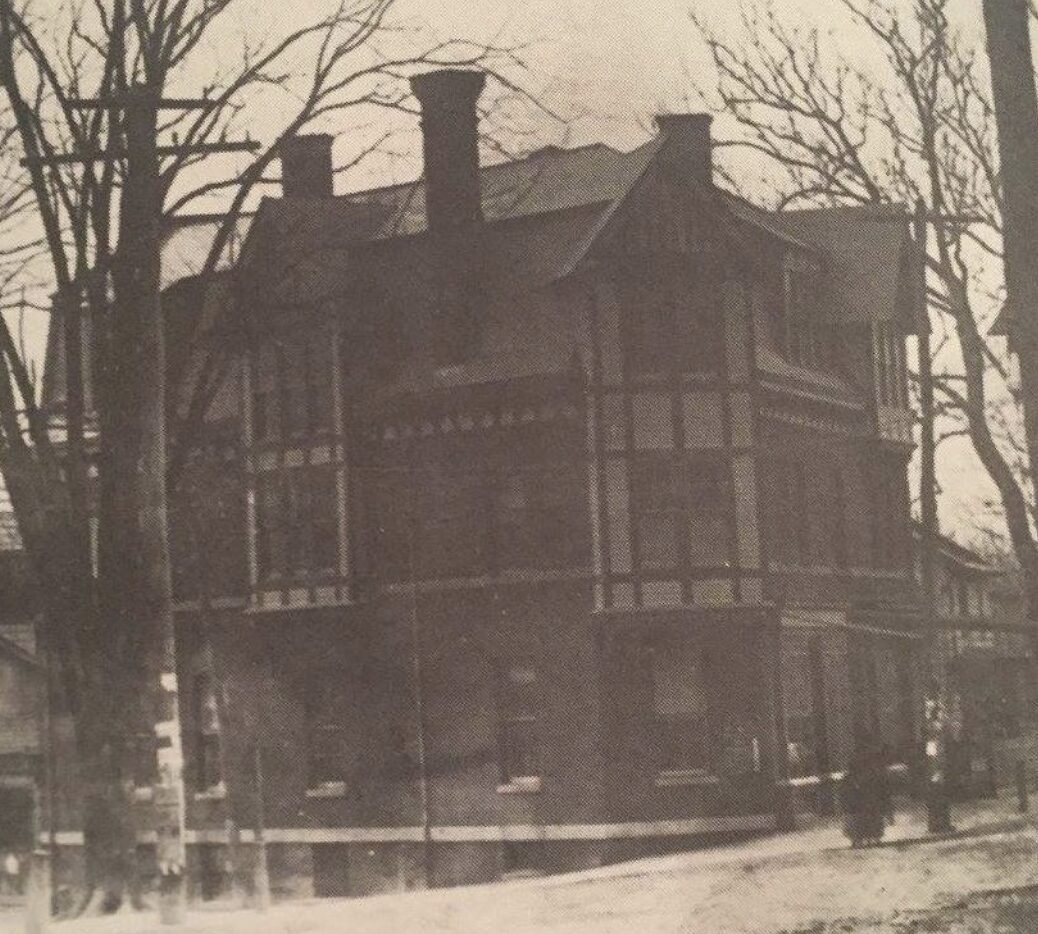
Photo: Wikimedia Commons: The Isaac Mead building was the meeting place for Acacia Lodge for a good period of time in the second half of the 19th-century.
Jenny Larkin read into the record information written by Lanny Hoagland and Nils Kerschus in 1979 for the Historic Resources Inventory on Connecticut.
“This landmark structure occupies the acute angled lot formed by the busy intersection of West Putnam Avenue and Greenwich Avenues. Its high visibility is due to the verticality and height of the roof line, and the contrast in surface materials.
Three steeply gabled bays of half timber construction interrupt the cornice and contrast with the otherwise red brick construction. The central bay is two stories high and projects over an office entrance and the angled corner of the building. The eastern bay is similar, but the northern bay has only one story and projects from the western end of the cornice. All of the bays are supported by the large curved brackets. Surrounding the prominent bracketed cornice are slate shingle gambrel and roofs at either side of the corner bay.
Each feature a triple windowed shed dormer. The eastern roofline also shows a tall chimney with vertical moldings lines that is flanked by a single windowed shed dormer. The first floor level has entrances at the corner and north side, while paired entrances distinguish the basement level of the eastern elevation. All of them are framed by Neo-Gothic stone moldings, adding another contrast in textural quality. The north elevation retains the original store windows with their multi-pane transoms. Known historically as the Isaac Mead building, this edifice was supposedly the first brick building to have been erected in the borough of Greenwich. The gabled bays were originally clapboarded, appearing more Stick Style than Neo-Tudor in old photographs. Around 1910 the chimney appears to have lost its corbel cap and acquired flanking shed dormers. The Neo-Tudor entrances were installed at approximately the same time.
This building is one of the most important commercial structures in Greenwich. Its status as a landmark is confirmed by its strategic location, its long history and its unique appearance.”
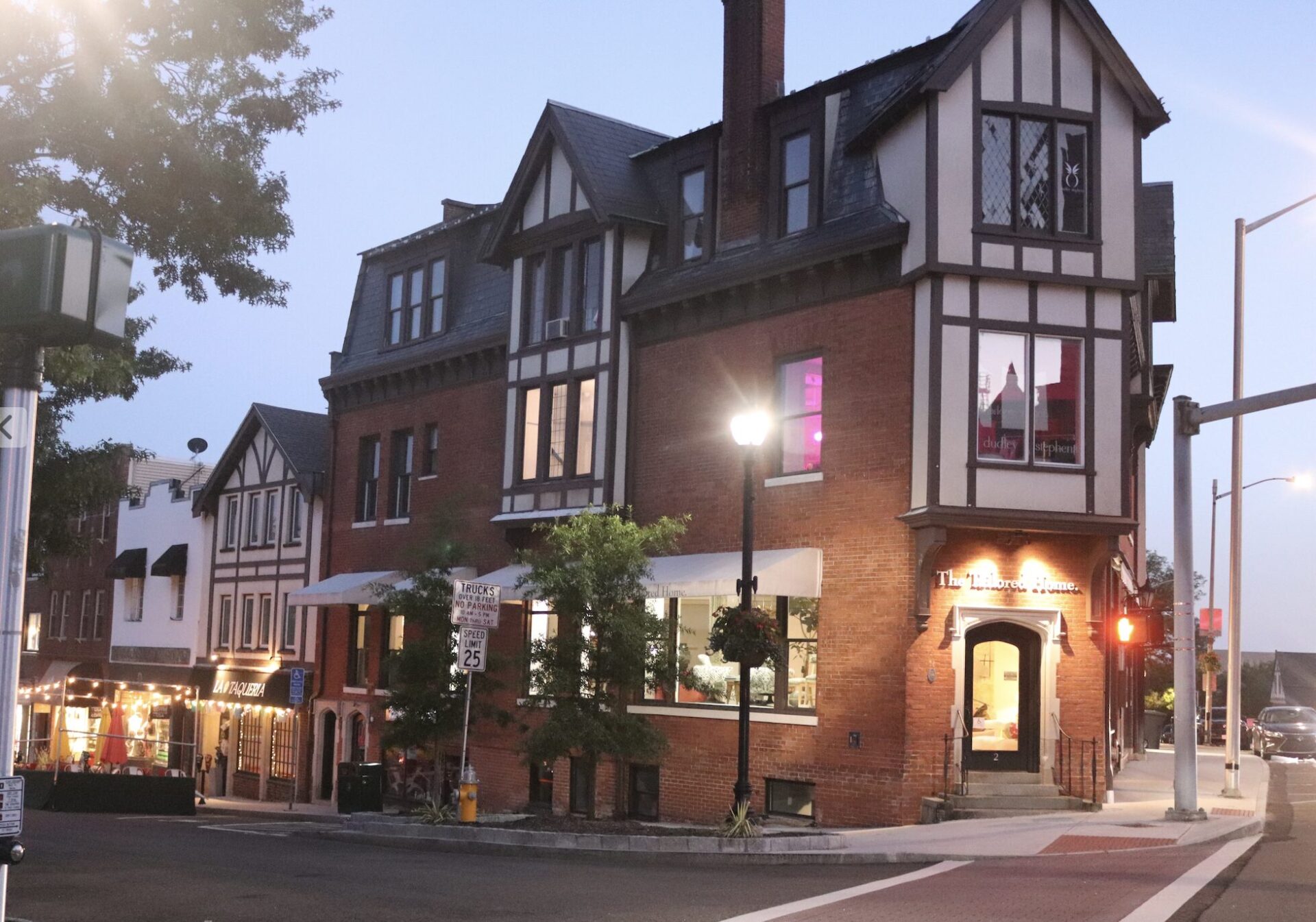
Intersection of Greenwich Ave and Putnam Ave. July 8, 2026 Photo: Leslie Yager
The HDC’s chair Stephen Bishop was not present on Wednesday, so regular member Martin Kagan welcomed attendees and explained that the HDC had not yet seen the proposal for what would replace the existing buildings, they were there to listen to comments on possible demolition.
Mr. Kagan and Mr. Melillo explained that the HDC can’t deny a demolition.
The commission can only issue a 90 day “stay” of demolition.
HDC commission member Mary Shaw Marks said the HDC had not seen the proposal for redevelopment. That said the application is public information and GFP wrote about the proposed demolition and redevelopment back on June 11.
During public comment, P&Z commission Chair Margarita Alban Zoomed in to clarify that the P&Z commission does not review demolitions applications and cannot deny them.
“We only see the re-build application. That’s all we see. This is up to the community and you at this point,” Alban said. “When people tell P&Z to do this, we have no power.”
Similarly, Mr. Melillo said even though Greenwich Avenue is a National Historic District, the Historic District Commission has no legal authority to deny a demolition.
Alban said that any possible action against demolition would invoke state law.
She said a private entity can enlist the SHPO (State Historic Preservation Office) and propose an intervention under the CT Environmental Protection Act (CEPA) which “prohibits the unreasonable demolition of historic structures as a damage to the environment.”
In CT’s general statutes, the CT Environmental Policy Act, chapter 439, Sec 22a: 19 and 19a, refers to “unreasonable destruction of landmarks of the state.”
A few years ago, this was the route pursued by a private intervener when there was a proposal to develop an 8-30g in the Fourth Ward on Church Street and Sherwood Place.
Some of the speakers Wednesday night included board members of the Greenwich Historical society board, including Heather Georges, who said the Isaac Mead house contributes to the Greenwich historic district.
“It is a historic streetscape. It is in a prominent position, and I am against demolition particularly as there are no plans approved for what is going in its place,” Georges said.
Melinda Carroll, also on the board of the historical Society described the building as a bellweather.
“There have been so many buildings taken down. And the buildings going up are radically different from the established vernacular that makes Greenwich so special,” Ms Carroll said. “This is true, not just in our business center, and the streets we go down every day, but it’s happening in our neighborhoods.”
“It’s critical to ask ourselves, what do we care about when we look at our town, how do we want it to look and feel, what makes Greenwich special, and how we protect that, and protect other buildings that are coming down the pike. To demolish something as significant to our history and the development of Greenwich Ave without careful consideration of what that means is really challenging.”
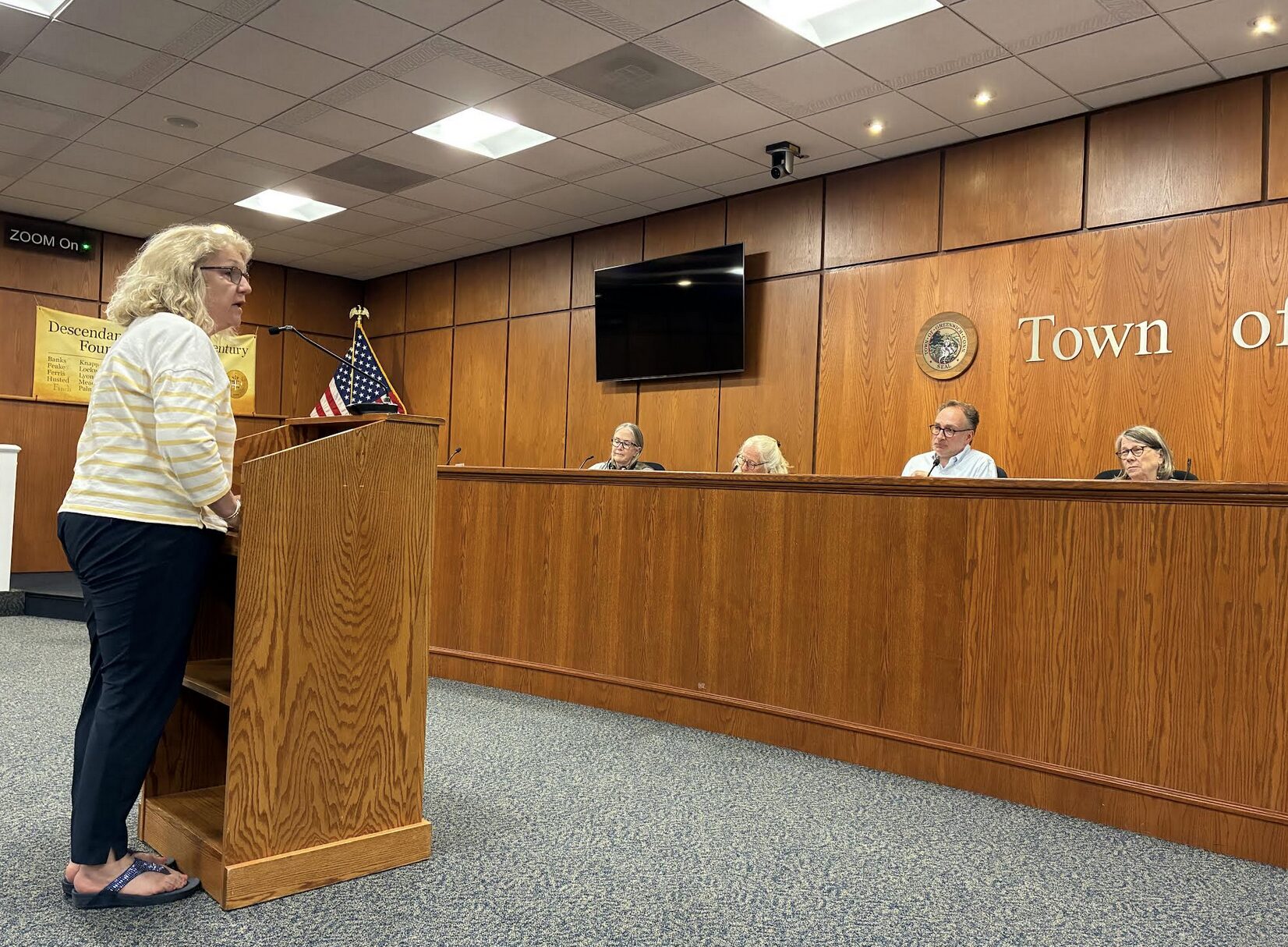
JoAnn Messina testified before the HDC. July 8, 2026 Photo: Leslie Yager
JoAnn Messina, who sits on the Greenwich Preservation Network, was previously director of the Greenwich Tree Conservancy, and is the chair of the board of Greenwich Green & Clean, described Greenwich Ave was the town’s “Rodeo Drive.”
“We have hanging baskets by Greenwich Green & Clean. We have we have trees by Greenwich Tree Conservancy. We have established this as our centerpiece and as our main area,” Messina said, adding that she also felt strongly the building is part of its neighborhood.
“It is a landmark. It is historic. It needs to be maintained as it is – at least its facade at the very least,” Messina said.
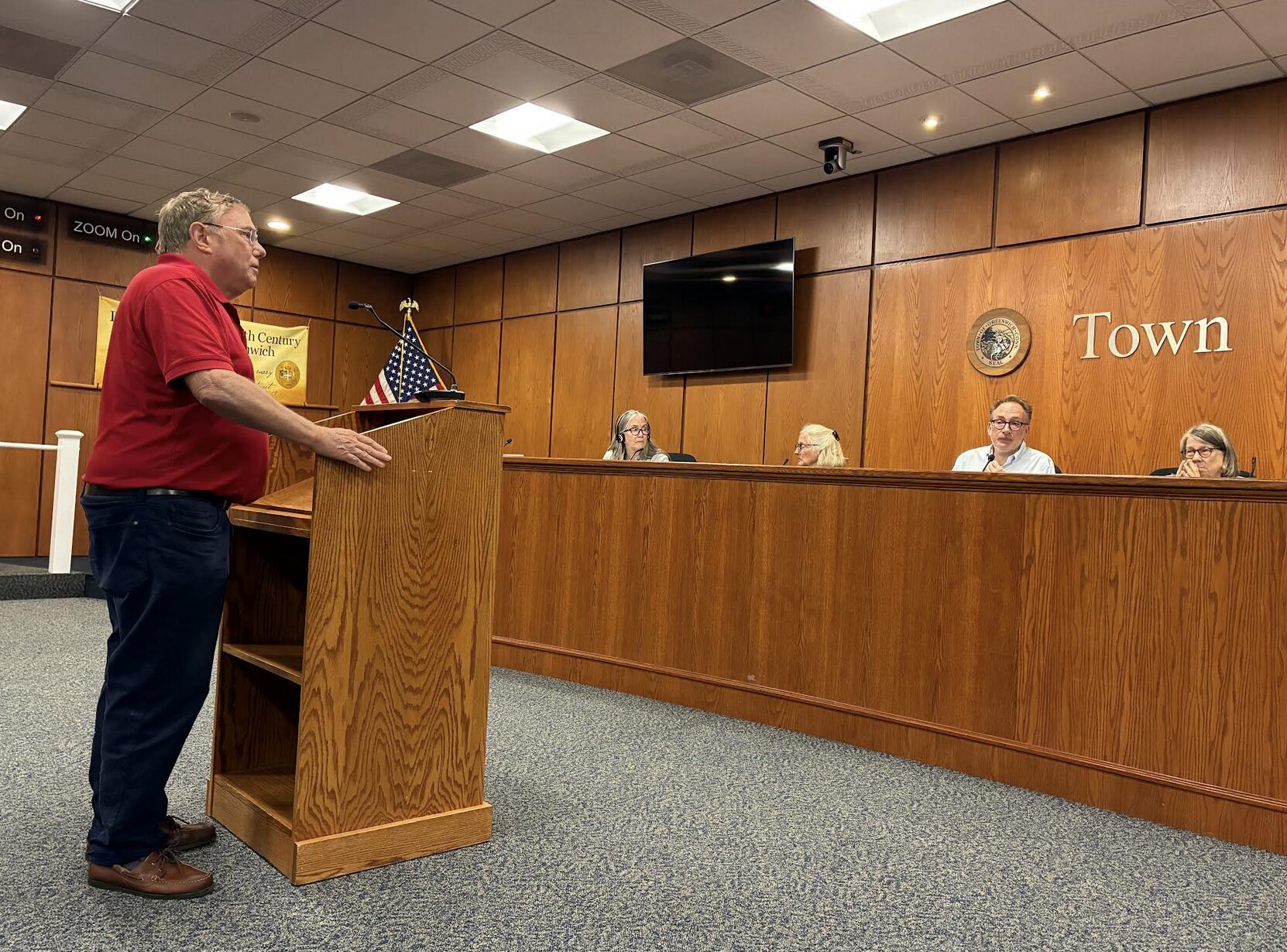
Trey Reynolds testified before the HDC.July 8, 2026 Photo: Leslie Yager
Trey Reynolds, who said his family had been in Greenwich for over 300 years, said, “I was at the protests for Pickwick Hotel and Lowell Weicker when I was about 10 years, and it was pretty horrifying as a 10 year old to see that building come down.”
Lowell Weicker, who was Greenwich First Selectman from 1964–1968, before going on to serve in the US House of Representatives from 1969–1971 , the US Senate from 1971–1989, and finally Governor of CT from 1991 to 1995, championed the major urban renewal project that demolished the aging hotel to facilitate construction of Pickwick Plaza.
The Pickwick Arms Hotel was located at the corner of East Putnam Avenue and Greenwich Avenue.
The iconic 120-room hotel operated from 1920 until 1971, and was demolished in 1972. It was replaced by Pickwick Plaza.
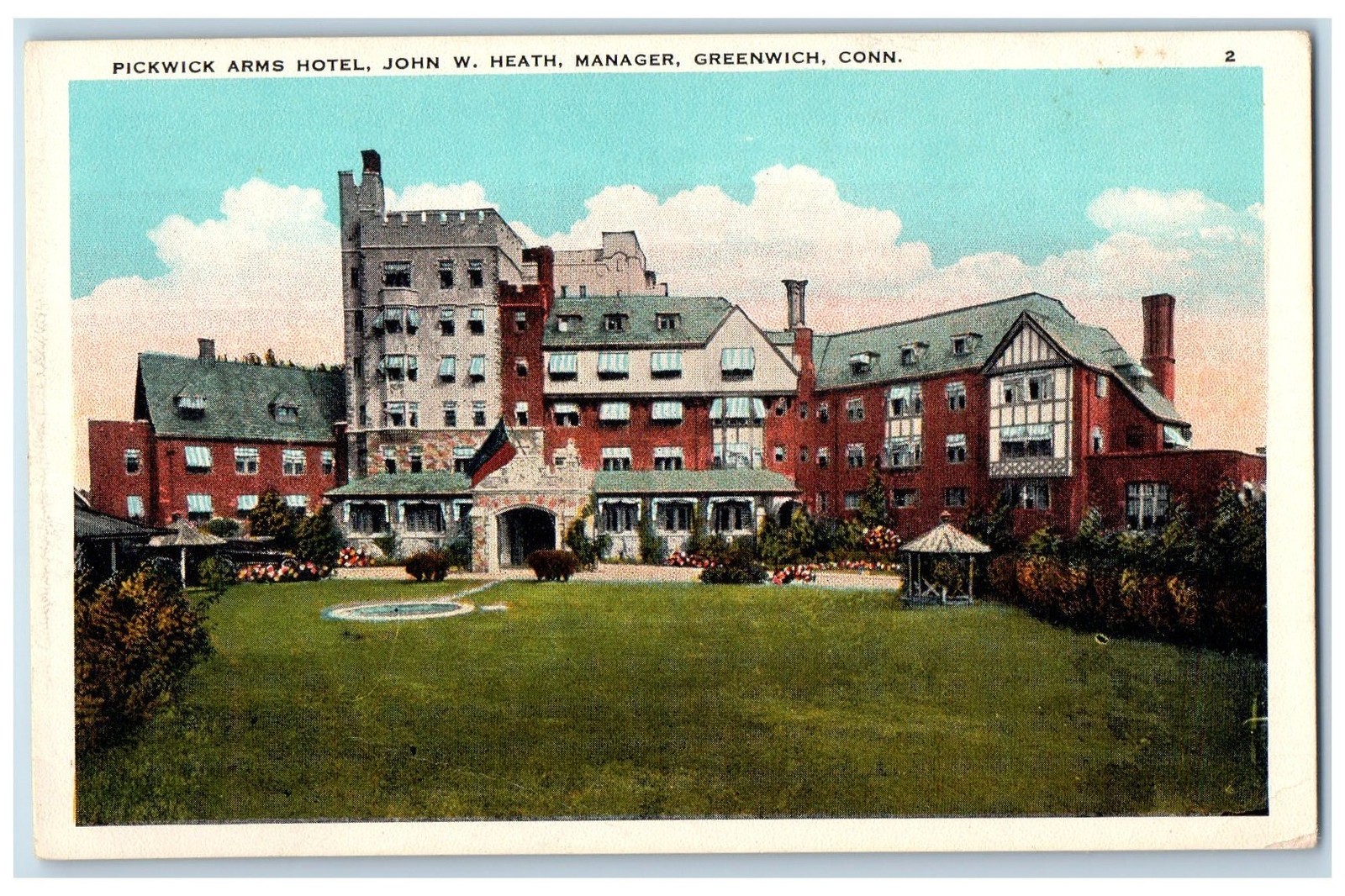
“This building at the corner of Greenwich Ave and the Post Road is just part of the architecture of the town,” Reynolds said, of 2 Greenwich Avenue.
“The idea of tearing something like that down without an idea of what’s going to go there? Why would you tear it down if you don’t have an idea of what’s going in there?” Reynolds asked. “It’s a beautiful building and it should stay.”
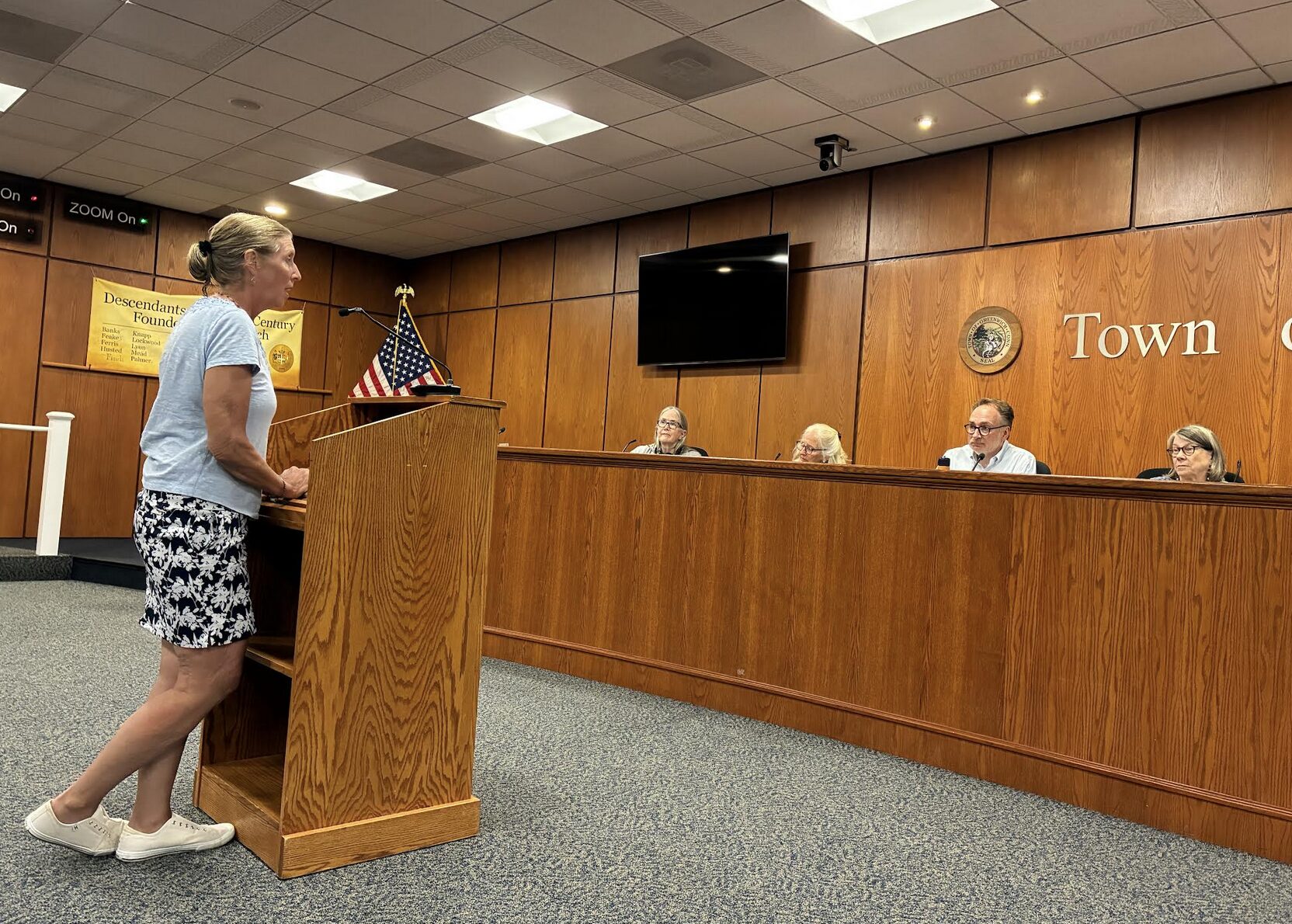
Cheryl Moss testified before the HDC. July 8, 2026 Photo: Leslie Yager
Cheryl Moss, an RTM member, District 8 chair and chair of the Public Works committee described the building as the entryway to Greenwich Ave and an anchor of the town.
“It’s a very meaningful site, and to destroy it and put up some sort of facade to replicate it isn’t the same as having the original,” Moss said. “In this town, we can’t keep allowing things like that to happen…We need to be preserving what makes our town the place was all want to stay and raise our families.”
Karen Fassuliotis said, “Its Tudor Revival architecture reflects an important period in Greenwich’s growth and the site is associated with the the 1920’s Isaac Mead building, one of the first brick buildings the vibrant community we know today. Once this building is demolished, its authenticity, craftsmanship and historic character are lost forever.”
“A replica, no matter how carefully designed, cannot preserve the original. Preservation should always be the first option, with demolition reserved only for when no reasonable alternative exists.”
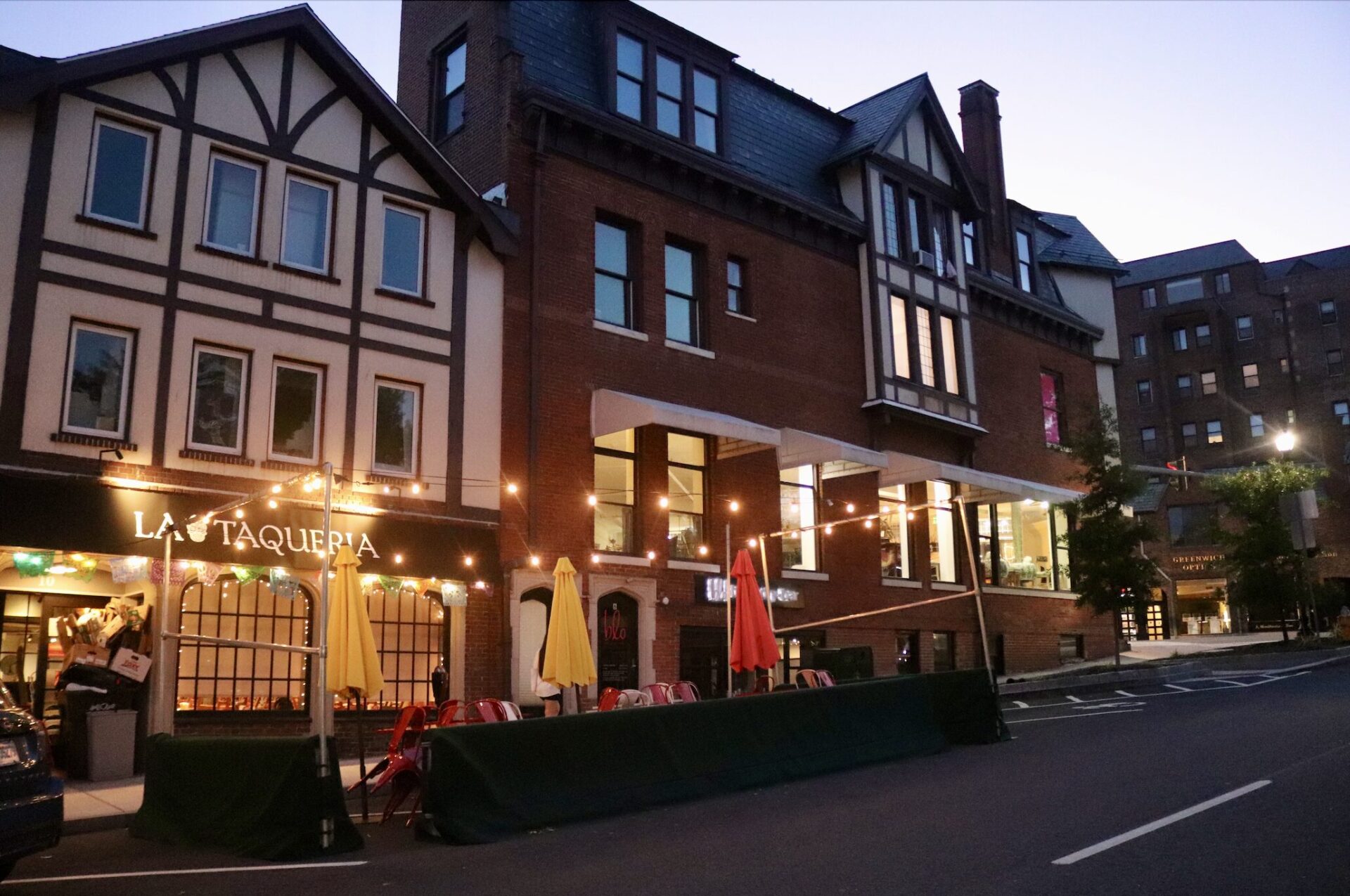
10 Greenwich Ave (building with Taqueria restaurant) and 2 Greenwich Ave at right. July 8, 2026
2 Greenwich Ave at right. July 8, 2026 Photo: Leslie Yager
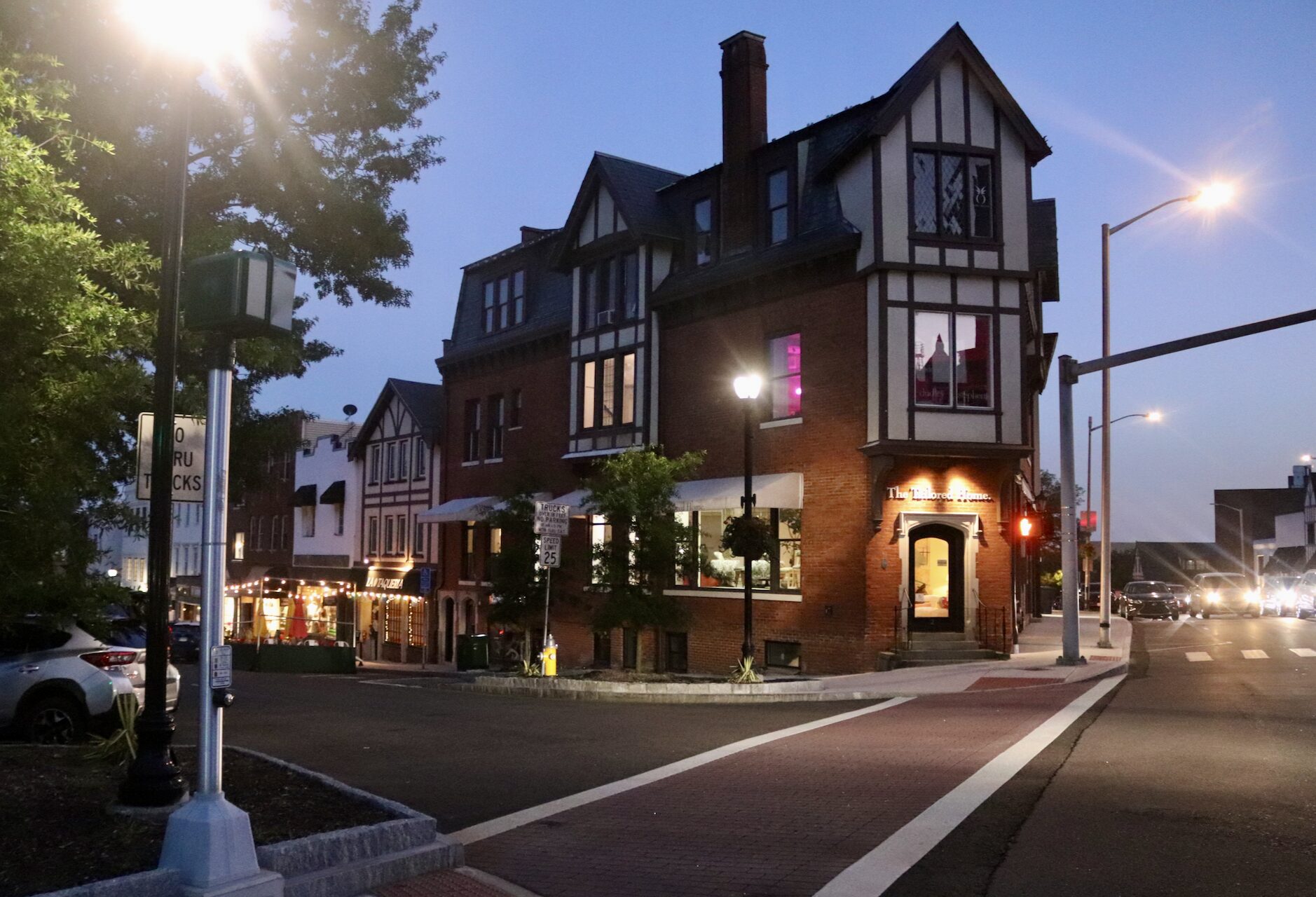
Intersection of Greenwich Ave and Putnam Ave. July 8, 2026 Photo: Leslie Yager
See also:
June 11, 2026
October 14, 2022