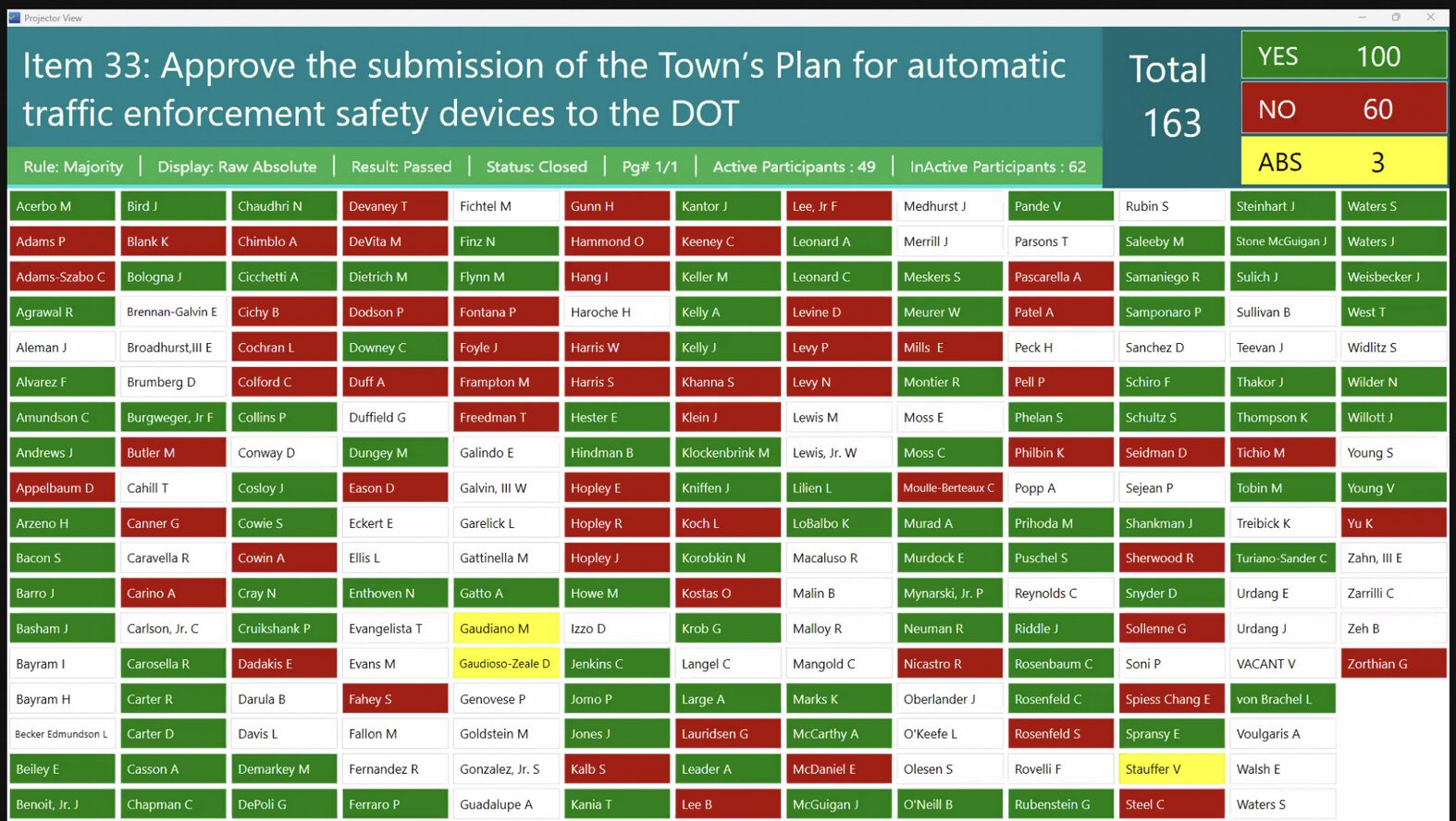
At Monday night’s Representative Town Meeting, attendees in person, on Zoom, and viewing on cable waited several hours for three highly anticipated votes at the end of the long agenda.
The most closely followed concerned school speed cameras in Greenwich, part of the town’s safety plan to be presented to the state.
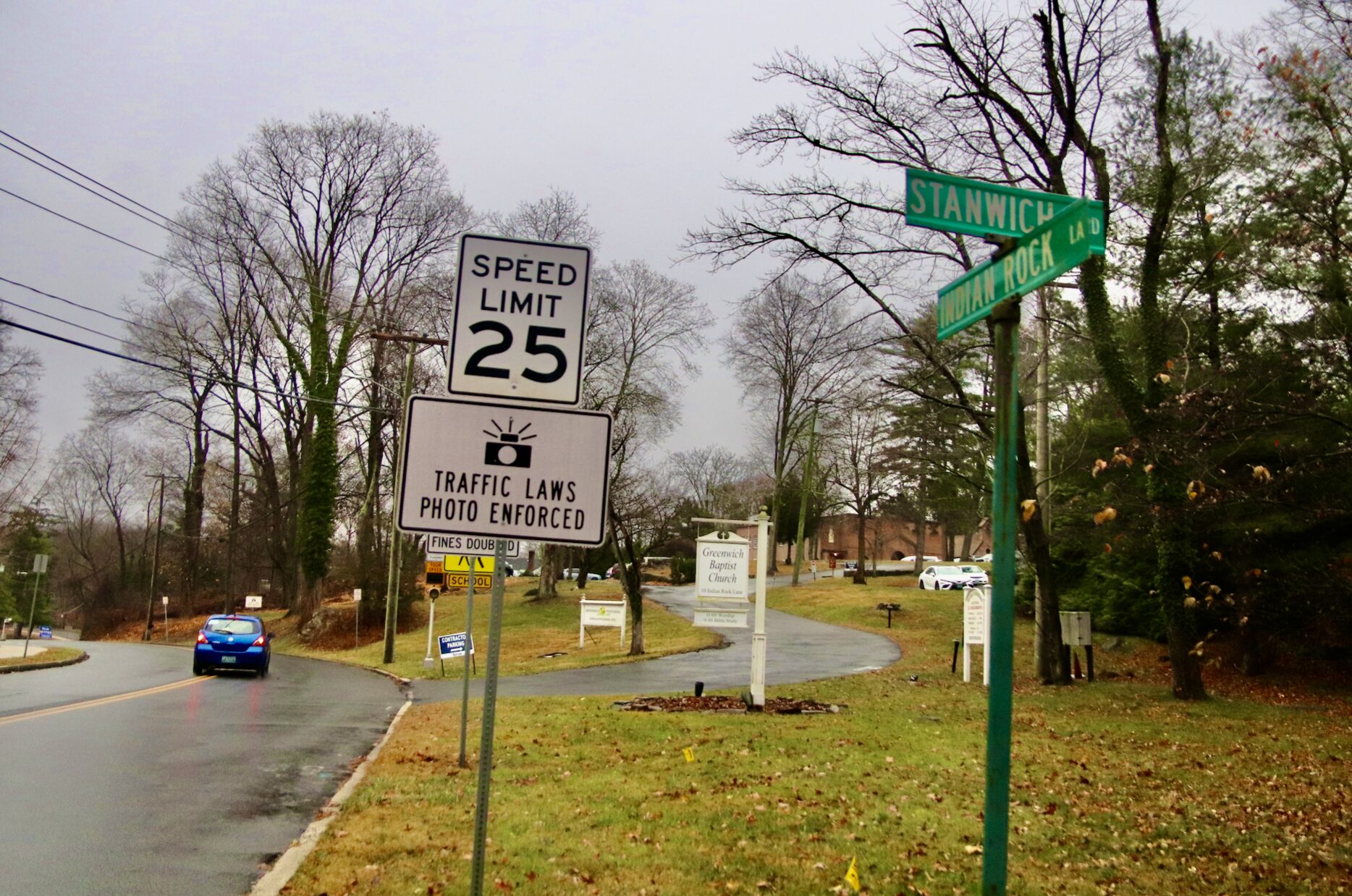
Speed Camera signage in the area of Central Middle School.
The program went into effect in November 2025, but was paused in April 2026 when the town learned the public meetings did not count as the required public hearings. Nor did they go before the RTM before launching the program as required.
On May 14, the town held a proper public hearing.
On Monday, the chairs of several RTM committees reported having been persuaded to support the program after a joint meeting where Police Chief James Heavey and representatives from the vendor, Blue Line Solutions made presentations.
In all, the program was endorsed by eight committees and districts.
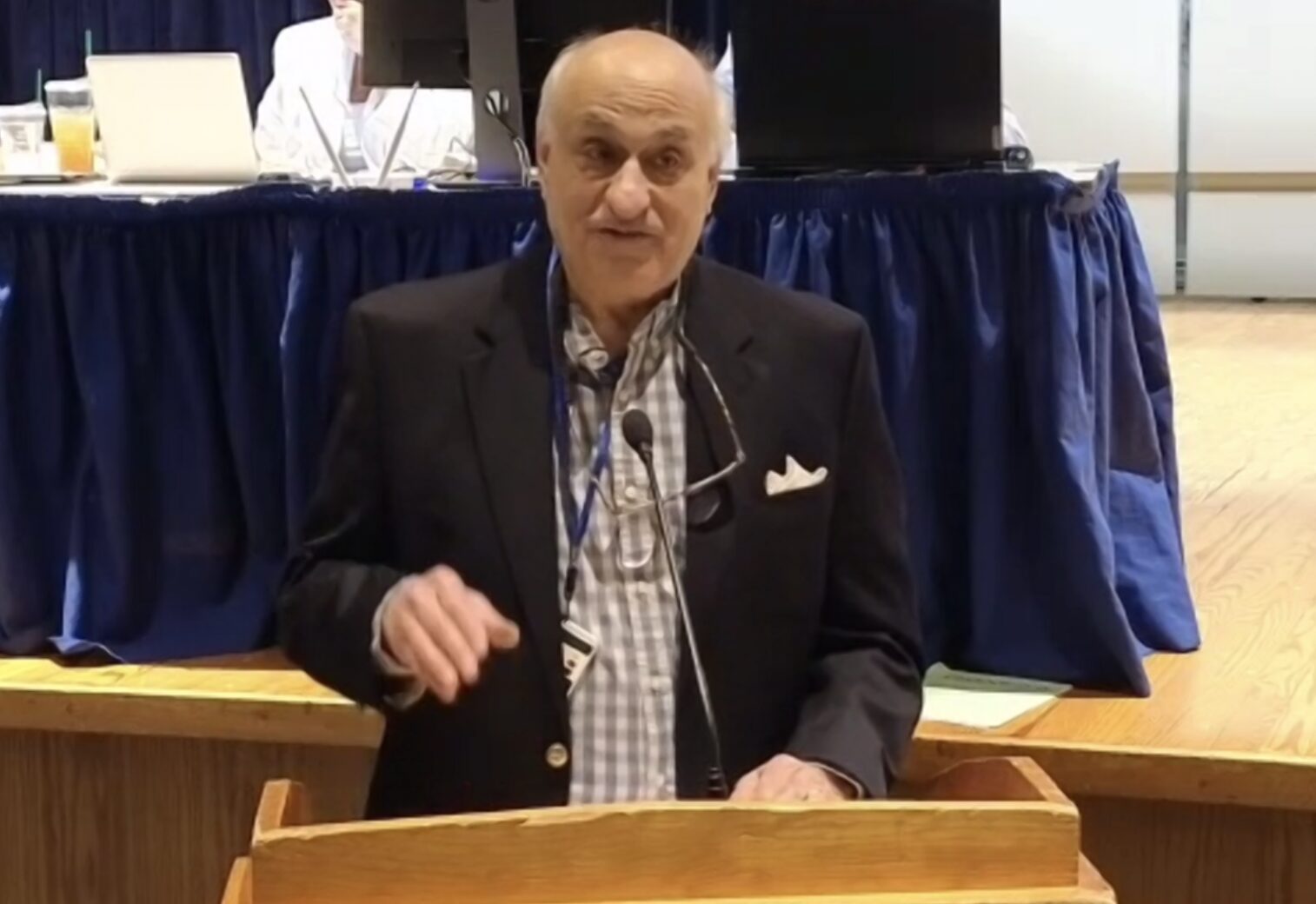
Steve Rubin gave a lengthy report on joint meeting of the five committees: Public Works, Education, Legislative & Rules, Finance, and Land use committees where they heard presentations from Heavey, Deputy Chief Mark Zuccerella, Sergeant JD Smith, Blue Line Solutions leadership and private equity partner.
Mr. Rubin presented as “a factual baseline,” including that Greenwich school zones are not safe and Greenwich Police had documented 3 pedestrian accidents within the exact corridors under consideration.
He said, per the National Highway Traffic Safety Administration data, a child struck at 40mph has only a 10% chance of survival, but at 20mph a child’s survival rate rises to 90%.
“There are not punitive speed traps designed to harness revenue. The camera locations were selected entirely by the Greenwich Police, not Blue Line Solutions,” he added.
“The program is deigned for behavior modification, not revenue generation. Since cameras were introduced in Greenwich school zones, violations in Greenwich school zones dropped by 92%. As for finances, by state law, any revenue must be deposited into a restricted account dedicated to solely transportation safety initiatives. It cannot be used to pad the operating budget.”
He said Blue Line operates on a zero cost basis, absorbing approximately $1.2 million up for infrastructure up front at no expense to Greenwich.
Committee Votes
The Education Committee voted 11-1-0 in favor of the school speed camera program.
The Finance committee was divided, with 5 yes, 4 no and 3 abstentions.
Chair of Finance Committee, Scott Kalb said concerns included data privacy and hackability of the speed cameras. He said in terms of process, many members felt the roll out of the plan had botched, and that there was a lack of transparency, oversight and participation that had alienated town residents and prevented general buy-in.
The Budget Overview Committee voted 12-0-0 in favor.
Chair James Waters said he had expected the committee to reject the plan, but they didn’t.
He said the police department had a limited head count despite a growing list of responsibilities and difficulty hiring police officers.
“As we know police officers don’t come cheap, require extensive training and benefits that are standard in law enforcement.”
“Chief Heavey explicitly confirmed that that data cannot be shared for any unrelated purpose, including immigration enforcement,” Waters added.
Transportation committee voted 9-0-2 in favor after a presentation from Blue Line and Chief Heavey.
Transportation Committee secretary Annabel Gatto said the committee had learned about a “halo effect” beyond the 92% drop in violations.
“Drivers slowing down throughout the school zones, not just at the cameras,” she said.
Public Works voted 7-1-2 in favor.
Chair Cheryl Moss said opinion on her committee shifted in favor after seeing a video with footage of a child being struck by a school bus on Route 1 and skeptics moved toward support after reviewing the detailed plan.
Land Use voted 10-2-0 in favor. Sandy Harris said the committee was influenced by the presentations.
Legislative and Rules Committee determined the item was in legal order and voted 9-0-0 in favor, and 8-1-0 in favor on merits.
An exception was District 11, chaired by Susan Fahey. At the D11 meeting they were visited by leadership of NGA and Pierre Gourdon. She said comments concerned process, placement of cameras, lack of community education about the program prior to installation and enactment, and “poor, inconsistent, and difficult to read signage.”
Fahey said District 11 voted on a motion to postpone Item 33 until September, in order to give the town time to form a safety committee over the summer and consider moving cameras to schools where children walk, and have broader and consistent hours of operation across all schools.
D11’s vote on the motion to postpone was 12 yes, 3 no, with 7 absent.
Chief Heavey said postponing made no sense.
“If there are any amendments to the plan, we have to do a public hearing and come back to the RTM,” Heavey said, noting that would be the case with the new Central Middle School after the change in traffic pattern with the new building.
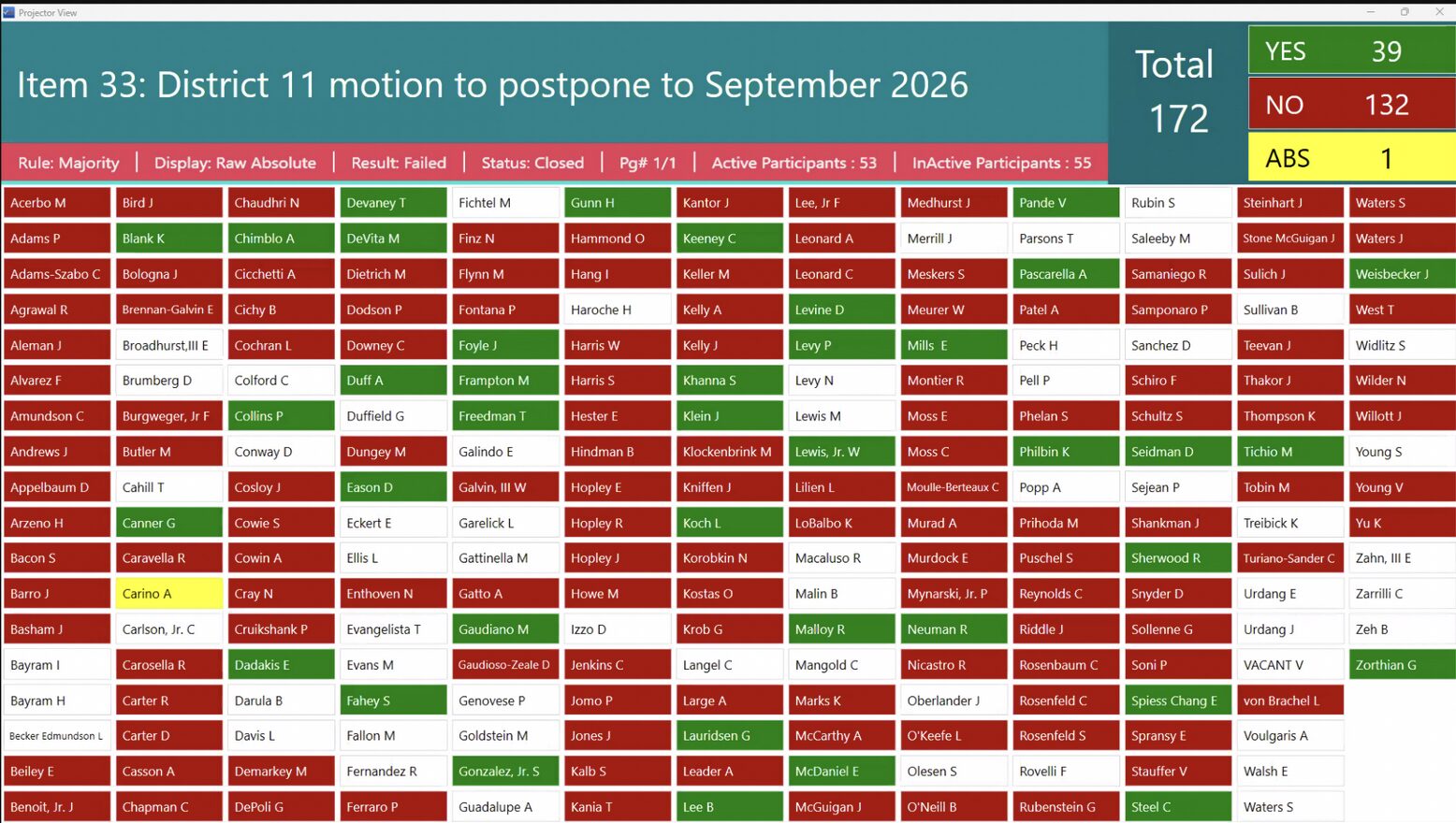
A motion to postpone the speed camera item failed.
At the full RTM, the motion to postpone to September failed, with a vote of 39 yes, 132 opposed, 1 abstention.
The debate on the merits of speed cameras featured dozens of individual speakers, each allotted two minutes.
Most speakers had concerns, ranging from the locations selected not having pedestrian activity, to fears about data breaches and hacking.
Democratic Selectwoman Rachel Khanna supported the cameras, noting in 2023, when she was State Rep for the 149th district, she voted in favor of a bill to allow municipalities to install speed cameras in school zones as part of the Vision Zero initiative.
“According to the traffic safety plan, the purpose of the speed cameras is to promote public safety of the public and residents of Greenwich,” Khanna said. “Many have taken that to mean children who are walking to schools, but this is about general safety, in order to reduce and prevent traffic fatalities, not just pedestrian injuries, which is why the cameras were installed in areas identified as having a large number of people speeding.”
Also speaking in support of the camera program, was State Rep Steve Meskers, (D-150) who said, the cameras reduced speeding by about 90%.
“The alternative is expensive and impractical, matching that level of enforcement with officers would require six or seven dedicated to school zones full time, roughly $1 million in annual salary and benefits. The cameras cost a fraction of that. Speeding tickets issued by a police officer will invariably end up in points on your license and higher premiums from your insurance company.”
He said any revenue received by the town from the fines must be used for traffic safety improvement initiatives, and the police or Public Works would submit requests to the BET.
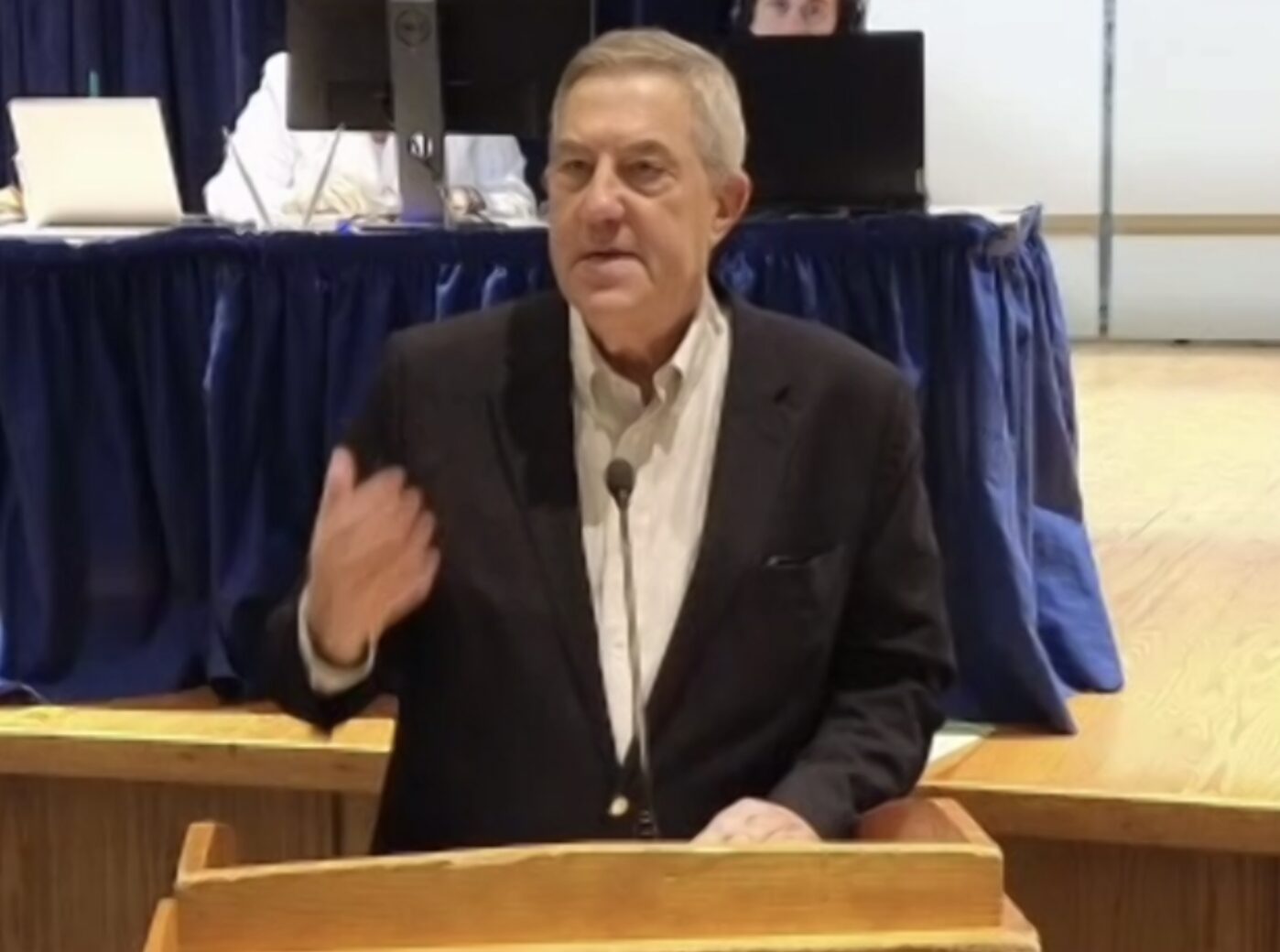
Ed Dadakis was strongly opposed the program.
“Are we prepared to approve this plan tonight despite clear and substantial concern raised by the public?” he asked. “If we vote yes, the RTM’s role effectively ends. Oh, maybe there will be a change here or there. We will have no meaningful opportunity to shape where these cameras go or how residents’ privacy and data are protected.”
“A program like this requires public trust, and public trust is not built through a rushed process limited answers, and a plan that moves forward unchanged despite overwhelming public concern,” he said. “In good conscience I cannot support this flawed plan.”
Pierre Gourdon from Distrcit 11 said he was suspicious about privacy and data breaches.
Mr. Gourdon said he had worked in cyber security over 20 years. “Regarding the speed cameras, I believe there are significant data privacy risks we face, despite assurances we’ve received that the cameras are only going to be recording license plates and only doing it when a speeding car passes. The reality is that traffic cameras like many other internet connected devices are vulnerable to cyber hacking.”
He said Israeli intelligence tracked the movements of the Iranian regime by hacking traffic cameras across Iran for over two years, allowing them to predict the movements of Iranian leaders.
“Many large companies with robust and layered cyber security controls have become victims of cyber criminals.”
James Waters said he favored the speed cameras.
“We have a plan created by our police department that follows state law, places cameras in school zones with documented excessive speeding activity,” he said. “We have repeated disinformation and shifting narratives by email, most debunked by our committees. We have a spirited campaign to make a couple hundred residents appear like 60,000.”
At about 12:45am the RTM voted to limit remaining debate to 30 minutes, plus 5 minutes for Chief Heavey to have the last word.
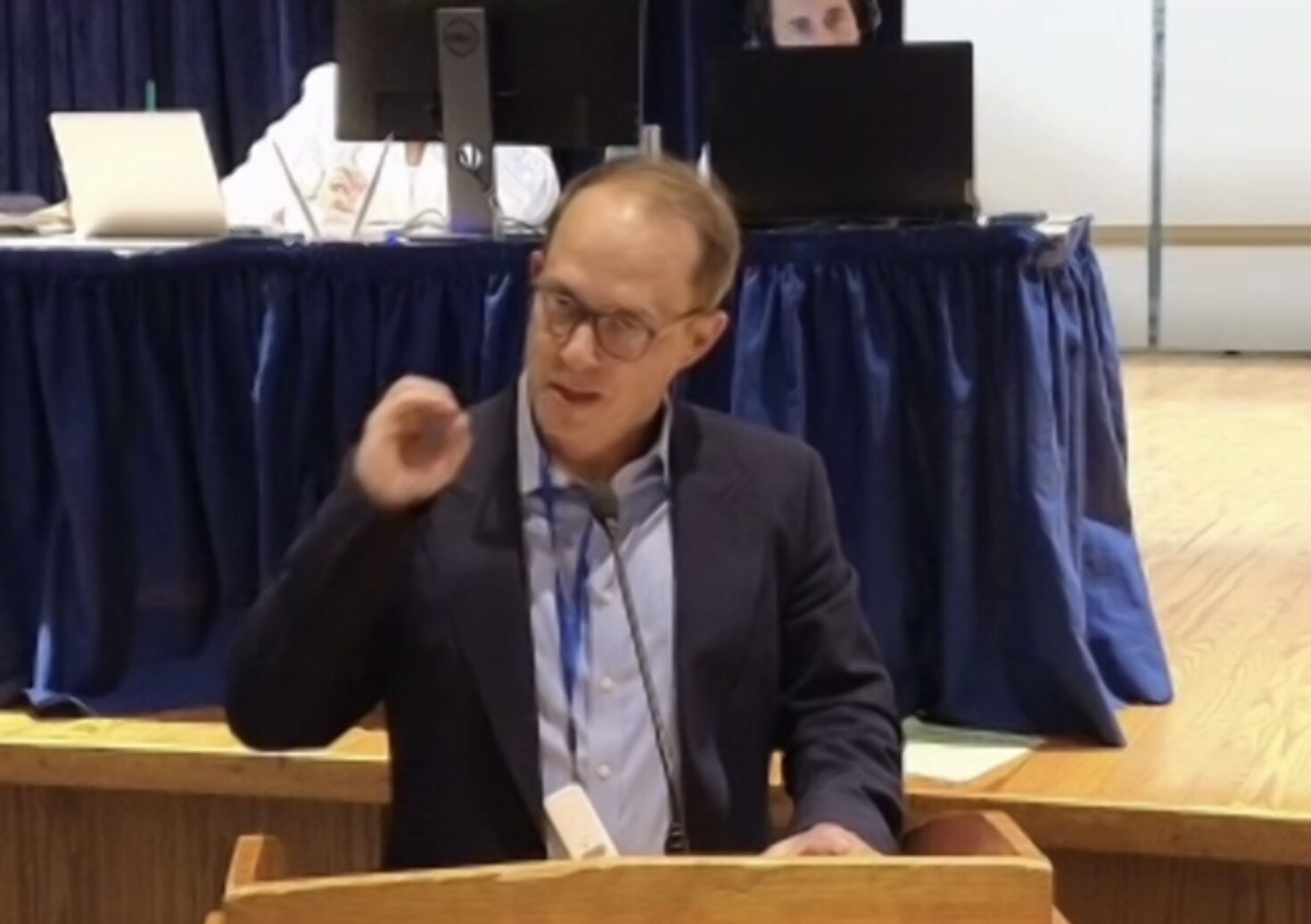
David Levine from D1 said, “My main issue with the proposal is not only that the data is accessible as United States IP addresses are potentially hack-able, also that our data is sent all around the country, and that people review and remove the data, and therefore, even if they have background checks, they could be hacked.”
“My main issue is the process by which this proposal was created. As you know the cameras are a financial investment. They under written by business people seeking to make money and maximize revenues. The RTM and the community did not have input in the process by which they chose the locations for these cameras,” Levine added. “Greenwich knows business. We know private equity. We know hedge funds. We know family offices. We also know a process that isn’t right.”
Gail Lauridsen talked about the will of the people.
“You’ve heard many arguments against the adoption of a school zone safety program: camera location, privacy, signage, data vulnerabilities, legal issues, listed lack of a speeding problem, cash grab, etc. You’ve heard many of those arguments multiple times. None of those arguments are the result of misinformation. The suggestion that they are is insulting. The public hearing demonstrated overwhelming opposition to the speed cameras.”
Lauridsen said there was a petition against the cameras in addition to emails to the RTM that were mostly opposed to the cameras: 31 in favor and 209 against.
“Our mandate is to value the input from the community more than we value the influence of a sophisticated sales operation that has been inflicted on us.”
She said the language of the resolution meant approval of the plan would allow the cameras to multiply indefinitely without further input from the community.
Ingrid Hang, D11, said the vote was less about speed cameras than the process by which they were installed.
“The RTM exists to decentralize power from a few individuals to elected representatives to our 12 districts, to represent the will of the people, and check the power of our Board of Selectmen,” she said. “I’m voting no on item 33 because a yes vote is a vote to undermine the purpose of this body.”
“I’m voting no because the selectmen and chief of police decided they know better than this body and our constituents and they don’t need our input. They relied on a slight of hand argument that because no money was spent up front there was no budget impact and and therefore no need for our approval. If the No Kings protesters need a location for their next rally someone should direct them to town hall.”
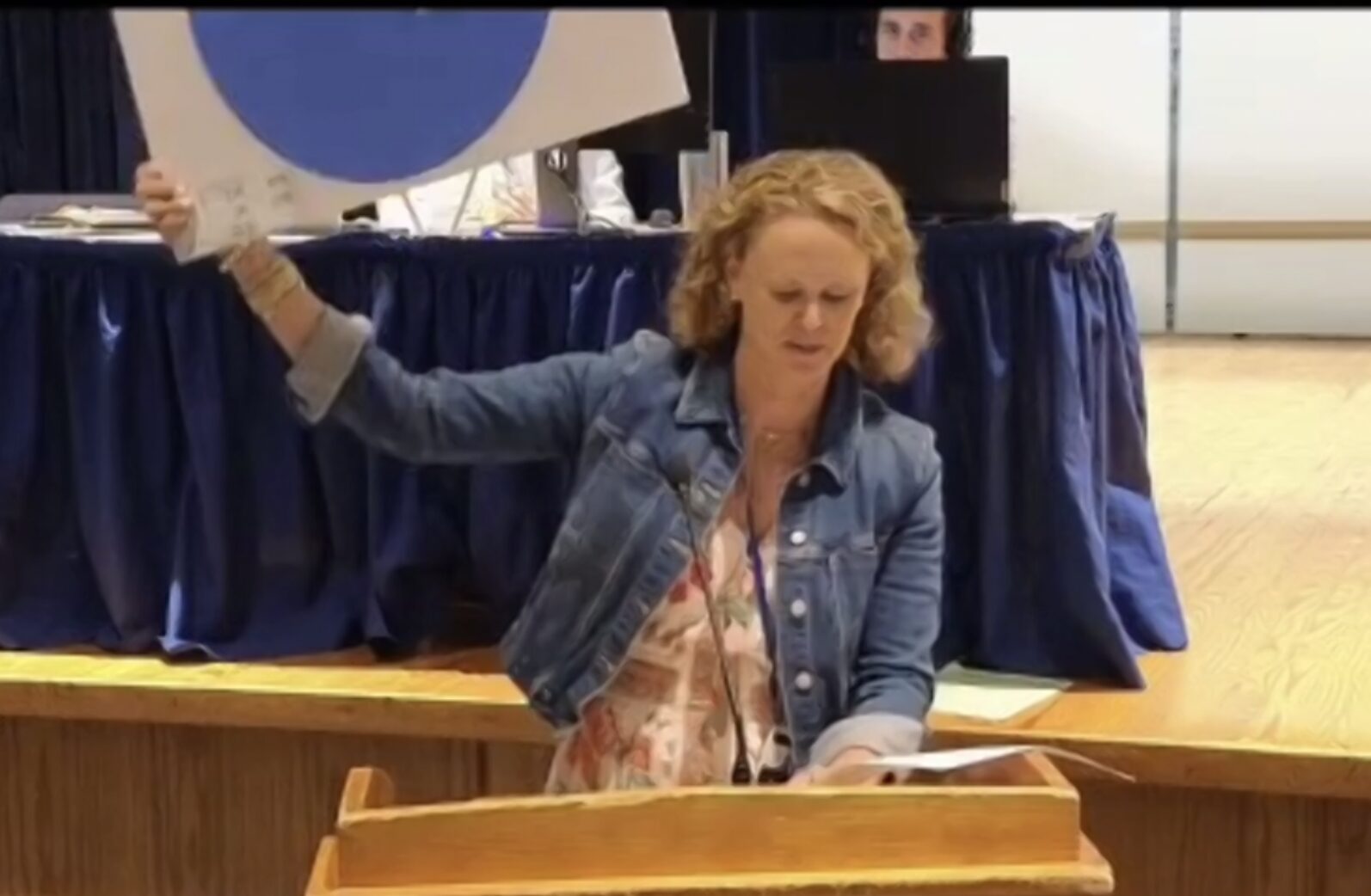
“The RTM has received a great many comments, 90% against the cameras. Typically 90% of people don’t even agree that the sky is blue,” Ms Hang said. “Tonight is our last chance to uphold the charter and reclaim our role. Even if you support the cameras, a yes vote undermines the RTM. And if that role no longer matters, we might as well dissolve this body and hand the crowns to the first selectman and chief of police.”
Sam Rosenfeld recommended starting the process over again and increasing funding for traffic enforcement in the next budget cycle.
“We hear over and over again that we have a hard time recruiting police to come work here,” he said. “We should be giving them the resources that they need. We all agree there is a real problem and it’s not just at these school zones.”
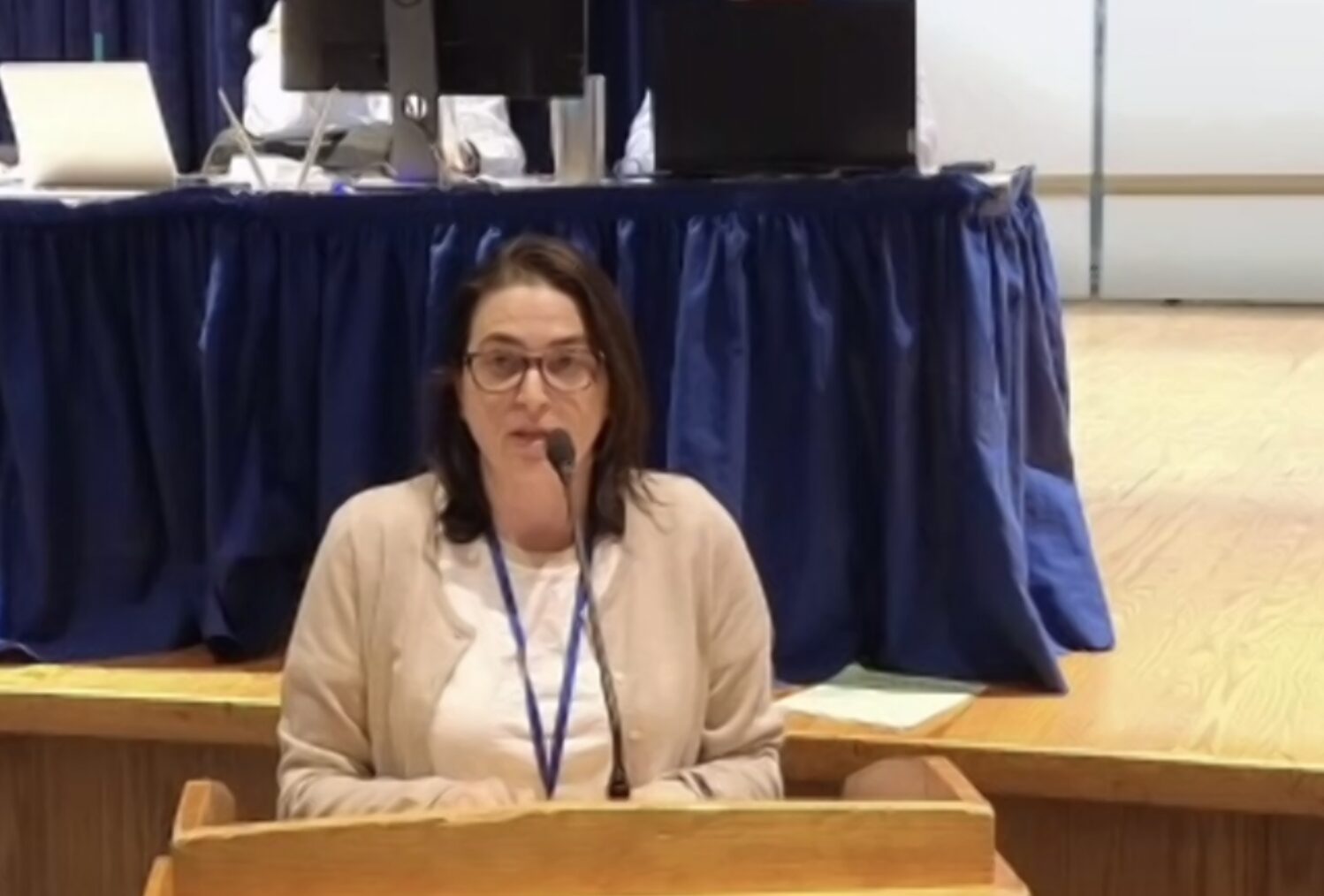
Danielle Eason said the town installed the cameras without following legal procedures, and after the May 14 hearing, there was an opportunity to make proactive changes based on the feedback received.
“What happens to the funds that were collected while the program was improperly running? And what will happen with the numerous contested infractions that are in limbo? If we need to refund people, where will that money come from?” Eason asked. “I hope it won’t take a lawsuit to find out.”
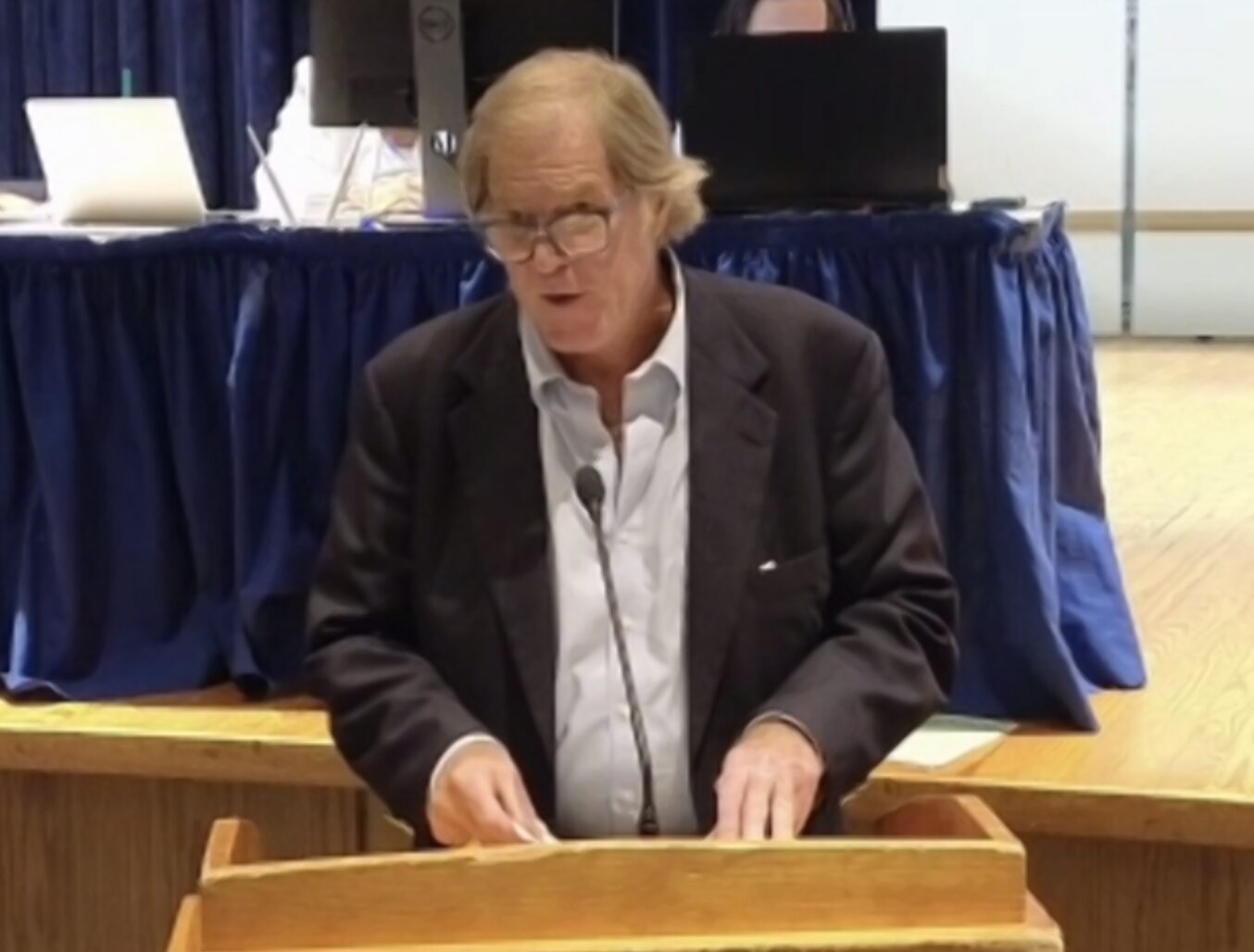
Ted Walworth, president of the Northeast Greenwich Association, said its 18 directors voted no on the town safety plan with speed cameras.
“There are legitimate concerns about government overreach and privacy. Blue Line who initially denied it, is owned by a private equity firm whose profits depend on the number of tickets issued,” he said.
Brad Radulovacki said, “I’m speaking tonight about representation. For myself and the thousands of Greenwich residents who also oppose this initiative. As you can see, opposition to traffic cameras is real.”
“Tonight I hope the RTM will look at the large volume of well articulated opposition to traffic cameras and will represent those voices in the voting,” he said. “The fact that so many residents have rallied to oppose traffic cameras is sending a clear message to the RTM.”
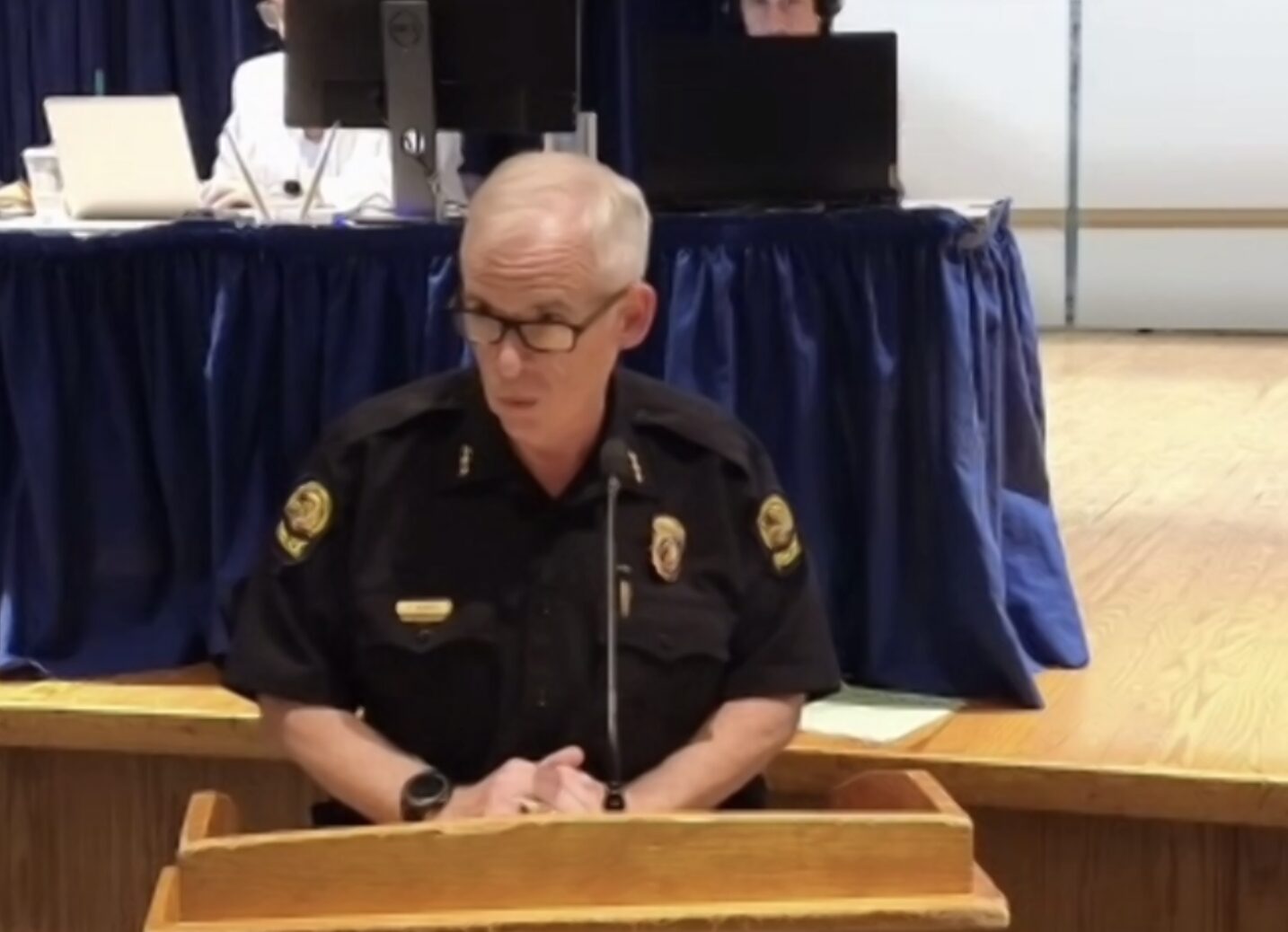
Greenwich Police Chief Jim Heavey, the principle proponent, was given the last word, with a limit of five minutes.
“This was a difficult start to this program, but once it got started we got to look at the proven results, the 92% reduction in speeding,” he said. “I’m talking about speeding in school zones.”
He emphasized the vendor did not select the camera locations. The police did that based on data.
He acknowledged data security was a concern for everyone, and there has been a 70% increase in financial crimes in Greenwich.
“Safeguards are in place,” he added. “This isn’t just us trying to find something that will do our job for us. We recognize the police dept is 10% below strength because we are having a hard time recruiting and retaining officers in Greenwich.”
He emphasized the program was not just about pedestrian safety, but was about traffic safety.
“Some of the schools mentioned where people think there shouldn’t be a camera, there are young drivers driving vehicles to and front schools, and school buses that have been involved in accidents.”
He noted that police had listened to feedback, updated signage and changed the process to appeal a summons.
Close to 1:30am, Heavey concluded, “Being a leader sometimes requires that you make even an unpopular decision in the interest of the greater good. You will do that by voting yes and making Greenwich safety by adopting this plan.”
After the vote, the meeting was adjourned.
See also:
Hearing on Greenwich School Speed Cameras Raises Concerns over Privacy and Data Collection
May 14, 2026