In Greenwich the topic of rogue e-bikes, dirt bikes, modified e-bikes that become motor cycles, and e-scooters is top of mind as the Board of Selectmen are set for a second read on a proposed ordinance on road takeovers and e-bikes at their meeting on Thursday.
At the July 23 Board of Selectmen meeting, Greenwich Police Captain Patrick Smyth proposed a draft ordinance on vehicle use and street takeovers (see pages 24-26) for Greenwich.
This week, AAA Northeast shared some crash data. Noting, e-bikes and e-scooters are surging in popularity, that corresponds to an alarming spike in crashes and injuries associated with their use.
Battery-powered bicycles and scooters — which fall under a category called micromobility devices — can be fast, efficient and affordable modes of transportation. But unsafe riding and driving behaviors, confusion about where certain devices are allowed and limited public understanding regarding their sale and use have created a new traffic safety crisis on our roadways.
According to the U.S. Consumer Product Safety Commission, emergency department visits nationwide for injuries caused by micromobility crashes rose from 37,300 in 2017 to 149,100 in 2024, a 300% increase. Over that period, at least 533 people were killed, with fatalities rising from five in 2017 to 135 in 2024.
“Troublingly, many injured e-bike riders are children who lack the skill and experience to ride at high speeds, or the training and practice to operate what is essentially a motor vehicle on public roads,” said Lauren Fabrizi, spokesperson for AAA Northeast. “And all too often, they gained access to an e-bike or scooter as a gift from a parent or caregiver who was unaware of just how fast — and risky — these devices can be.”
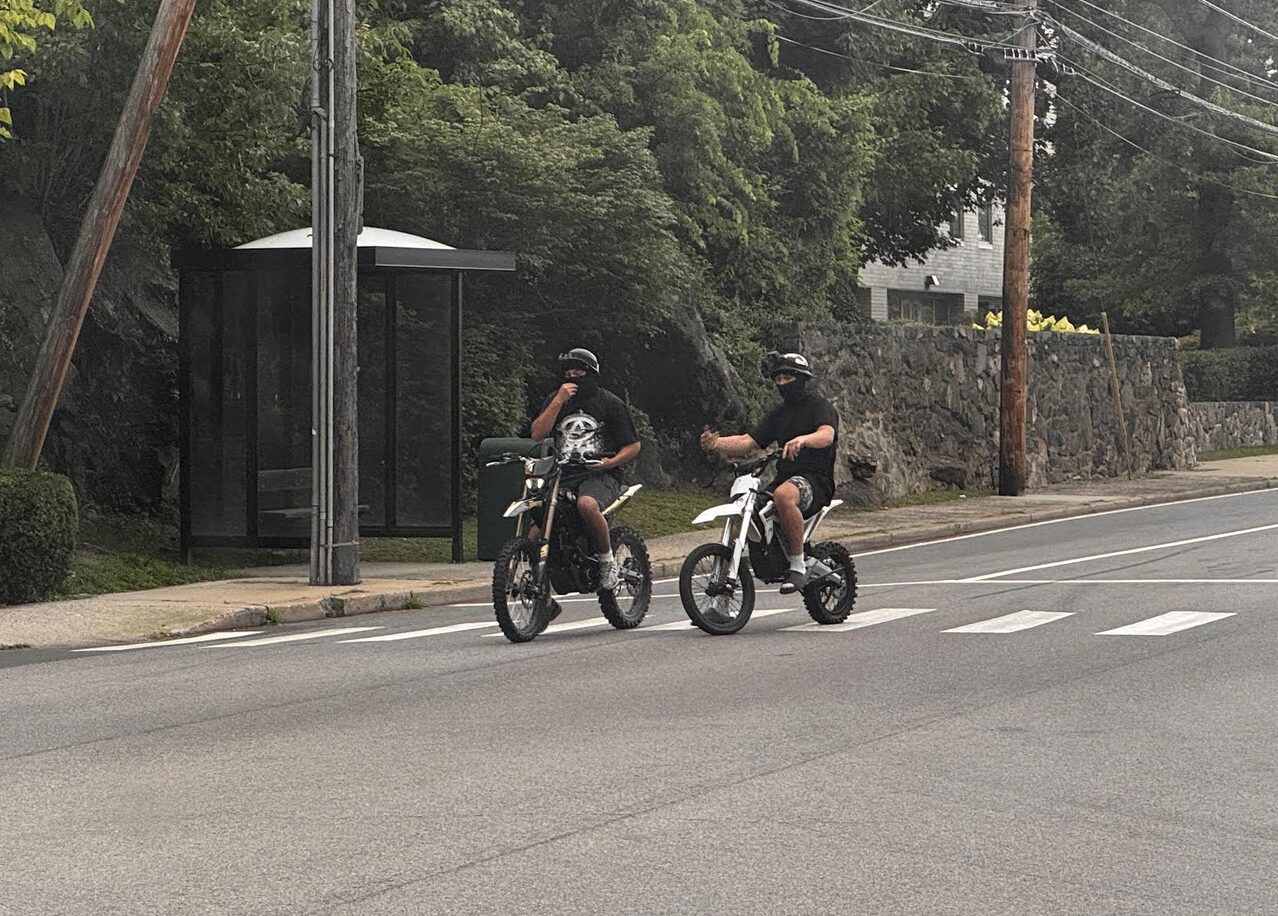
Riders on West Putnam Avenue. Under Connecticut law,any electric powered bicycle with a motor exceeding 3,500 watts is considered a motorcycle. July 2026 Photo: James Bonney
In Connecticut, there were 144 crashes involving e-bikes and e-scooters between 2021 and 2025, according to data from the Connecticut Crash Data Repository. Of those crashes, 124 resulted in injuries and one was fatal. More than 25% of those involved were under 18.
These figures likely underrepresent the scope of the problem and reflect only crashes in which an e-bike or scooter was explicitly identified in the crash report, even though a AAA Northeast analysis found that many e-bike crashes are classified as traditional bicycle crashes.
Meanwhile, the rules that determine who can ride e-bikes and where vary between states, and sometimes even from town to town. There is no singular national standard to classify e-bikes and scooters, nor is there widespread uniformity in existing laws about age restrictions, helmet usage or licensing and insurance requirements. Knowing whether an e-bike is safe, legal and appropriate for a particular rider is difficult.
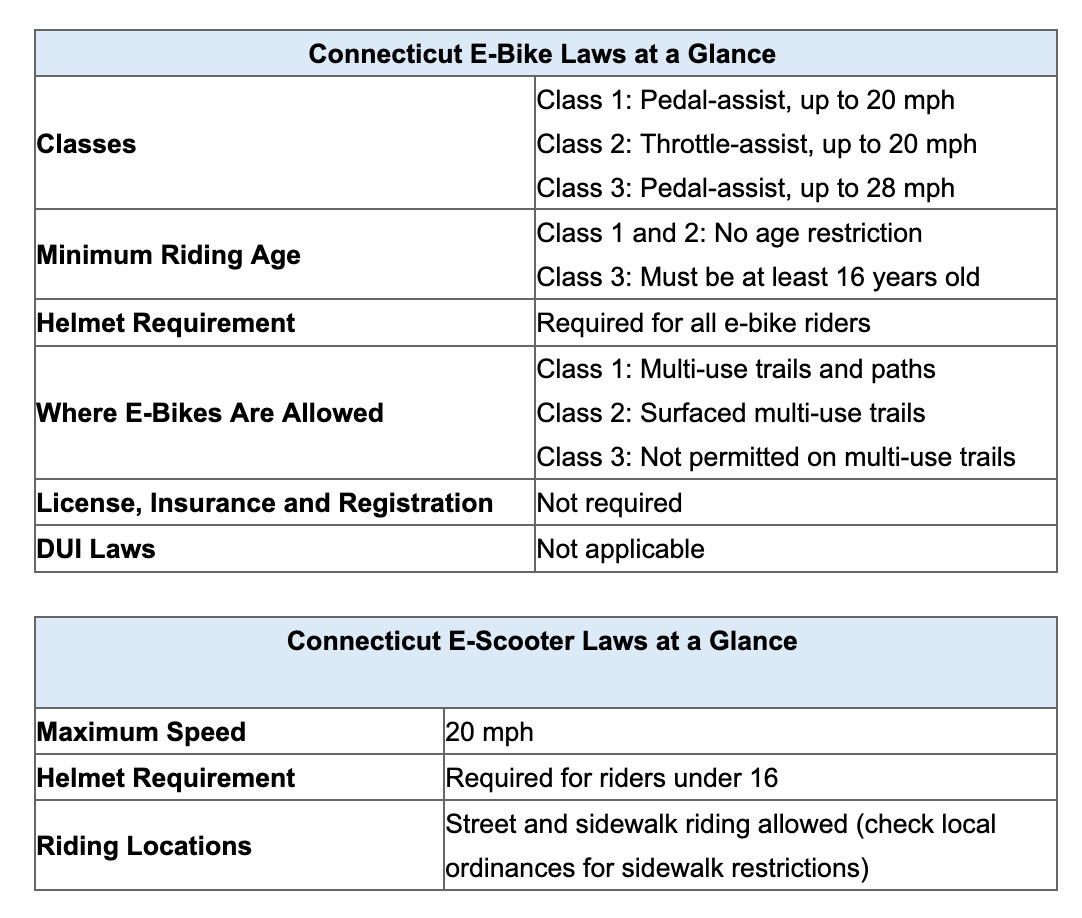
The current regulations in Connecticut are as follows:
If you’re exploring buying an e-bike or e-scooter for yourself or a child, consider the following before making a purchase:
- Buy from a local bike shop, if possible. They should be able to provide guidance about what bikes might work best for your environment and will help you avoid purchasing devices that are marketed as e-bikes but are technically illegal.
- Understand the difference between e-bike classes and consider whether throttle-only or Class 3 e-bikes are appropriate for the rider’s skill level.
- Never purchase an e-bike for a child younger than the minimum age requirement listed for that vehicle, or for their first bicycle.
- Understand that riding a bicycle is not the same as riding an e-bike; e-bikes are heavier, much faster and harder to steer and stop than traditional bicycles.
- Educate children about the rules of the road and take practice rides alongside them before allowing unsupervised rides. If they engage in risky behaviors, have a conversation with your child about safety.
- Know that e-scooters are less stable than e-bikes due to smaller wheels and are more likely to tip over on bumpy roads.
AAA Northeast urges e-bike and e-scooter riders to:
- Always wear a helmet, regardless of age, skill level or legal requirements. The higher speeds attainable on an e-bike increase the risk of traumatic brain injuries.
- Stay alert. The faster you go, the less time there is to react to obstacles. Stay focused, avoid distractions and resist the temptation to speed.
- Stay visible. Wear reflective clothing at night and use lights and reflectors.
- Be predictable. Don’t weave around cars, ignore traffic signals or ride close to pedestrians.
- Be wary of parked cars. When approaching parked cars, anticipate that a door may open and cause a severe crash.
- Be careful on hills. Due to their increased weight, e-bikes can reach dangerous speeds downhill and can be difficult to stop.
“As the presence of e-bikes and e-scooters rapidly increases in our communities, it’s never been more important for drivers to slow down and ensure they are driving without distraction,” Fabrizi said.
“These devices are often traveling at higher speeds than drivers might expect and can be difficult to see, especially from larger vehicles. Always double-check for e-bikes before turning, opening your door or entering an intersection. Anticipate unpredictable behaviors, especially from younger riders. The best way to increase safety for all road users is to be patient and give yourself more time to react to sudden and unexpected situations.”
AAA Northeast is a not-for-profit auto club with offices in Rhode Island, Massachusetts, Connecticut, New Jersey, New Hampshire and New York, providing more than 6.9 million local AAA members with travel, insurance, financial and auto-related services.
See also:
Ordinance Proposed as Dirt Bikes, Modified E-Bikes “Terrorize Neighborhoods” in Greenwich