About three-quarters of Long Island Sound’s beaches had consistently clean water last summer. Seventy-seven percent of the 192 public and private Long Island Sound beaches that were sampled at least nine times during the 2025 swimming season received A or B grades from Save the Sound—the highest percentage since 2022. That represents a 5 percent improvement in As and Bs from the 2024 Beach Grades.
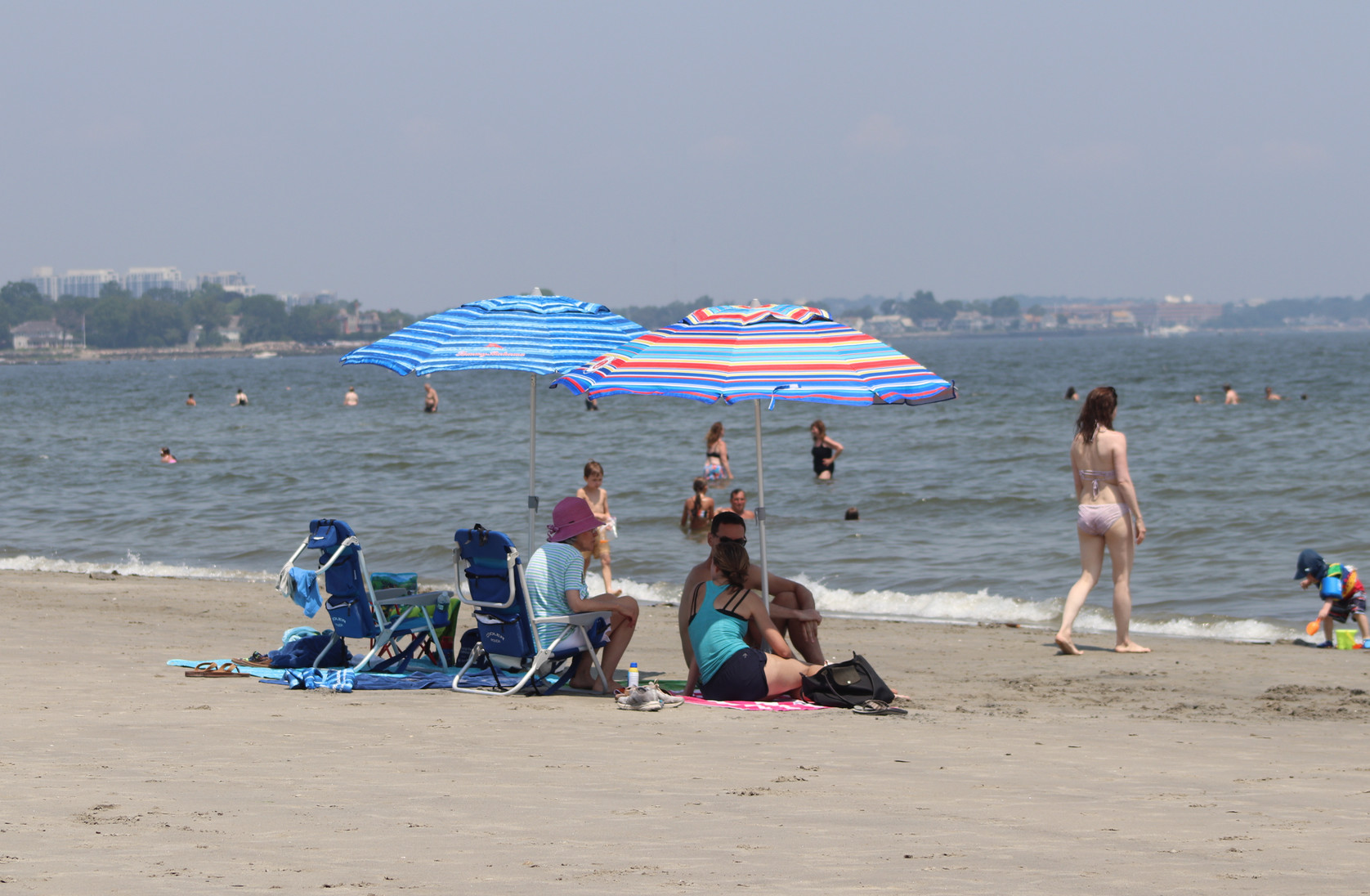
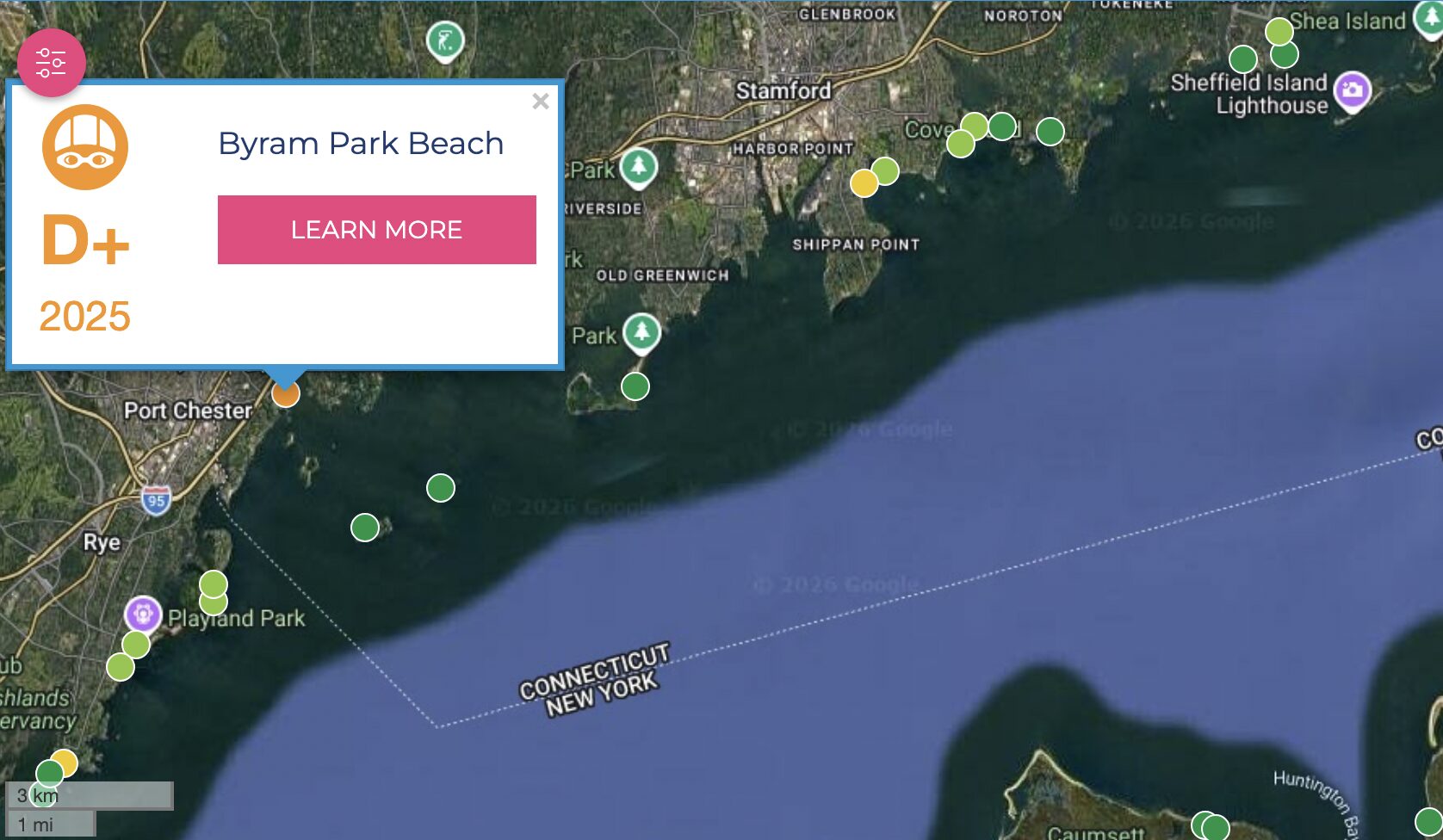
At the same time, the total number of Sound beaches that struggled with poor water quality (Ds and Fs) remained the same. Sixteen beaches received either a D or F—the same as in 2024, though no beach received an F in 2024; there were four in 2025. Eleven of those 16 beaches are located in either New York City or Westchester County, including all four Fs.
“As we have seen over the years, there consistently is a high number of beaches that receive great marks for swimming all around Long Island Sound,” said Peter Linderoth, director of healthy waters and lands for Save the Sound in a release on Tuesday. “But as we also have seen, nearly one-quarter of Sound beaches face some level of water quality challenges that need to be looked into and addressed.”
Save the Sound’s Beach Grades, calculated and released annually, reflect water quality data collected the previous summer at each beach by local health departments and uploaded to the Environmental Protection Agency’s Water Quality Portal database. Samples are collected throughout the swimming season during wet and dry conditions and are analyzed for levels of fecal indicator bacteria.
High counts of fecal indicator bacteria are associated with pathogens in the water that can make people sick. These high counts of bacteria can be associated with untreated sewage, improperly disposed of dog waste, local wildlife inputs such as resident Canada geese, or polluted stormwater entering the waters at or near a beach.
In 2025, 17.7 percent of all samples collected around the Sound under wet conditions (when one-quarter of an inch of rainfall is recorded in the 48 hours prior to sampling) failed to meet those safe-swimming criteria. That the 2025 swimming season saw only 16 inches of precipitation around the region, the lowest since 2022, could explain in part the year-over-year improvement in overall grades.
Whenever it rains, stormwater runoff is particularly problematic in developed areas with swaths of impervious surface coverage near a beach and in the nearby lands that drain to it. Rainfall cannot penetrate hardened surfaces like roofs, driveways, streets, sidewalks, and parking lots. Instead, it cascades into catch basins and storm drains, carrying along fertilizer, pesticides, oil and fuel residue, tire debris, and fecal indicator bacteria, which can originate from improperly discarded pet waste or waste from raccoons, rodents, or other wildlife living inside stormwater pipes. Too often, stormwater also picks up spills and leaks from sanitary sewer infrastructure and septic systems, adding human waste to the mix of polluted runoff delivered to our beaches.
“Stormwater pollution is a leading challenge to water quality at Long Island Sound beaches,” Linderoth said. “Expanding the use of green infrastructure—rain gardens, bioswales, green roofs, constructed wetlands—is a critical step toward reducing stormwater runoff. The more stormwater can be filtered or diverted before reaching the Sound, the more water quality will improve, and the better a beach’s grade will be.”
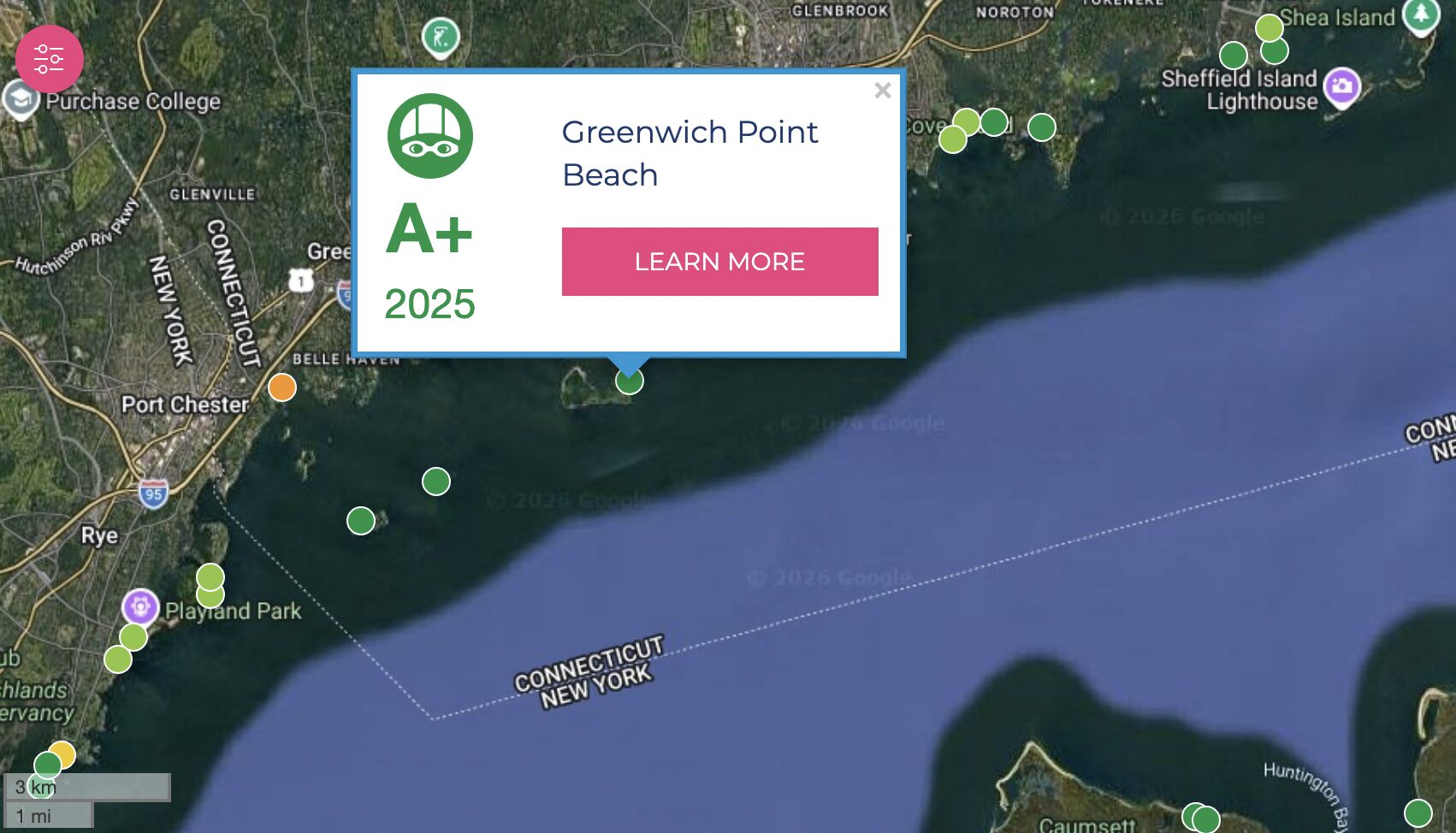
Grades from 2025 for individual Long Island Sound beaches are available on Save the Sound’s interactive website, Sound Health Explorer, as are grades and sampling results dating back to 2003 for most beaches.
Save the Sound shares these Beach Grades with the public and municipal leaders. Residents concerned with the grade received by their local beach are encouraged to discuss the issue with their local elected officials, health departments, and beach managers. Community members also are welcome to contact Save the Sound with any questions, comments, or leads on potential sources of fecal contamination for a given beach.