By James Bonney
Long before a police cruiser arrives or a fire engine turns the corner, the first point of contact in an emergency is often a voice on the other end of the line.
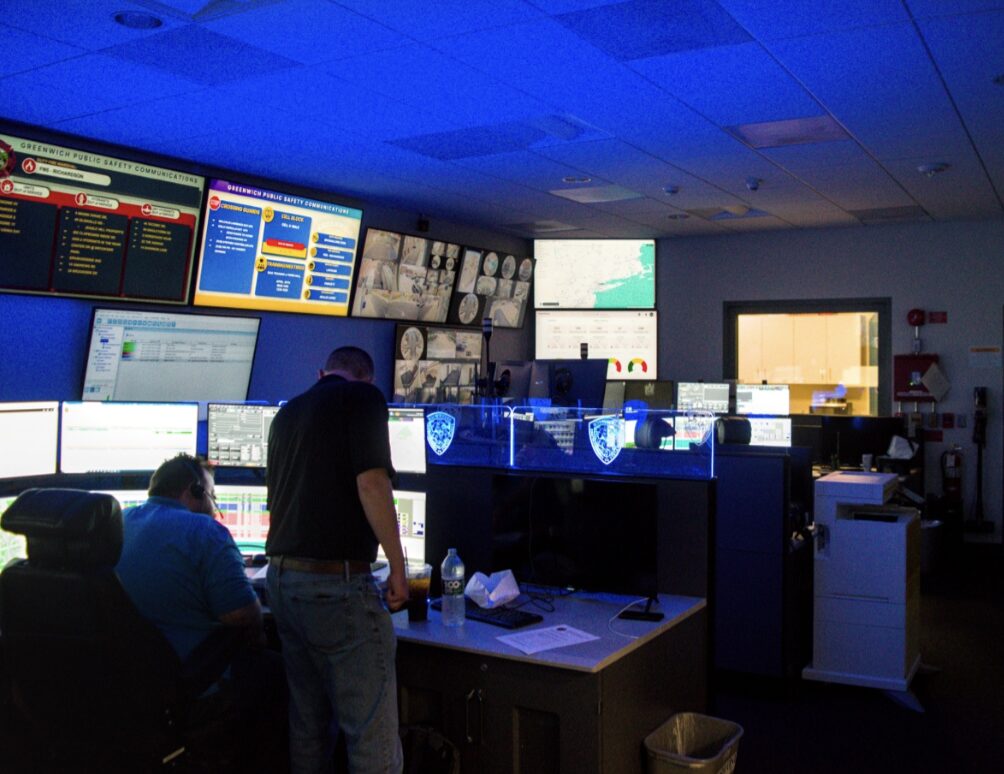
Inside the Town of Greenwich’s Public Safety Dispatch, that voice belongs to a team of dispatchers working around the clock, fielding everything from life-threatening emergencies to routine questions, often all at once.
For Nicholas Didelot, manager of public safety dispatch, no two days look the same.
“You don’t know what you’re going to get,” Didelot said. “One day you could wait an hour for a motor vehicle accident with no injuries. The next day it could be five minutes. It really depends… that’s one of the things many of us like about this job.”
A typical weekday shift begins early. Dispatchers arrive around 6:30 a.m., immediately coordinating logistics across town, starting with school crossing guards. If coverage is short, dispatchers arrange substitutes or coordinate with officers to fill in.
At the same time, calls are already coming in.
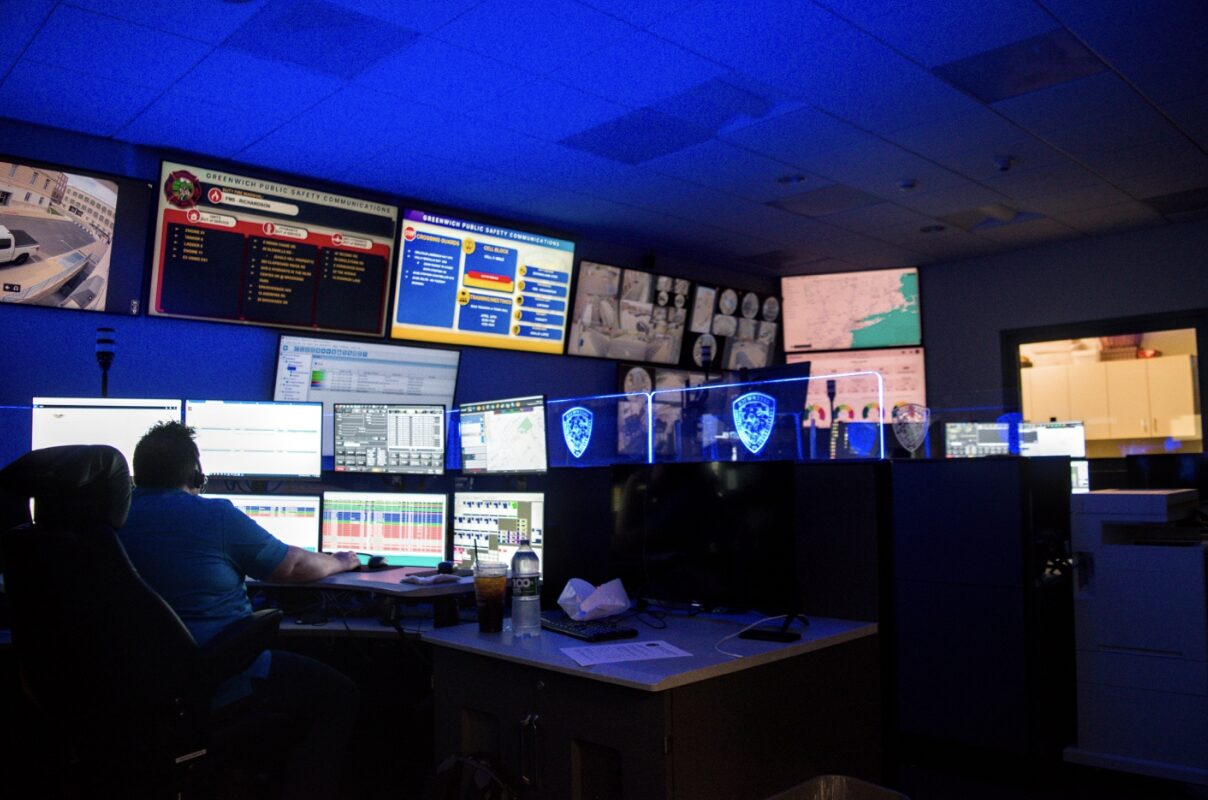
Dispatchers handle 911 calls, non-emergency line calls, and administrative duties. April 16, 2026 Photo: James Bonney
“It’s very common to get a couple medical calls in the morning,” Didelot said. “People get up and going… you get your falls, your sick person calls.”
From there, the day builds quickly. Dispatchers relay fire department training updates, manage road closures, coordinate with emergency management during storms, and support officers in the field, all while answering both emergency and non-emergency phone lines.
“It’s not just answer 911, type up the call, send a unit,” Didelot said. “You’re doing a lot more work.”
That work often extends beyond emergencies. Dispatchers handle administrative requests, background check processing, and calls from residents seeking direction on everything from permits to legal questions.
But while the workload is broad, the responsibility is precise, especially when it comes to 911.
Didelot emphasized that misuse of emergency lines can disrupt critical operations.
“When you call 911, we expect an emergency,” he said. “There are so many times I’ve told someone on a regular line to hold on because I need to get a 911 call… and then you pick up and it’s a barking dog.”
He added that 911 should be reserved for urgent, potentially life-threatening situations, such as medical emergencies or serious accidents.
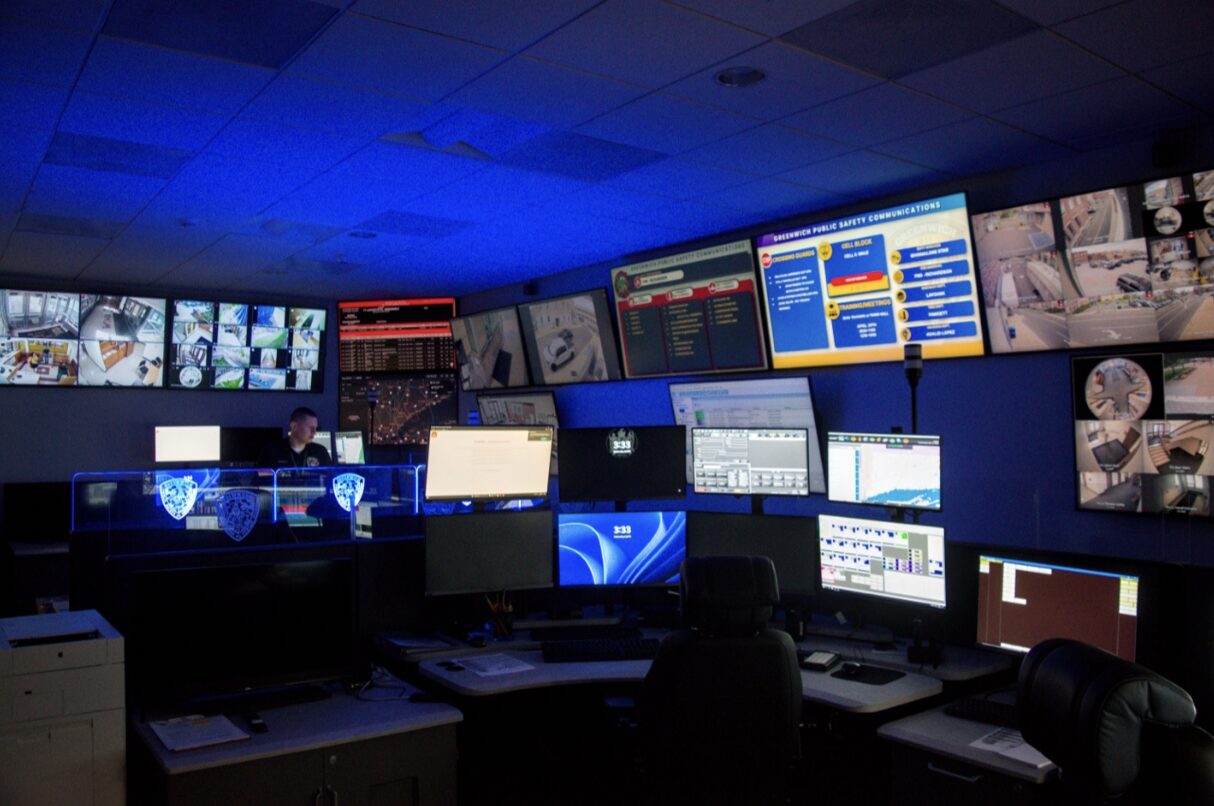
Nicholas Didelot, manager of public safety dispatch,works with dispatchers to handle scheduling issues, a constant battle during a time when Dispatch is facing staffing issues. April 16, 2026 Photo: James Bonney
Noise complaints, barking dogs, or minor quality-of-life issues should instead be directed to non-emergency lines.
“It’s not because we don’t want to help,” Didelot said. “It’s about keeping the workflow efficient so we’re ready for real emergencies.”
Beyond logistics and call volume, dispatchers also navigate the emotional weight of the job, often acting as the first calm voice in moments of crisis.
“There’s no perfect way to prepare somebody for those very serious calls,” Didelot said.
Among the most difficult are calls involving suicides, where dispatchers must quickly gather information while managing highly distressed callers.
“You have to remain calm,” he said. “We train people to control the call… to get the caller to a level where we can communicate and get help where it needs to go.”
That control can sometimes be mistaken for bluntness, but Didelot explained it is a necessary technique.
“We’re being firm because we have to be,” he said. “We need to help them help the person they’re calling about.”
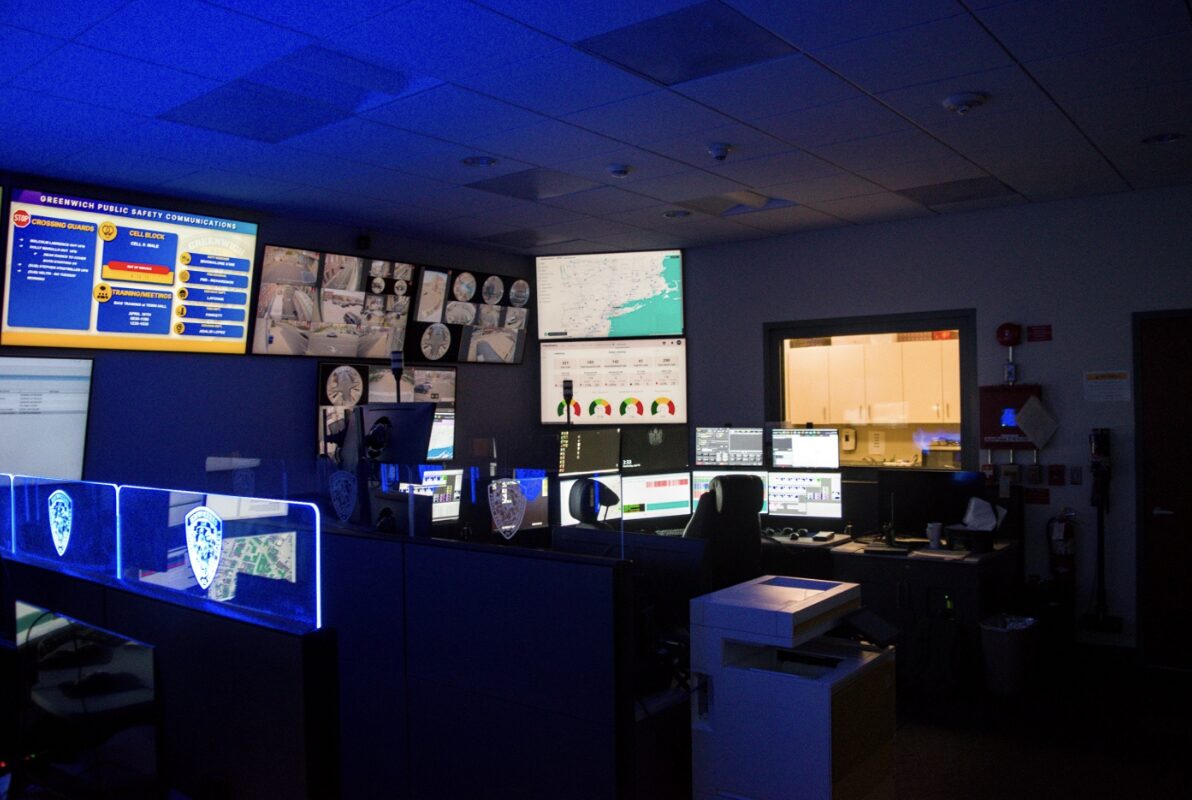
One of four Dispatch stations in the department. Allowing them to handle all calls from Police, Fire, and EMS. April 16, 2026 Photo: James Bonney
Even with experience, some calls leave a lasting impact.
“Those are the ones that stick with you,” he said, recalling particularly difficult incidents over the years.
To cope, dispatchers rely on small but effective routines, stepping away briefly, decompressing after shifts, and leaning on one another for support.
For Didelot, even the drive home marks a transition.
“By the time I pull into the driveway… I’m pretty good,” he said.
Still, the work inside dispatch continues to evolve. Advances in technology have transformed the role, allowing dispatchers to coordinate in real time with neighboring agencies, track vehicles across jurisdictions, and support investigations far beyond town lines.
Much of that coordination happens quietly, behind the scenes.
“A lot of what happens to clean up the town after a storm… we’re the ones coordinating it,” Didelot said. “It’s everyone sitting in these chairs.”
While residents may never see the dispatch room, its impact is felt across the community, in faster response times, coordinated emergency efforts, and the steady presence of someone ready to answer the call.
And for those making that call, knowing when to dial 911 can make all the difference.