By James Bonney
On Thursday community members, advocates, physicians and researchers gathered in Greenwich to mark Rare Disease Day, standing together in recognition of the families in town and around the world navigating diagnoses that are often isolating, complex and life-altering.
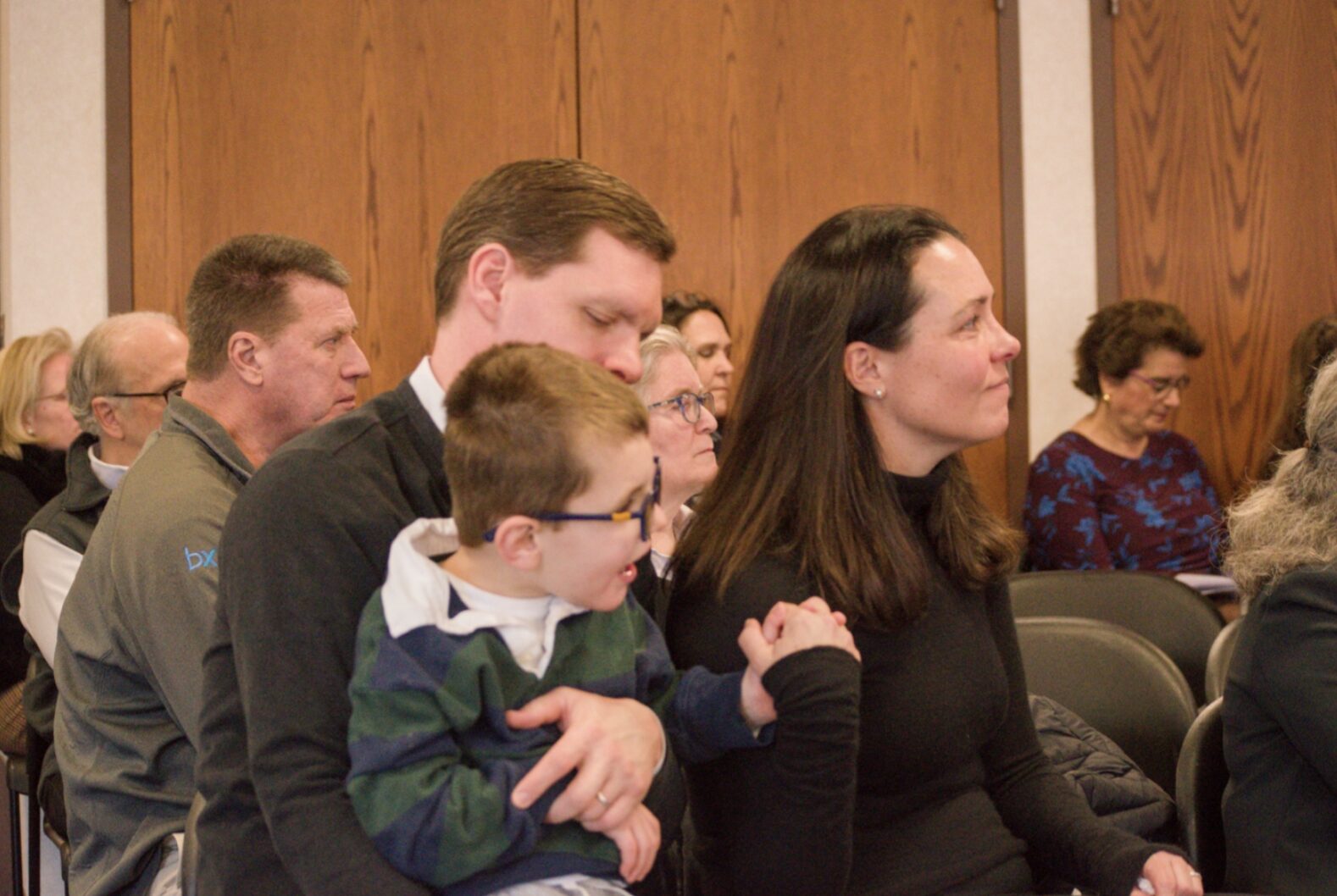
The Chiavaroli family at the Rare Disease Day event at Greenwich Town Hall. Feb 26, 2026 Photo: James Bonney
First Selectman Fred Camillo opened the event by reflecting on the power of progress in medicine and the importance of hope. He spoke about losing his sister to leukemia in 1968, when childhood leukemia was considered a death sentence. Today, he noted, the cure rate exceeds 90 percent.
“We’re not at 100 percent,” he said. “And that’s just leukemia. There are so many others.” His message underscored the afternoon’s theme: Keeping the focus on rare diseases gives families hope, and progress is possible.
The proclamation formally declared February 26, 2026 Rare Disease Day in the Town of Greenwich. He called on residents to recognize the impact of rare diseases on local families and to honor those whose lives have been shortened by them.
Throughout the program, speakers returned to a striking statistic: 1 in 10 Americans lives with a rare disease. While each diagnosis may be uncommon, collectively they impact millions, making rare diseases not so rare at all.
In his proclamation, Camillo noted there are over 7,000 identified rare diseases and collectively the number of people living with a rare disease is equivalent to the population of the world’s third largest country.
Greenwich and Connecticut based rare disease foundations including the Golden Lights Foundation, Dana’s Angels Research Trust, Hopper-Belmont Foundation, Fibrolamellar Cancer Foundation, National Organization of Rare Disorders Rare Cancer Coalition, Connecticut Rare Action Network, Defeat Adult Refsum Everywhere, Sarcoma Alliance for Research through Collaboration and others have taken a leadership role in raising awareness for rare diseases.
Veronica Chiavaroli, one of the event’s organizers and a parent of a child with a rare genetic condition, brought both urgency and warmth to the gathering. Introducing the speakers, she emphasized the importance of community partnerships and the collaboration between families, researchers and civic leaders.
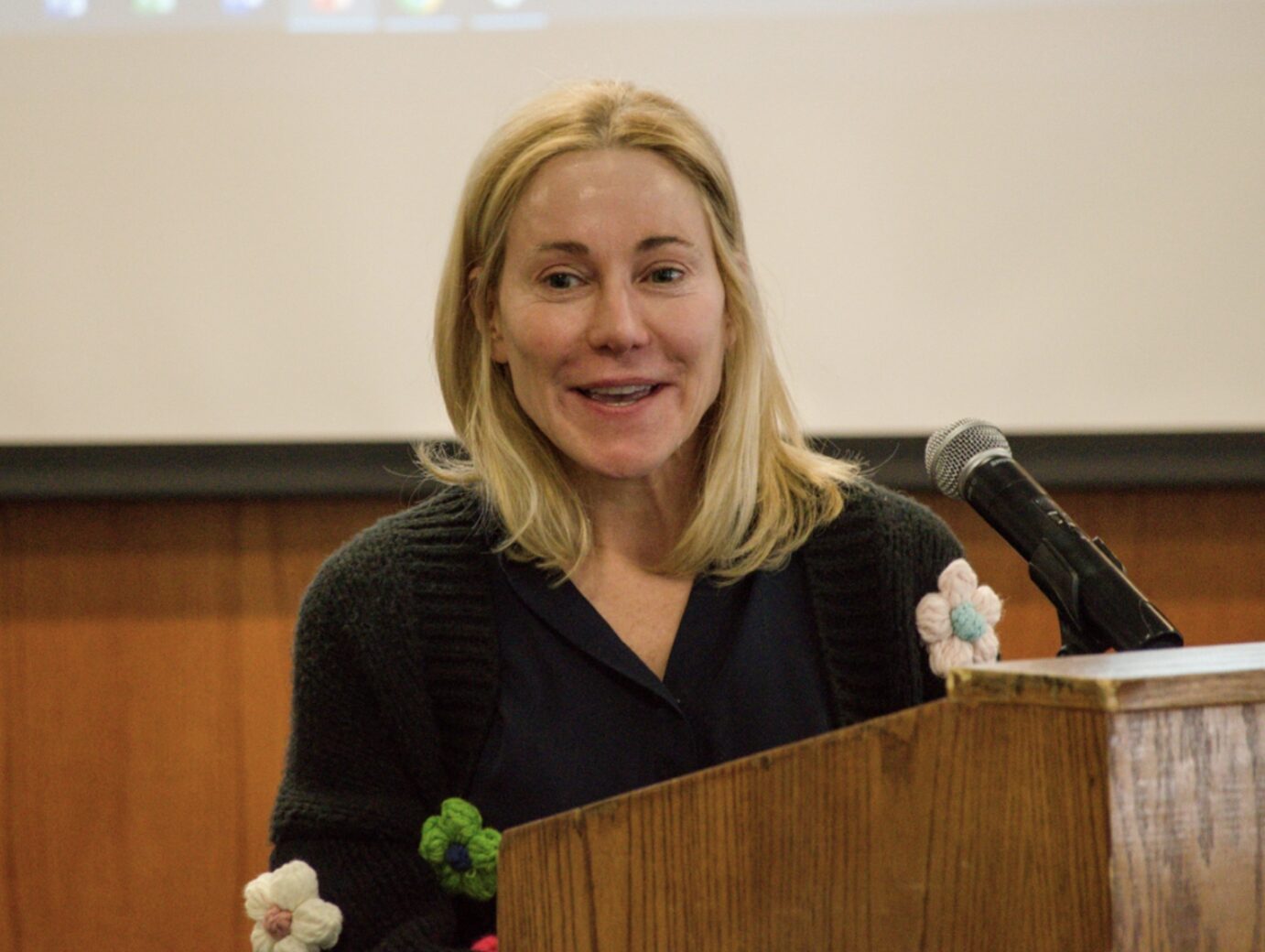
Caroline Martinez, M.D. shares a story about a mother in 1886 who traveled across France to find a cure for rabies for her son. Explaining how one person can spark a movement, as this act started the initial waves of research into rare diseases. Feb 26, 2026. Photo: James Bonney
Later, Dr. Caroline Martinez, whom Chiavaroli credited with “fully saving my child’s life,” shared lessons from years of caring for families facing rare diagnoses.
“Every medical breakthrough starts with a single patient and their family,” she said, recounting the story of a mother in 1885 who sought out Louis Pasteur to save her son from rabies. The pattern continues today, she noted, with parents funding research, connecting scientists and pressing regulators to move faster.
She spoke about the day-to-day realities families manage, including medical appointments, school needs, therapies and insurance appeals. What families need most, she said, is coordinated care and community. In one local case, the turning point for a young girl with a rare disorder was not a new drug, but a team working together toward a single goal.
And in a moment her message resonated across the room, she recalled a mother who told her, “I really hope there’s a cure, but we love him so much, just as he is.”
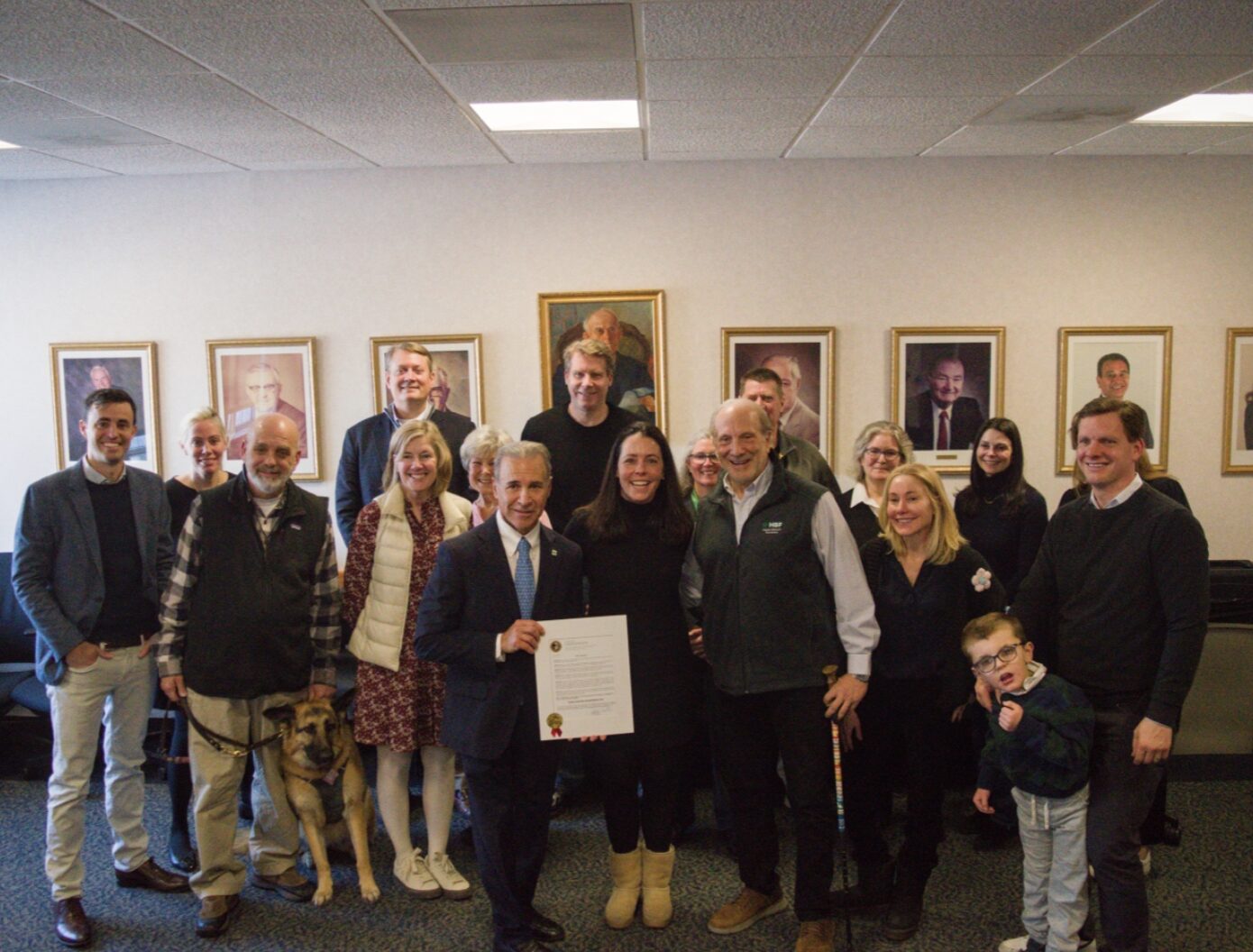
Group photo at the Rare Disease Day event at Greenwich Town Hall. Feb 26, 2026. Photo: James Bonney
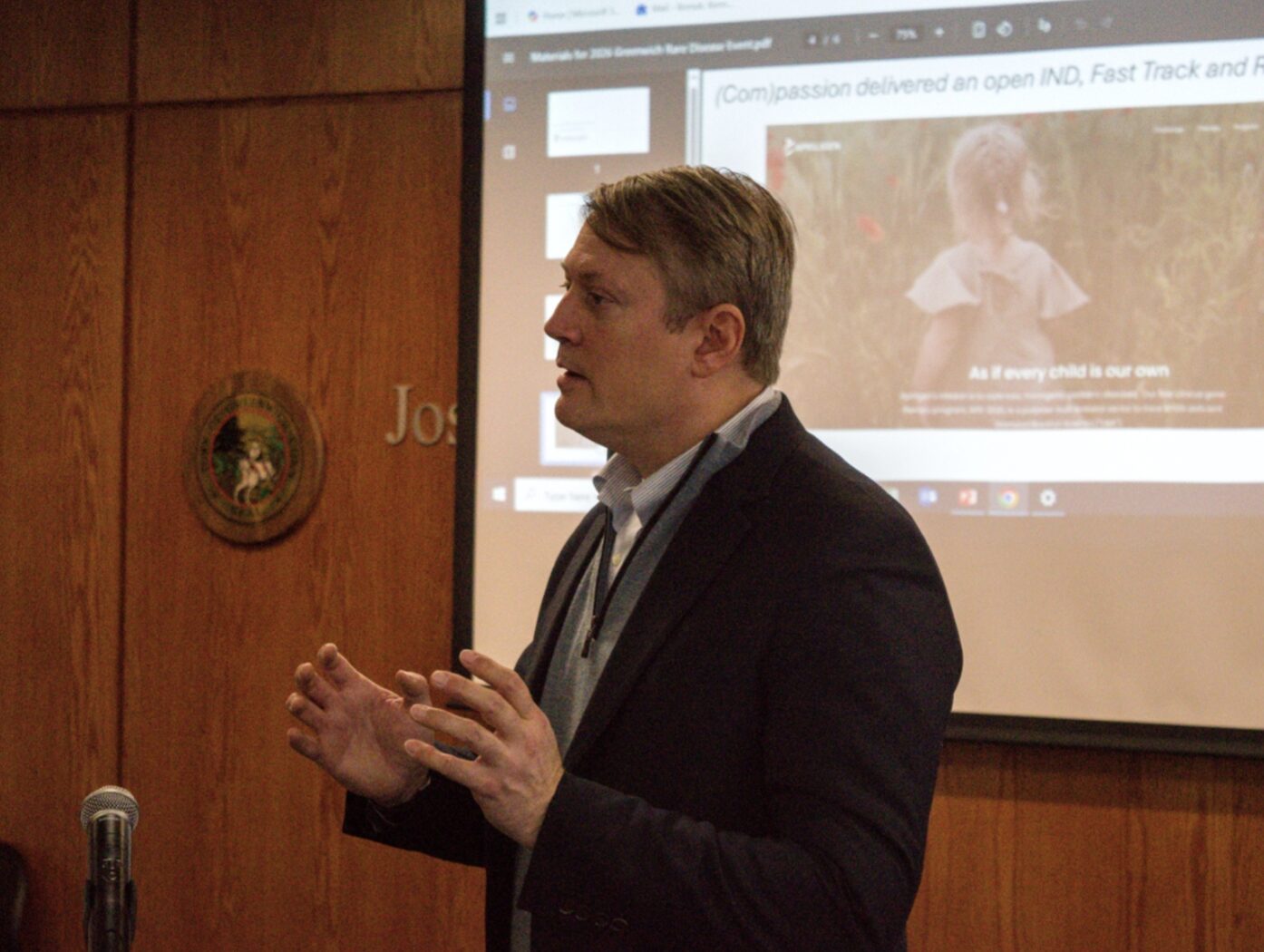
Nicholas Vita, co-founder of Apriligen, Inc., answers questions about rare diseases and research at Greenwich’s Rare Disease Day event. Feb 26, 2026. Photo: James Bonney
The program also highlighted the evolving science behind rare disease treatment. Nicholas Vita, a Greenwich resident and CEO and co-founder of Apriligen, a gene therapy company focused on ultra rare, pediatric, monogenic diseases, described how advances in gene therapy are changing timelines that once stretched six to ten years into processes that can move in 12 to 18 months.
Regulatory designations such as orphan disease and rare pediatric fast track status have shifted what is possible, he said, though funding and public awareness remain critical challenges.
Kendrick Luse, a portfolio manager at Point72 where he focuses on investments in emerging Biotech and Medical Devices, echoed the need for continued advocacy.
He noted that while investment and innovation are growing, regulatory and political pressures require ongoing community engagement.
Several speakers urged attendees to “tell five friends,” reinforcing the idea that awareness spreads person to person, and that rare disease can touch any family at any time.
Rare diseases may carry unfamiliar names, but the families who live with them are neighbors, classmates and friends. By supporting research, strengthening community networks and amplifying awareness, Greenwich helps ensure that hope continues to grow, one family at a time.
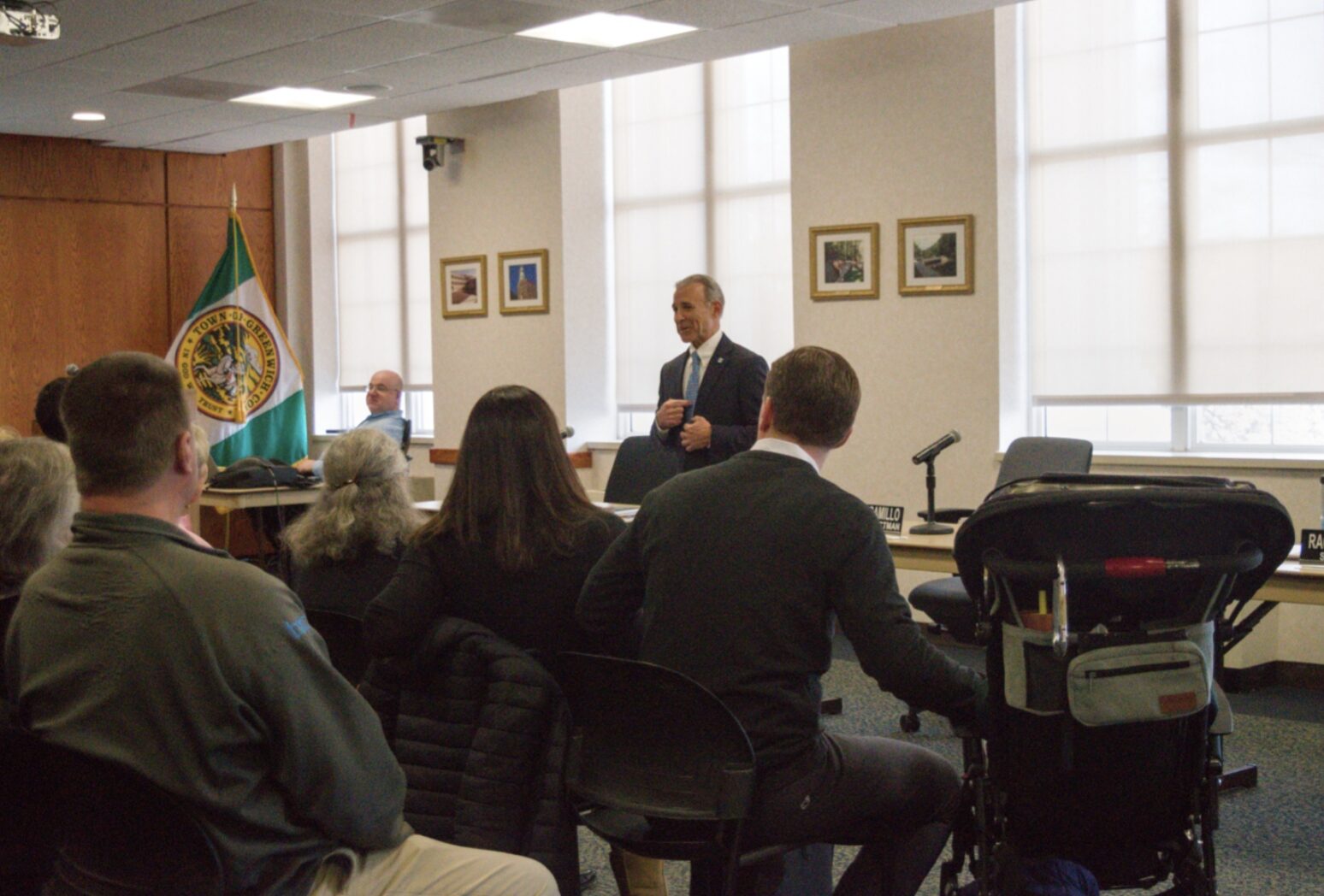
Fred Camillo welcomes attendees to the Rare Disease Day event at Greenwich Town Hall. Feb 26, 2026. Photo: James Bonney
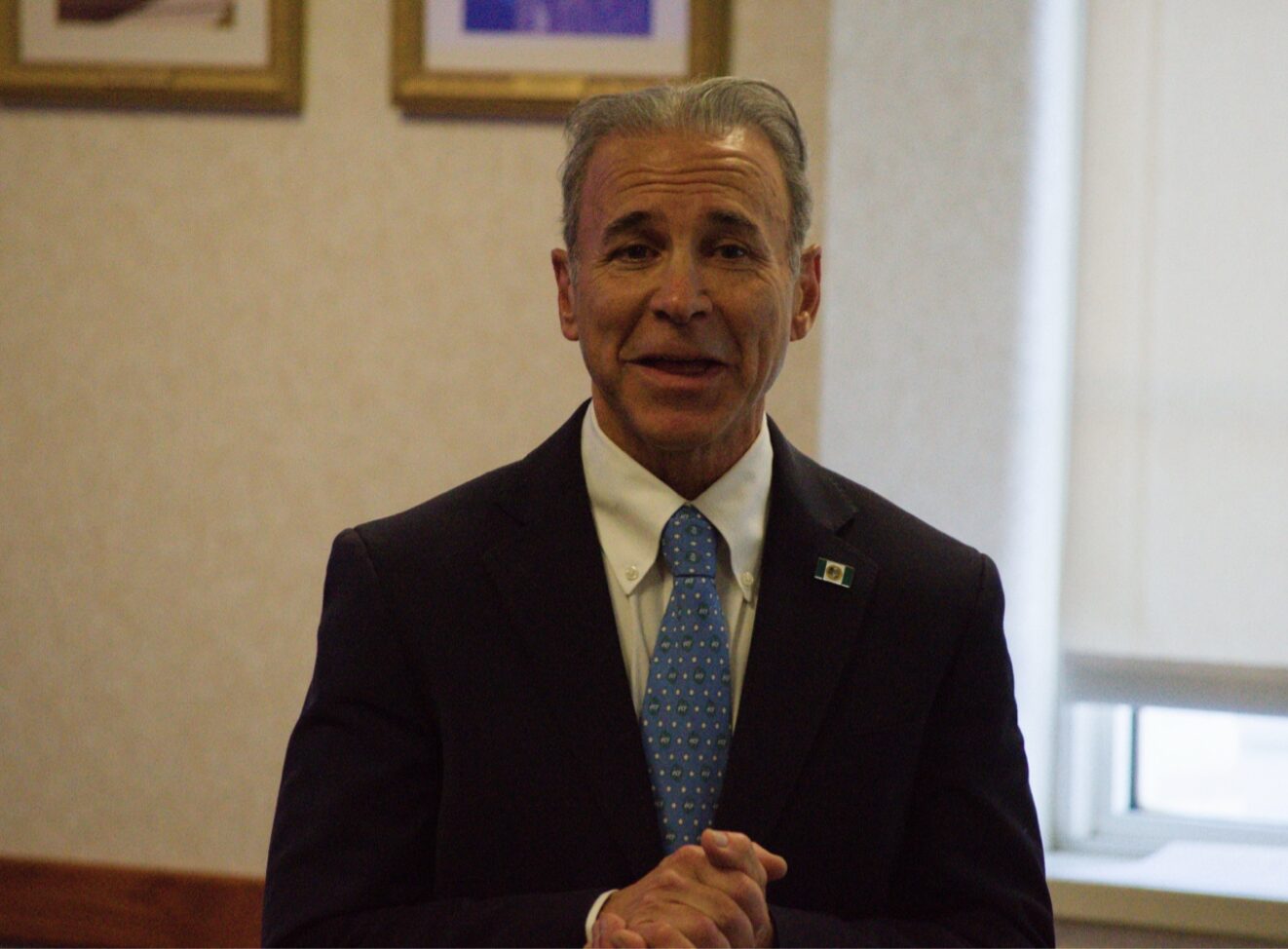
Fred Camillo proclaims Thursday as Rare Disease Day in Greenwich. Feb 26, 2026. Photo: James Bonney