Submitted by Myra Klockenbrink and Svetlana Wasserman
Every autumn, New Englanders marvel at the breathtaking tapestry of crimson, gold, and amber that transforms our landscape. Yet a few weeks later, when those same leaves fall to the ground, we consider them trash.
In Greenwich, we spend hundreds of thousands of taxpayer dollars to make them disappear. In 2024, the Town reportedly spent approximately $650,000 on leaf collection. The cost in 2026 will be higher as diesel costs soar.
Fallen leaves are not waste. They are the natural cycle of decay and renewal. As leaves break down, they return vital nutrients and organic matter to the soil, improve soil structure, retain moisture, and support the complex communities of plants, animals, fungi, and microorganisms that make healthy ecosystems possible.
Leaves are habitat.
Millions of organisms depend on leaf litter to survive the winter. Salamanders, frogs, toads, bees, butterflies, moths, and countless other insects use this natural layer for food, shelter, and overwintering. Removing leaves on a massive scale means removing essential habitat and disrupting the food web that sustains birds and other wildlife.
The consequences are measurable. A recent study found that removing leaves from just one square meter of ground led to significant declines the following spring: 45% fewer butterflies and moths, 56% fewer spiders, 24% fewer beetles, and a 44% decline in butterfly and moth species diversity.
There is an economic cost to this practice as well. We remove the leaves, then pay to transport nearly 50,000 cubic yards of them by diesel-powered trucks to an out of town composting facility. We incur the costs of fuel labor, greenhouse gas emissions, and air pollution associated with collection and transportation. The leaves are composted elsewhere, and Greenwich does not receive that finished compost back as a resource for its own parks and landscapes.
Meanwhile, we pay landscapers to apply synthetic fertilizers to replace nutrients that nature would have returned to the soil for free. We are paying to remove a resource, paying to transport and process it, and then paying again to replace what we have taken away. Our current leaf collection program subsidizes this cycle.
There is a better way, and our neighbors are showing us how.
Westchester County’s Love ’Em and Leave ’Em initiative has worked with municipalities, homeowners, and landscapers to encourage leaf mulching and on-site management.
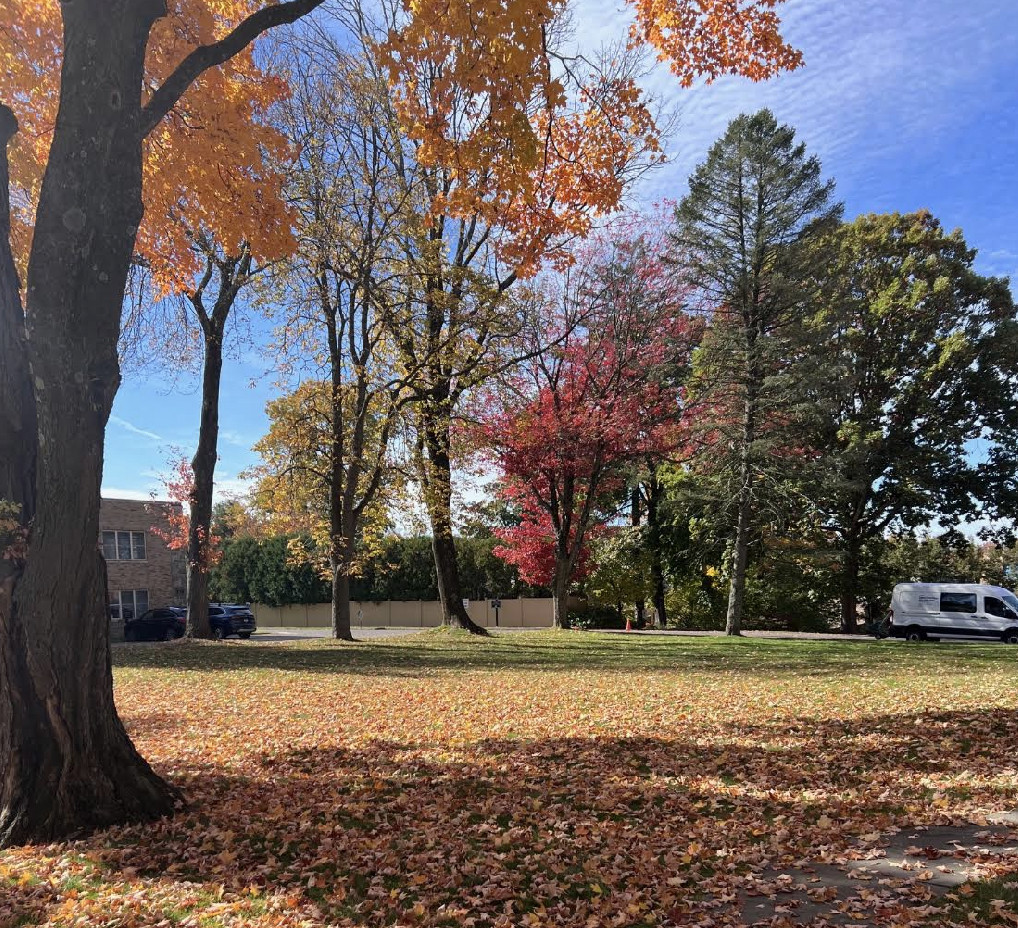
Greenwich should follow suit. Some residents have more leaves than they can reasonably manage. A sensible alternative would be a reduced, limited collection program for excessive leaves, with residents asked to retain leaves under trees and shrubs wherever possible. For leaves that cannot be managed on site, the Town could provide a limited collection service for excess leaves placed in biodegradable paper bags at the curb.
This would preserve a needed public service while reducing the volume of leaves collected, the number of truck trips, and the associated costs and pollution.
The Town could accompany this change with a public education campaign, demonstrations, and outreach to landscaping companies, helping residents understand that leaving leaves is not neglect of their property. It is caring for it.
Greenwich has made commitments to biodiversity, pollinator protection, climate resilience, and responsible stewardship of public resources. Our annual leaf collection program is an opportunity to put those commitments into practice. Greenwich can stop paying to remove its natural capital and start managing it as an asset.
Myra Klockenbrink and Svetlana Wasserman
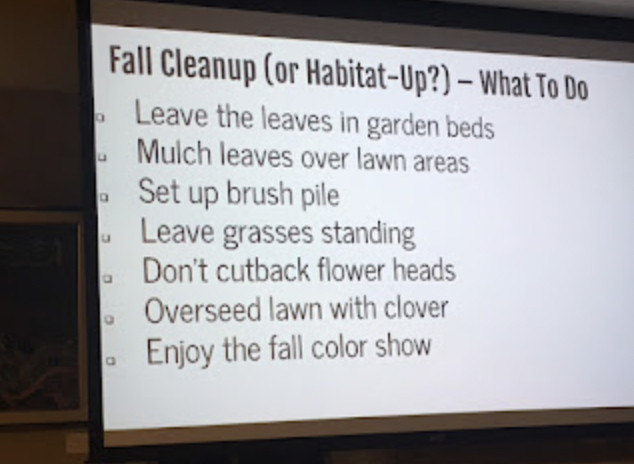
Westchester County’s Love ’Em and Leave ’Em initiative
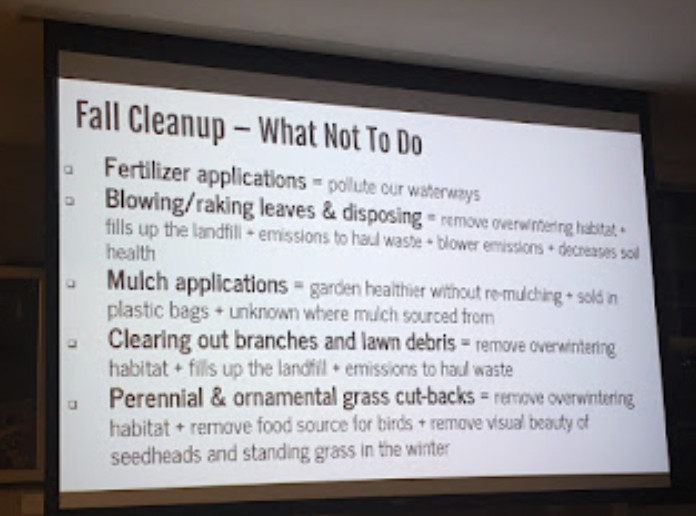
Westchester County’s Love ’Em and Leave ’Em initiative