Fourth in a series about the Greenwich High School Music Department, by James Bonney
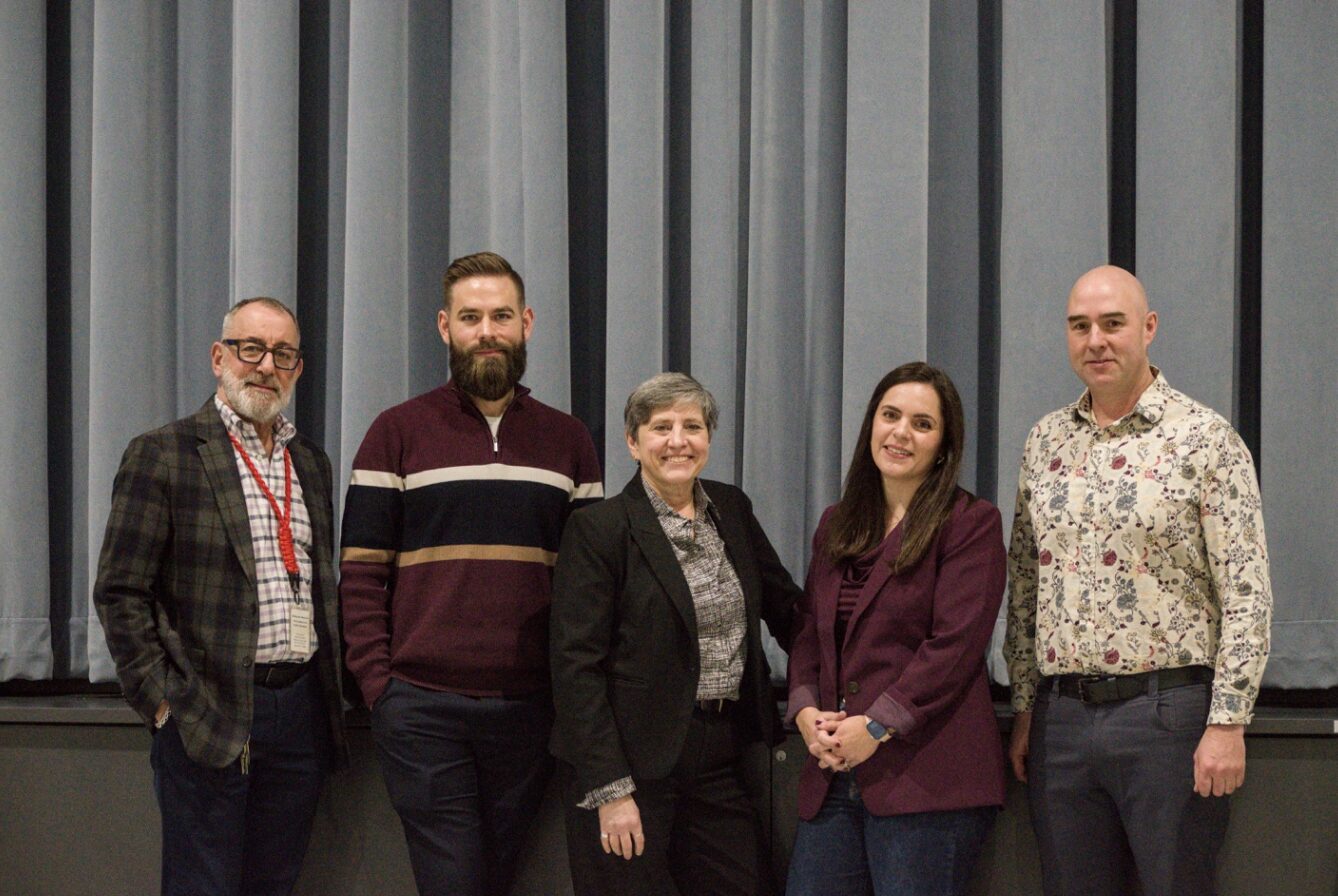
The Music Department teachers: Michael Breaux, Mr. Luke Rosenberg, Dr. Barbara Freedman, Ms. Bethany Fuscaldo, Mr. Jason Polise. Photo: James Bonney
Inside Greenwich High School’s music wing, classes vary widely. In one room, students rehearse orchestral passages in short segments. In another, a choir breaks down vowel shapes and phrasing. Elsewhere, band students adjust balance and articulation, while music production students build tracks on computers.
Despite the differences in discipline and teaching style, the department’s five music teachers described a shared approach to instruction and collaboration that shapes how the program functions as a whole.
The department includes Michael Breaux, band director; Bethany Fuscaldo, orchestra director; Luke Rosenberg, choral director; Barbara Friedman, music production teacher; and Jason Polise, who teaches modern band, guitar, jazz ensemble, and electronic music.
Each teacher brings a different background and specialization, but all described their work as part of a collective effort rather than isolated classrooms.
Ms Fuscaldo said orchestra classes require students to function as a team, often across multiple grade levels and experience levels.
“These are not classes where everyone is in the same math class or the same English class,” Fuscaldo said. “You get all walks of life in one room.”
She said one of her priorities is helping students understand their responsibility to the group.
“We’re only as good as our weakest link,” she said. “So how do we make sure everyone feels supported and prepared?”
Breaux described band rehearsal as a balance between structure and listening. While technical accuracy matters, he said students are consistently asked to evaluate sound and make adjustments together.
“What are we hearing?” Breaux said. “Is it in tune? Is it balanced? Is it blended?”
He said that approach pushes students to take ownership rather than rely solely on direction from the podium.
Rosenberg said choir instruction involves helping students understand how their individual voices fit into a larger ensemble, while still valuing each singer’s sound.
“I’m never trying to erase a student’s voice,” Rosenberg said. “But I am teaching them how to blend and function as part of an ensemble.”
Rosenberg also said understanding the cultural and historical context of music is a priority.
“We don’t want students just singing notes,” he said. “We want them to understand where the music comes from.”
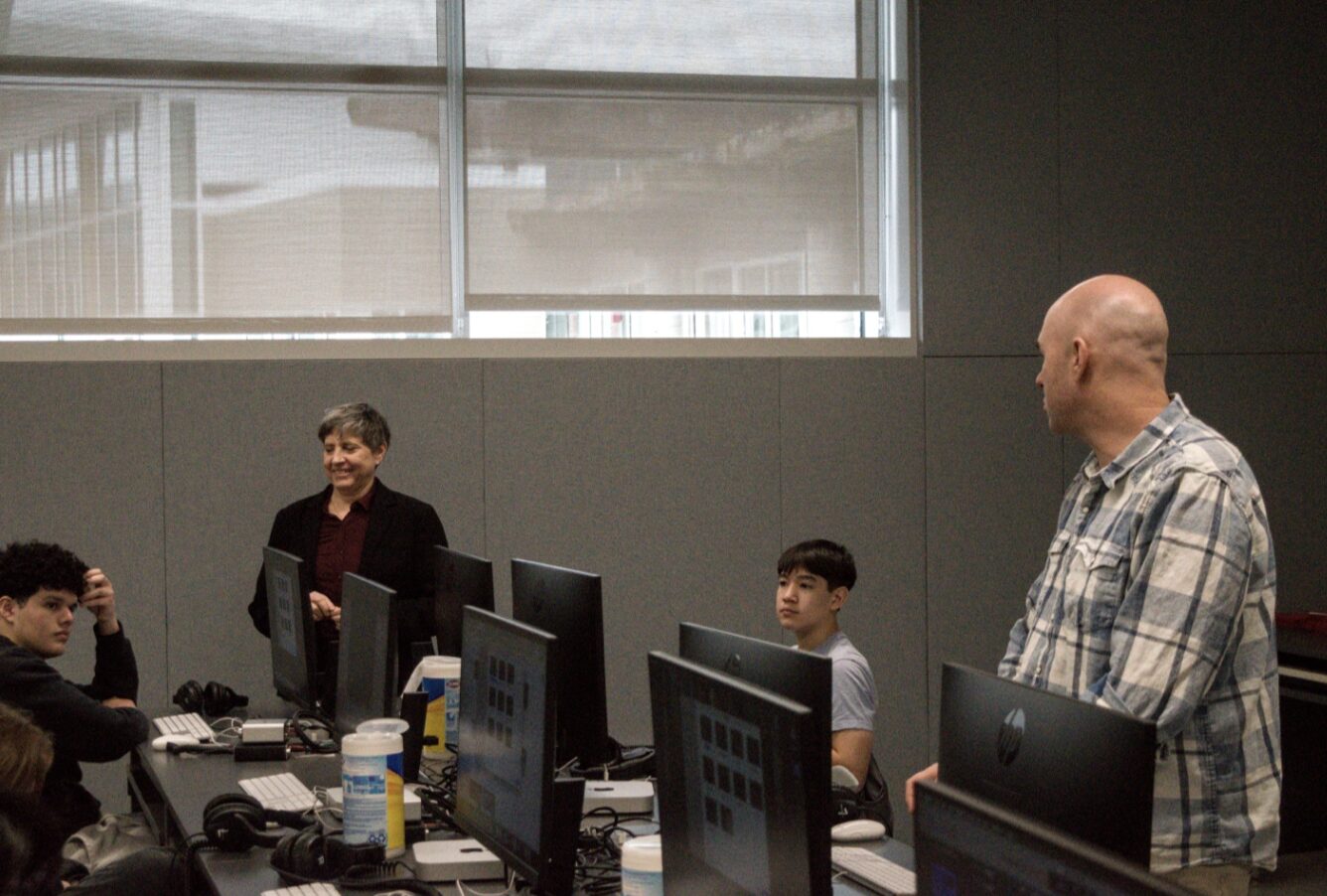
Barbara Friedman and Jason Polise teach an electronic music class. Photo by: James Bonney
Teaching beyond performance
Across interviews, teachers emphasized that music classes are structured to teach skills that extend beyond performance.
Ms Fuscaldo said orchestra students learn to meet deadlines, pay attention to detail, and submit work they are proud of.
“If you miss something small, the whole group hears it,” she said.
Mr. Breaux said band classes emphasize preparation and intrinsic motivation.
“I can’t practice for them,” he said. “They have to decide to care.”
Polise described ensemble classes as places where students learn adaptability.
“When someone changes what they’re doing, everyone else has to respond,” Polise said. “That’s not just music.”
He said those moments teach students to adjust quickly and work collaboratively.
Friedman said her music production classes focus on creation and problem solving.
“They’re making something from nothing,” she said. “That takes persistence.”
She said students are responsible for managing long-term projects, refining their work, and meeting technical expectations.
“It’s serious work,” Friedman said, “even though it looks different from a traditional ensemble.”
Teachers said collaboration among faculty is essential, particularly for department-wide performances and shared initiatives.
Fuscaldo described planning as a collective process.
“Everybody has an equal say,” she said. “If something doesn’t work for one part of the department, we adjust.”
Rosenberg said the department’s ability to work together developed over time.
“We all came in with different experiences,” he said. “We’ve merged those into something that works here.”
Polise said the variety of courses offered reflects an intentional effort to create multiple entry points for students.
“We try to give students a broad range of experiences,” he said, “so they can find something that connects with them.”
Friedman said introductory courses are designed to be accessible while still rigorous.
“If you take one class and never come back, you still leave with skills you can use,” she said.
One feature that teachers highlighted is the opportunity to work with students over several years.
Rosenberg said seeing students grow from freshmen into seniors shapes how he approaches teaching.
“You get to watch them grow up,” he said. “That’s not something every teacher gets.”
Breaux said long-term relationships allow teachers to see changes that happen gradually.
“Growth isn’t always obvious day to day,” he said. “But over four years, it’s significant.”
Friedman said students often discover strengths they did not expect.
“Some kids come in with no background,” she said. “By the time they leave, they’ve found something they didn’t know they were good at.”
While teaching styles differ, the five teachers described a shared philosophy centered on preparation, collaboration, and respect for students as individuals.
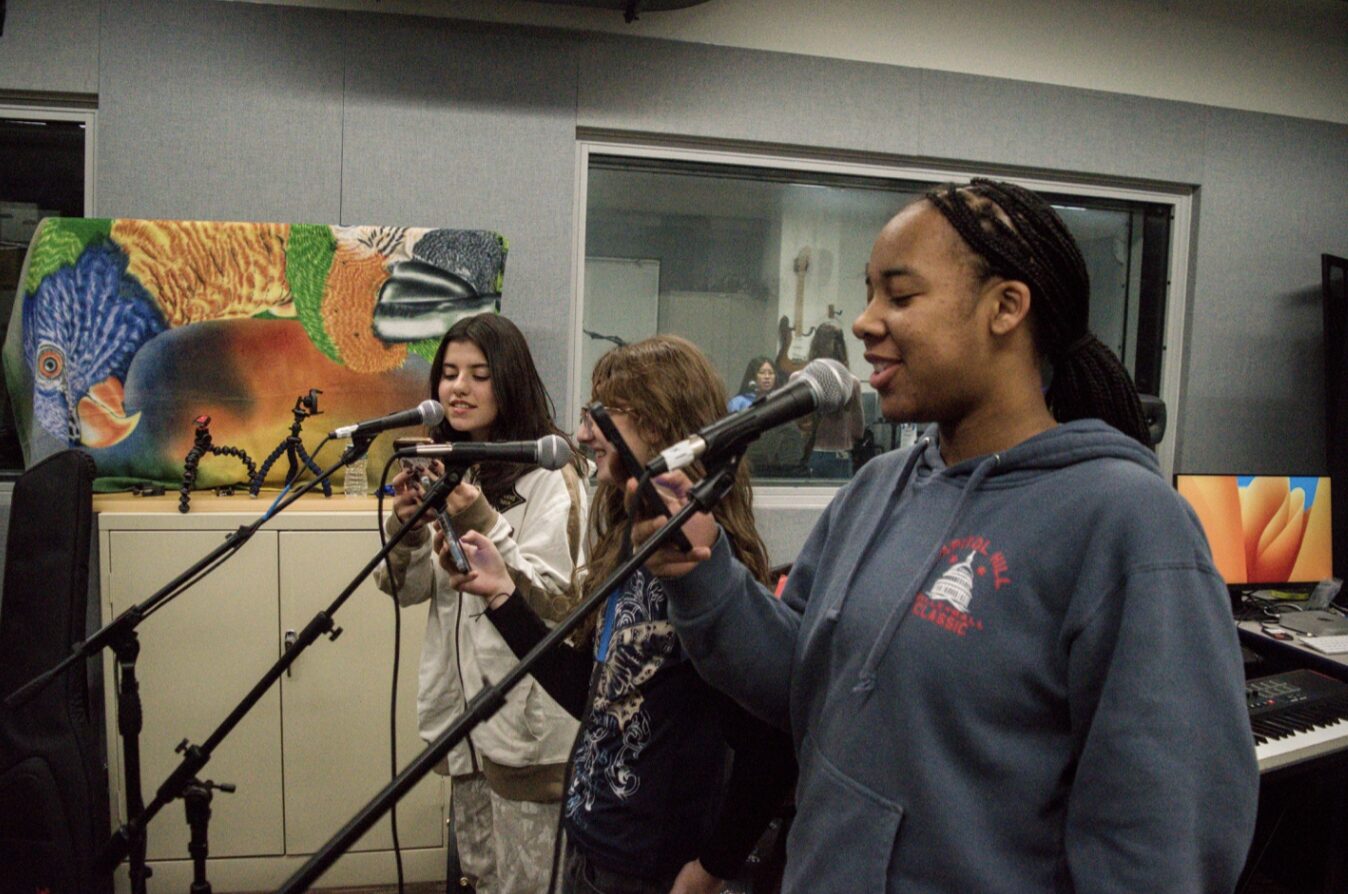
The Modern Band practices during the after-school club meeting. Photo: James Bonney
Polise said the goal is not to push every student toward a music career.
“It’s about helping them appreciate music and understand themselves,” he said.
Fuscaldo said the department’s identity is shaped by its collective approach.
“It’s not about one teacher or one class,” she said. “It’s about how everything works together.”
Rosenberg described the department as a place where students are known.
“We see them for years,” he said. “That matters.”
For the teachers, the program’s success is measured less by individual accolades than by the consistency of expectations across classrooms.
“The music is important,” Breaux said. “But the habits students build are just as important.”
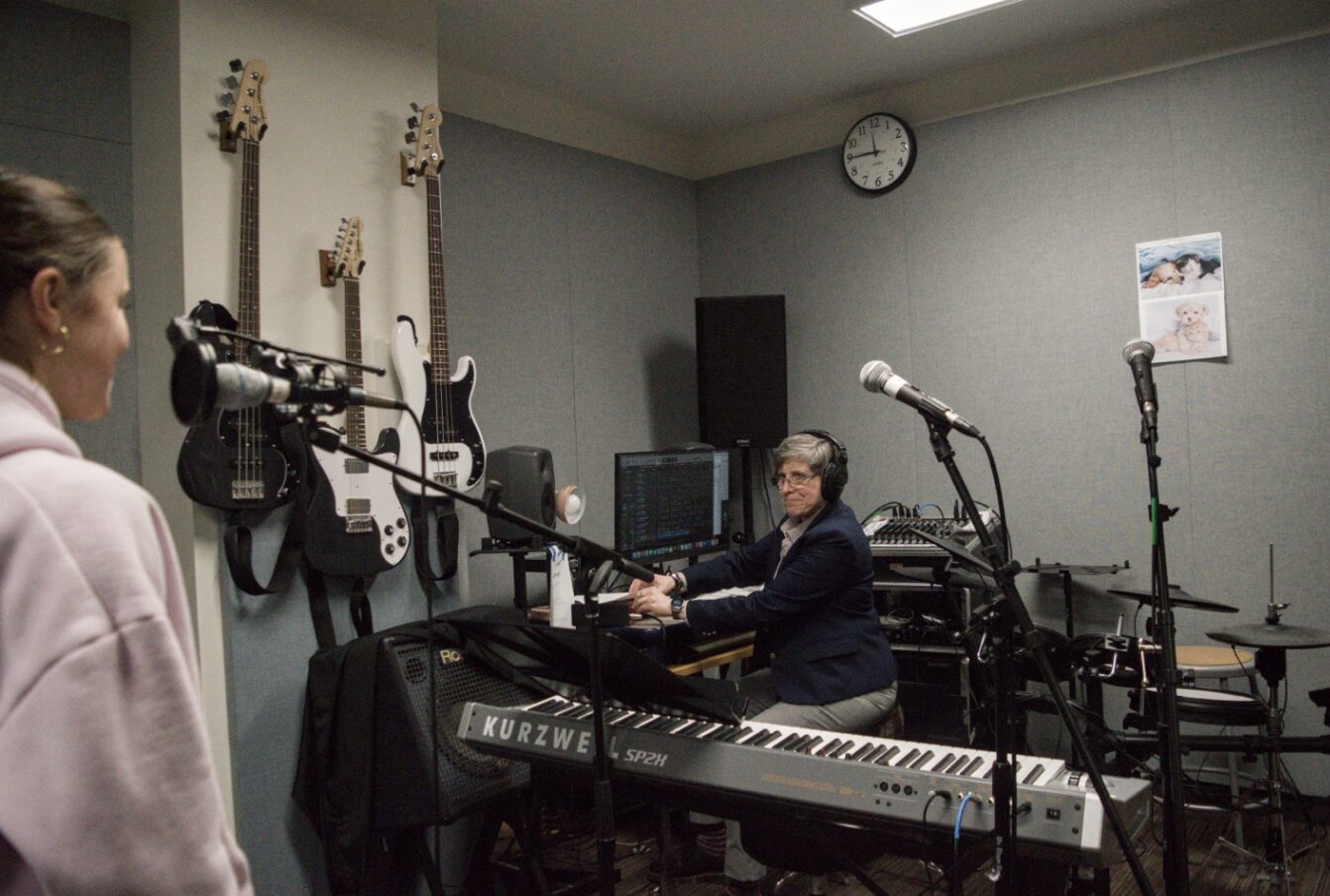
Barbara Friedman records a student’s DJ Tag as part of the studio production project. Photo: James Bonney
See also:
Behind the Scenes of Candlelight at GHS: Building a Department-Wide Performance
March 9, 2026
Feb 25, 2026
From Freshmen to Leaders: How Greenwich High School Music Students Grow over Four Years
March 3, 2026