Third in a series about the GHS music department by James Bonney
For audiences, Candlelight appears as a continuous winter performance that moves seamlessly between ensembles. Choirs, bands, orchestras and smaller groups rotate on and off the stage while music continues without interruption.
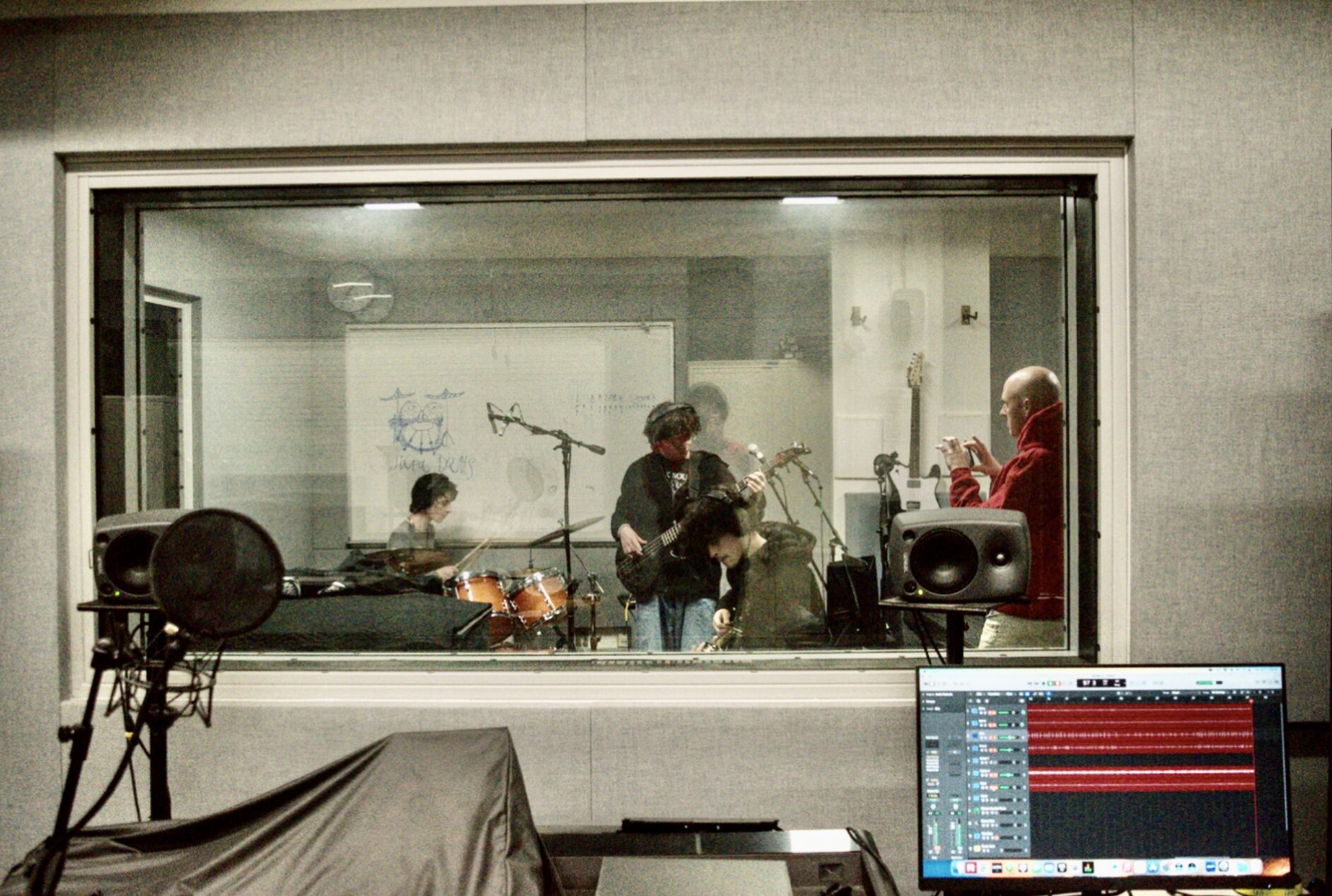
GHS students rehearse together during a music class, practicing their instruments as part of the modern band program. Jan 4, 2026 Photo: James Bonney
Behind that flow is a planning process that begins months earlier and depends on coordination across the Greenwich High School music department.
Unlike other concerts, Candlelight involves every major ensemble and requires shared decision-making among teachers, as well as an accelerated rehearsal timeline for students.
“Candlelight is different because it involves everybody,” said Bethany Fuscaldo, the orchestra director. “So, the planning looks different from the start.”
Fuscaldo said the department begins planning future performances well before the current school year concludes. After each concert season, teachers hold a post-concert reflection to evaluate what worked and what needs refinement.
“In January, right after the concert, we reflect,” Fuscaldo said. “Before we leave for summer break, we’ve basically already picked out repertoire and placed orders for anything we don’t have.”
That early planning allows teachers to map out pacing for the following year, but Candlelight compresses that timeline.
Fuscaldo said orchestra students typically have about six weeks between the first concert of the year and Candlelight to learn new material.
“That’s a tight window,” she said.
Because Candlelight involves multiple ensembles, teachers said planning is collaborative rather than hierarchical.
“Everybody has an equal say,” Fuscaldo said.
“Someone might bring an idea, we look at it, and if it doesn’t work logistically or musically for everyone, we scrap it.”
Luke Rosenberg, director of choral music, said the department’s approach has evolved through shared experience.
“We all came in with different backgrounds,” Rosenberg said. “We merged those experiences into what Candlelight looks like now.”
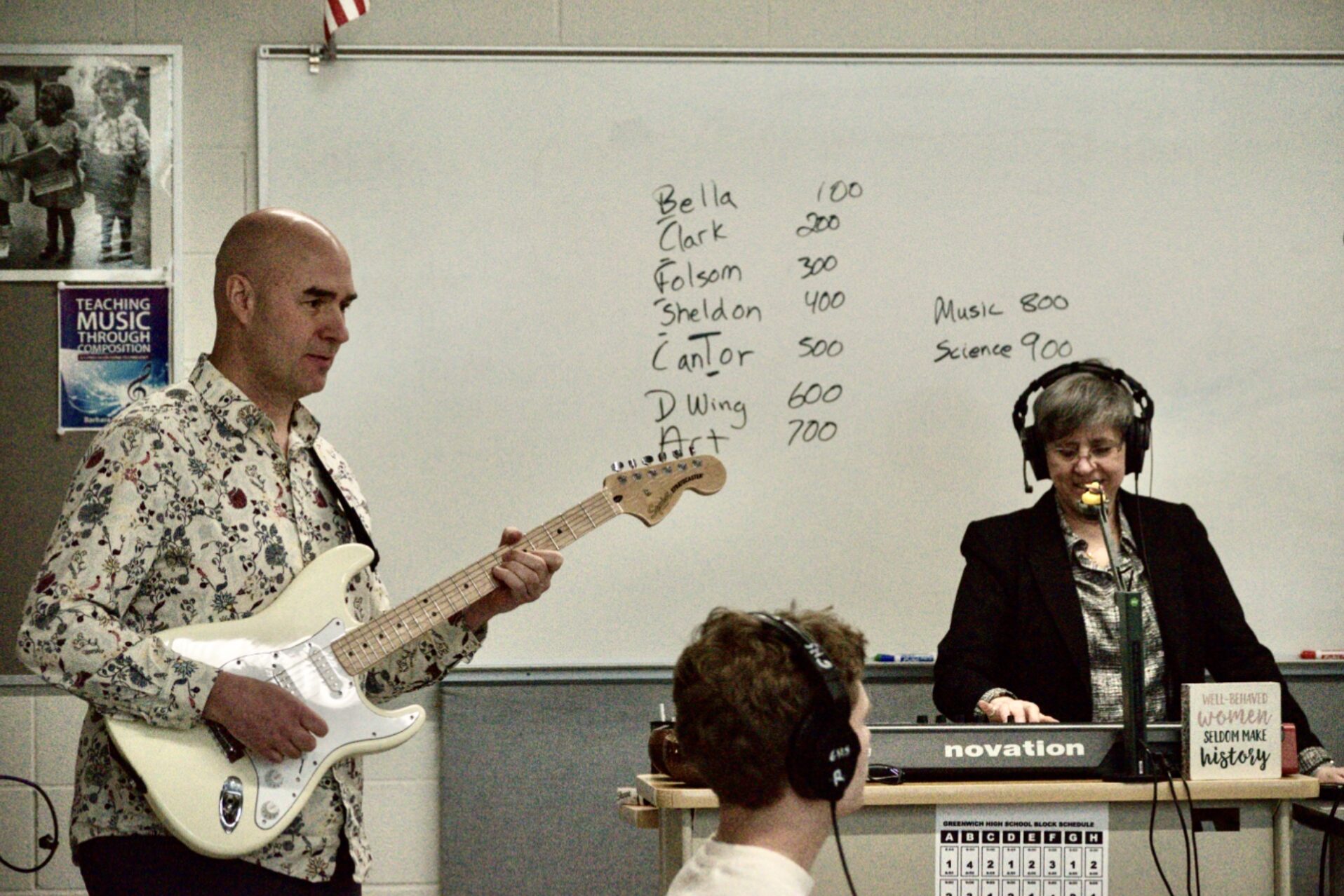
Freedman and Polise teach electronic music class. Jan 5, 2026. Photo: James Bonney
Coordinating across ensembles
Teachers said one of Candlelight’s primary challenges is alignment across classes that are normally taught separately. Choir, band, orchestra, and music production students rehearse on different schedules, with different ensemble sizes and performance norms.
Michael Breaux, the band director, said coordination requires careful sequencing.
“You’re not just thinking about your own group,” he said. “You’re thinking about timing, transitions, and how one ensemble hands off to the next.”
Candlelight’s format relies on continuous music, with ensembles moving on and off stage while other groups perform. Teachers said that requires students to understand not only their own music, but how it fits into the larger program.
Fuscaldo said that planning extends beyond repertoire to include stage movement and timing.
“There’s a lot happening that the audience doesn’t see,” she said.
Because rehearsal time is limited, teachers said preparation methods are intentional.
Rosenberg said his approach depends on the complexity of each piece. Some music begins with sight-reading to develop literacy. More complex pieces may begin with listening, allowing students to hear a target sound before rehearsing.
“If it’s more complicated, having them listen first helps,” Rosenberg said. “They can hear what we’re working toward.”
He also described balancing different learning methods, including teaching by rote, where students repeat phrases sung by the teacher, alongside traditional reading.
“That helps develop the ear,” Rosenberg said. “But it can’t be the only pathway.”
Breaux said band rehearsals during Candlelight preparation emphasize listening and adaptability.
“We’re constantly asking, ‘What are we hearing?’” he said. “That’s essential when your part of something this coordinated.”
Teachers said that during Candlelight preparation, rehearsals often focus less on individual mastery and more on ensemble balance and timing.
Rehearsals beyond the school day
Students said Candlelight preparation extends beyond regular class periods.
Nicole Kosinski, a junior in choir, said preparation included in-school rehearsals that replaced other classes, as well as after-school practices.
“It was definitely a rigorous process,” Kosinski said. “A lot of running it again and again.”
She said the experience was different from typical choir rehearsals because students worked alongside the entire music department rather than within their usual ensemble.
Ethan Shi, a freshman clarinetist, said Candlelight stood out as his first high school concert because of its structure.
“It felt more organized than middle school concerts,” Shi said.
Teachers said those extra rehearsals are necessary to manage the logistical demands of a department-wide performance.
Last year marked the first time Candlelight was produced in its current format. Fuscaldo described that first year as a learning experience.
“We were flying the airplane while we were building it,” she said.
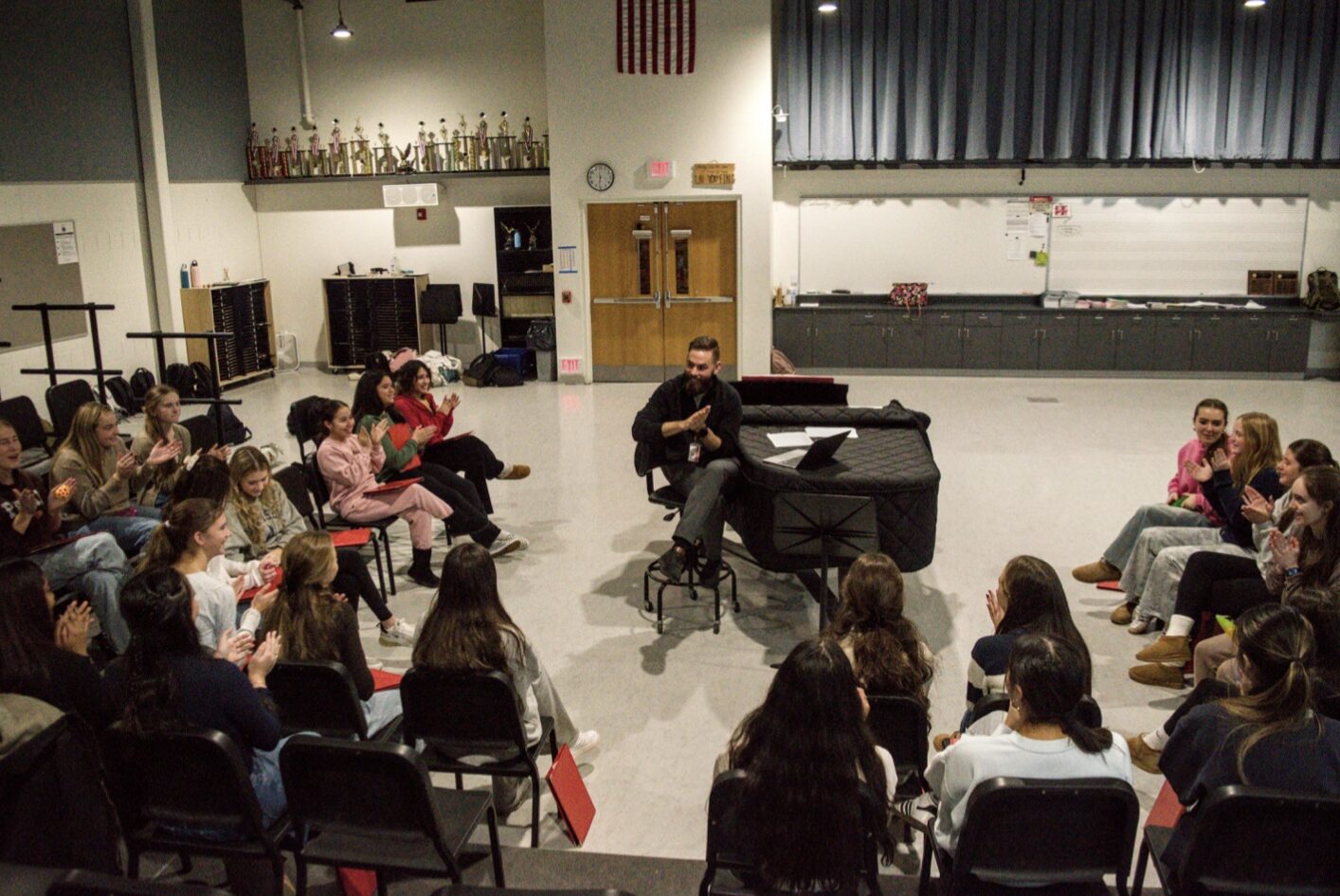
Students rehearse together lead by Rosenberg during a music class, practicing for choral performance. Jan 6, 2026. Photo: James Bonney
She said this year felt more controlled because the structure was already established.
“We had a form,” Fuscaldo said. “This year was about refining it.”
Teachers said refinement included adjusting transitions, improving pacing, and clarifying movement patterns for students.
Breaux said experience helped reduce uncertainty.
“Once you’ve done it once, you know where the pressure points are,” he said.
Students navigating complexity
During the performance, students are responsible not only for playing or singing, but also for moving quickly and quietly between positions.
Teachers said that level of coordination requires students to be aware of the entire production, not just their own part.
Students described learning how to navigate those expectations during rehearsals.
Kosinski said being part of Candlelight meant thinking beyond her usual role in choir.
“You’re aware of everything that’s happening,” she said.
Teachers said that awareness is built intentionally, with students reminded that their timing affects others.
Teachers emphasized that much of Candlelight’s work happens outside public view, including planning meetings, extra rehearsals, and logistical coordination.
“There’s a tremendous amount of work that goes into making it look seamless,” Fuscaldo said.
Breaux said that work includes not only rehearsing music, but managing schedules, equipment, and student movement.
Rosenberg said the result reflects collaboration across the department.
“There’s no better example of collaboration than Candlelight,” he said.
While audiences experience Candlelight as a single evening, teachers said it represents weeks of coordinated effort across multiple classes and dozens of students.
“It’s not just a concert,” Fuscaldo said. “It’s a process.”
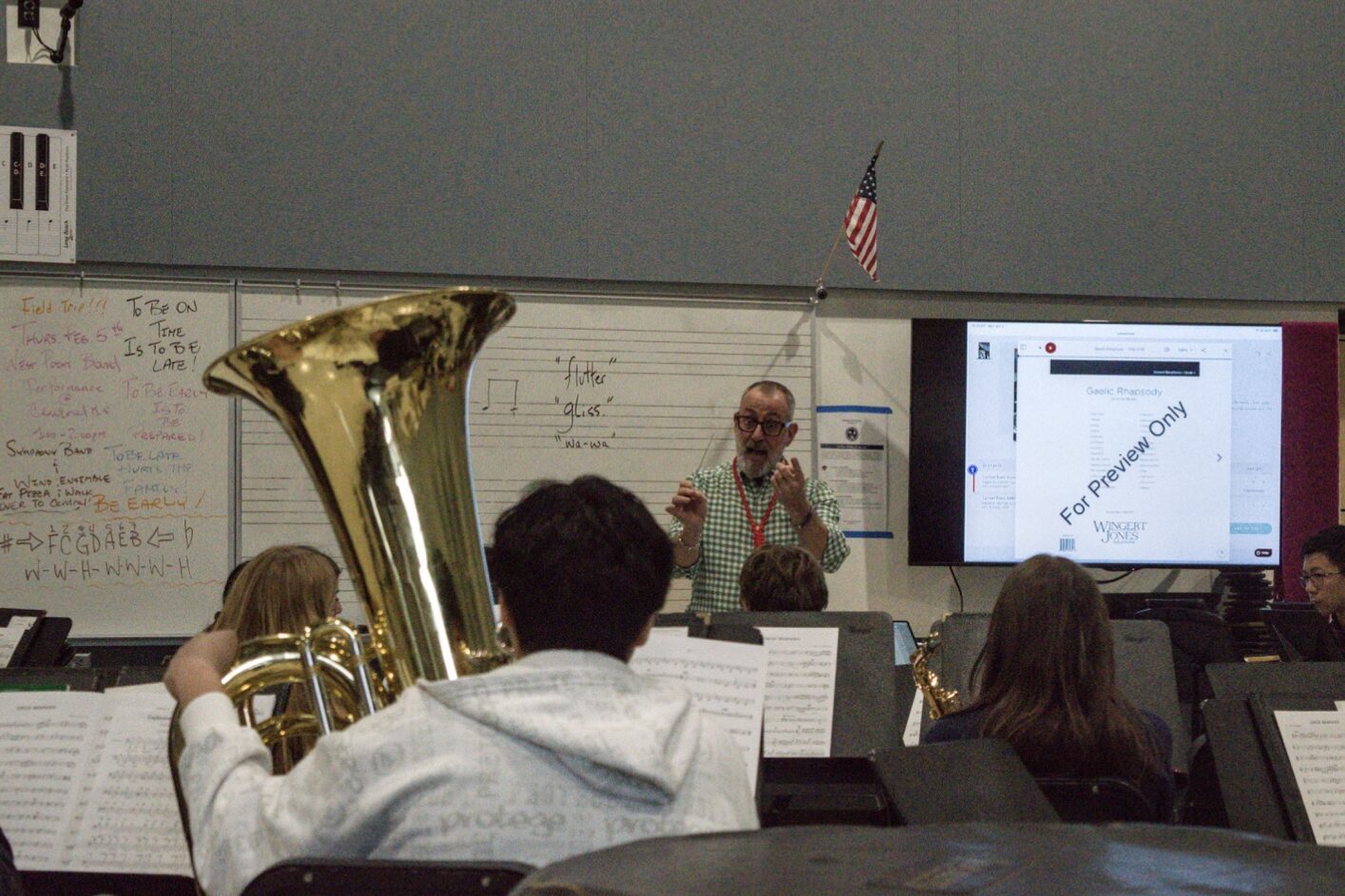
Students rehearse together lead by Michael Breaux during a band class. Jan 6, 2026. Photo: James Bonney
See also:
Feb 25, 2026
From Freshmen to Leaders: How Greenwich High School Music Students Grow over Four Years
March 3, 2026