The Greenwich High School boys outdoor track team learned a tough lesson in sportsmanship last weekend, when after celebrating coming in first in the CIAC Class LL championships in New Britain, defeating the strong team from Hamden High School, a student granted a religious exemption was allowed to compete the following day, and earn enough points to boost his team to first place.
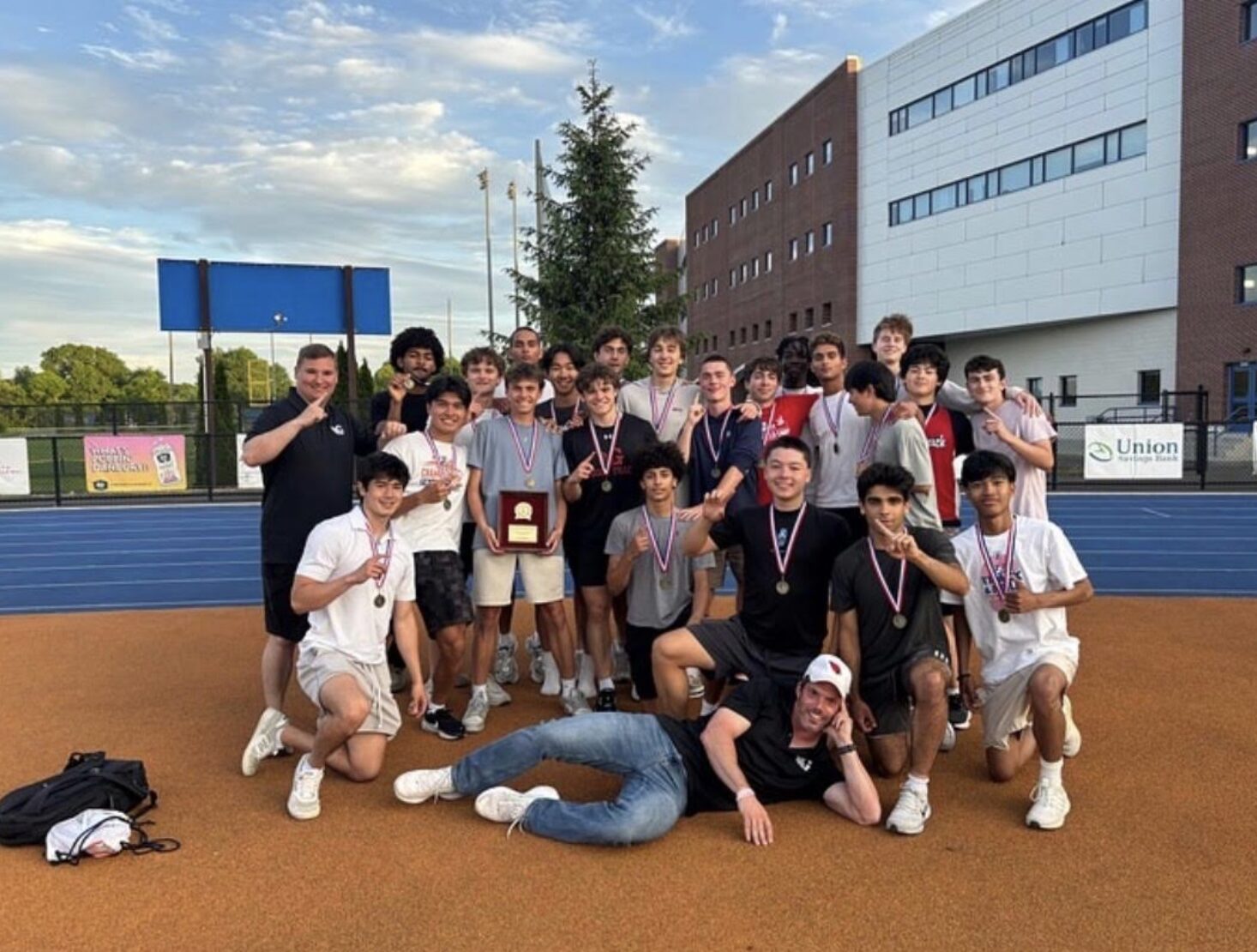
GHS outdoor track team. Contributed photo
According to the CIAC eligibility rules, Connecticut athletes can request a religious accommodation from the CIAC to avoid Saturday competitions for “sincerely held religious beliefs,” and typically that athlete’s event moves to Sunday.
Reached by phone, CIAC media director, John Holt, explained that a Hamden student-athlete’s accommodation to compete the following day, Sunday, which turned out to be a sunny day without the strong winds and rain that characterized Saturday – had been granted weeks in advance.
“That gave him the half point for the Hamden team to win,” Holt said.
The CIAC has numerous rules of eligibility for boys and girls high school athletics including ones concerning home schooled, residency, scholarship, academic standing, etc.
But Mr. Holt clarified each CIAC has a committee that comes up with rules and in this case the track committee were the ones to decide.
“It happens all the time,” he said. “But it’s making news because it involves the top two teams.”
Last Saturday the entire GHS team believed they had won and celebrated.
The score was 82-1/2 versus Hamden’s 77 points. But afterward the Cardinals learned that the Hamden team would have a player competing in New Britain the following day.
The weather in New Britain on Saturday was cold, rainy and windy. In those conditions, the GHS team strategized with the score sheet after each event, throughout the day.
Typically there is a 15-minute protest period after an event, if for example a runner is bumped into another lane by another athlete, in which case an athlete might be disqualified.
After the 2-mile event, Greenwich was up over Hamden by 7-1/2 points, and the Cardinals were excited.
The last event was the 4×400 meter relay, which traditionally serves as the concluding event of championship meets.
Greenwich knew they only needed to hold the lead, aware that Hamden had good 4×400 runners.
Hamden ended up scoring two more points on the 4×400 meter relay, but Greenwich still maintained its lead overall.
Up by 5-1/2 points at the end of the competition, the GHS team cheered and celebrated, believing they were the winners with a score of 82-1/2 to 77 over Hamden.
After the celebrating, there was an announcement for the Greenwich coaches to report to the scoring table. The team was informed that a Hamden athlete had been granted a religious exemption by CIAC to compete in the Class MM championship the following day in triple jump and long jump.
The athlete competed in Class MM but his points were filed into the Class LL from the previous day.
That Hamden athlete finished third in the triple jump, earning six points for his school’s team, resulting in the state championship over Greenwich, with a final score of 83 to 82-1/2 points.
GHS teammates were confused along with the coaches. The scores weren’t finalized until after the long jumpers and triple jumpers were awarded their medals through sixth place. All the athletes received their medals for their individual events, and scores online were marked final.
Athletes were unaware the competition was being opened back up by CIAC.
“We thought we won and it felt like they were taking it away from us,” one athlete from Greenwich said, adding that students and coaches were searching the rule books for answers.
He said no one blamed the Hamden athlete, and that a person’s religion should remain private.
But the same athlete said there are situations in which an athlete is accommodated by competing in advance, in which case the competing team knows what they need to achieve to win.
The Hamden athlete who competed Sunday earned 6 points, so Greenwich’s lead of 5.5 points wasn’t enough.
Protests have been filed and a suggestion was made that CIAC call a tie, but that was rejected.
Had the Cardinals received the championship, it would have meant they won both LL and FCIAC for cross country, indoor track and outdoor track all in one year.
Emails to GHS principal Ralph Mayo and athletic director Peter Georgiou were not returned.
Greenwich Schools director of communication Jonathan Supranowitz replied in an email Thursday, “We were aware of the situation, have spoken to the parents impacted, and are confident CIAC will handle it appropriately.”
In an email, GHS team parents David Chass and Cora Towle questioned, not the religious accommodation, but CIAC’s conduct that impacted every high school that competed last Saturday.
They said the controversy was about fairness to every team, not only Greenwich.
“The meet seemingly ended Saturday with Greenwich High School securing the championship at the conclusion of the meet before a CIAC official pulled the rug out from under Greenwich, and in a surprise twist, said the meet was not over.”
Mr. Chass and Ms Towle said, “CIAC provided this exemption and didn’t tell any of the other high schools that competed that day. They said nothing in the weeks leading up to the event, said nothing at the coaches’ meeting Saturday morning before the start of the meet, and then told only the Greenwich coach after the meet was seemingly over.
They said that the religious exemption was not at issue. They said the situation they said boiled down to bad policy, CIAC conduct and lack of communication.
“But the way the exemption was handled created an unfair disadvantage, not only for Greenwich, but for every other participating school. Hamden had information that no other school had. When each school was determining its strategy for the meet, it was doing so without critical information. As just one example, Greenwich’s coaches told their 4×400 team they only needed to finish fifth in the day’s final event to secure the championship based on the official standings. As a result, the team focused more on ensuring good handoffs and avoiding a disqualification for making a mistake than winning the race. Had it known the championship was still up for grabs, it would have approached the event differently. Greenwich coaches also allowed several kids to leave the meet early to get back for the high school’s Senior Prom that night. Had the championship been in doubt, those athletes would have stayed and competed.”
Finally they said, a different controversial decision in a high school meet last week in North Carolina was resolved by naming co-champions (See Mallard Creek (N.C.) named co-state champ after DQ overturned)
They quoted the North Carolina State Commissioner, who said, “We recognize that this situation has been emotional for the student-athletes, coaches, schools and communities involved. At the center of this matter are young people who have invested countless hours into their sport and their team. We are pleased that this matter has reached a resolution and that the accomplishments of the student-athletes involved can be recognized.”
Chass and Towle said that nearly 100 parents and student-athletes from Greenwich High School submitted the following document to CIAC for review:
CIAC HIGH SCHOOL OUTDOOR TRACK & FIELD
CLASS LL BOYS’ CHAMPIONSHIP CONTROVERSY
SEQUENCE OF EVENTS FROM GREENWICH’S PERSPECTIVE
● Class LL championships were held at Veteran’s Stadium on May 30, 2026 amid extremely challenging weather conditions of rain, cold, and extremely high winds.
● Individual track events are only considered final after a 15-minute protest period. After the 15-minute window closes, scores from the event are added to the official team totals.
● The Meet was proceeding as normal with each event closed after the normal protest period, with scores showing as normal for each event in both the event listing and subsequently in the Team Scores view. Medals were also handed out after the conclusion of each event, including Long Jump and Triple Jump, further supporting that these events were deemed completed.
● Greenwich overtook Hamden in team points after the 3200 meter race was scored, and proceeded to the final event, the 4×400 meter race, with a 7.5 point lead – these scores were posted to the Team Scores view (showing 17 of 18 events scored and official).
● In the final event, Hamden finished 2nd and Greenwich finished 3rd; resulting in Greenwich maintaining a 5.5 point lead and apparently winning the championship.
● As Greenwich was celebrating its win, an announcement was made calling the Greenwich Coach to the scoring table.
Greenwich’s coach was informed that there was a Hamden jumper who had been given a religious exemption to compete the next day at the Class MM meet in both Long Jump and Triple Jump. This was surprising because those events showed as completed and scored for the Class LLs.
● As the confusion set in, it became clear that the Meet’s Head Referee had NOT been told of this situation prior to, or even during, the meet. Further, no school coaches had previously been notified. Even when the Greenwich Coach was informed, no other coaches were notified. Greenwich coaches were stunned and immediately researched CIAC documents to understand religious exemptions policy and found no mention of any exemptions being permitted.
Subsequent inquiries showed that the CIAC Track & Field Committee and the CIAC Executive Committee were not aware either.
● Greenwich coaching staff filed an official protest at 9:30 the next morning, prior to the Class MM meet. Normal protest procedures were not followed as Greenwich coaches were not permitted to pay the protest fee, and normal signatures were not obtained on the form by the receiving officiant. No reply was given to Greenwich before the Class MM meet started, nor did CIAC officials respond to the Greenwich coaches in the timeframe they were promised.
● The allegedly exempted Hamden athlete competed at the Class MM field, under extremely different weather conditions than the prior day. The athlete’s performance was entered into the Class LL event from the day before and put him in 3rd place for the Triple Jump. This caused the previous 3rd place finisher from the day before and all other finishers to drop down one position, presumably changing every teams’ point totals. The athlete’s 6 points pushed Hamden ahead of Greenwich in the overall team point totals by 0.5 points.
● CIAC awarded Hamden the Class LL championship the day after the Class LL meet ended.
● Greenwich coaches have consulted with more than 20 high school track & field coaches and officials, and none has ever heard of a religious exemption existing or being used in this manner. This includes coaches who have been coaching for 30+ and 50+ years.
● CIAC rejected Greenwich’s protest.
● Greenwich coaches asked if there could be consideration for co-champions given this unusual circumstance, but this idea also was rejected quickly by CIAC.
POINTS OF CONTENTION
POLICIES & PROCEDURES
1) RELIGIOUS EXEMPTIONS – The CIAC handbook does not appear to include any policy related to religious exemptions. It does not appear that there is a written policy anywhere else that provides for competition on a different day, different track, different competition, or different weather conditions. Several questions arise:
a) Is there a written policy about religious exemptions? If so, how is that policy written?
b) If there is no such policy, how was the decision made to grant the exemption?
c) Who specifically made the decision to grant an exemption?
d) Was the CIAC board included in making this decision or informed of the decision?
e) Is there any precedent for such a religious exemption?
f) Is there precedent for allowing an athlete to compete after the conclusion of a meet and have his/her scores counted in the meet results?
g) If there is such a policy or rule, can CIAC explain how competing on a different day, with different competitors, and in different conditions, be fair to the other participants?
2) NFHS VS. CIAC – Henry Rondon, Assistant Director of Student Activities and CIAC Track and Field Liaison, informed the Greenwich coaches on Sunday, one day following the meet that NFHS rules supersede CIAC rules, and as such, this is where the religious exemption comes into play for this matter.
Greenwich’s coaches asked Mr. Rondon to provide this rule for their review. Mr. Rondon said he would provide it, but never sent anything to the Greenwich coaches.
Greenwich’s coaches conducted their own research and only found a rule with language pertaining to vaccines, headdresses, and jewelry for religious exemption. Greenwich’s coaches were not able to find any provisions (1) allowing an athlete to compete at an alternative meet on a different day, and (2) having those results included in a different meet.
Similar to the questions about religious exemptions and moving further into NFHS rules, the following questions exist:
a) Is there anything in CIAC’s policies or guidelines that states that NFHS rules supersede CIAC’s?
b) Is there an NFHS religious exemption policy beyond vaccines, headdresses, and jewelry related to how and when an athlete may compete? If so, why has no official provided the policy?
c) Is there an NFHS rule that allows an athlete to compete at one meet and have his/her results counted toward a different meet?
d) Is there precedent for NFHS allowing an athlete to compete after the conclusion of a meet and have his/her scores counted in a previous day’s meet results?
e) If there is such a policy or rule, can NFHS explain how competing on a different day, with different competitors, and in different conditions, be fair to the other participants?
3) THE ATHLETE IN QUESTION – To be clear, no one associated with the Greenwich program takes issue with the athlete.
He is not considered at fault here. However, his history might be illuminating and thus additional questions arise:
a) Most of the championship meets are on Saturdays, so this issue might have arisen in the past. Has this athlete ever been given religious exemptions in prior events?
b) It appears the athlete did not compete at the Division Championships and no exemption was granted. It further appears the athlete is not competing at the CIAC State Open on Saturday, June 6, and no exemption has been granted to our knowledge. If neither of those events granted an exemption, why should one have been granted for the Class LL Championships?
4) NOTIFICATION – Prior to the Class LL Meet on Saturday, there was an all-coaches meeting. Why were the assembled coaches not notified of the exemption? Further, when the Greenwich coaches were informed, only after the conclusion of the Meet’s last event, why were the other coaches not notified? All participating high schools have been impacted by this decision. Further research has revealed that CIAC allegedly was aware of this exemption for more than one month, yet it was NEVER communicated to anyone until the conclusion of the Meet. The lack of communication is not only a lack of transparency, but also robbed each and every school from making informed decisions about its participation and meet strategy.
5) CIAC DECISION-MAKING PROCESS – It is unclear who the decision makers were for the original exemption, who determined how this would be communicated before and during the meet, and lastly who was involved in the protest process and final decision. Why was the Head Referee not informed? Why were the CIAC Track and Field Committee and CIAC Executive Committee never consulted or notified? Greenwich High School’s Headmaster is a member of the CIAC board and was never informed of any exemption being granted.
6) ESTABLISHMENT OF AN EXEMPTION POLICY –
Certainly, other situations have arisen where athletes cannot compete for one reason or another (e.g., religious, academic, illness, family challenge). CIAC’s handbook is largely if not completely silent on what qualifies for an exemption. Further, there doesn’t appear to be a policy on how to request an exemption, how or who reviews and rules on exemption requests, if there is an opportunity to protest an exemption, how and when an exemption is communicated, how the exemption is implemented (e.g., competing the next day/week, the day/week before, at the same track).
CIAC must establish clear policies and procedures and include this in the Handbook. Importantly, CIAC must create a policy that does not allow for exemptions to be widely used, or taken advantage of, to protect the integrity of future competitions and ensure there is no unfair manipulation of results.
FAIR COMPETITION
1) MEET STRATEGY – At track & field events, many athletes qualify in more events than they ultimately compete. The coaches are tasked with developing a strategy to maximize his/her school’s best opportunity to win a Meet. Dozens of pieces of data inform those decisions. It is widely understood that coaches make decisions on their competitive line-up for the meet both before and during the meet itself, particularly when their team is chasing a championship.
Not being told in the month that CIAC knew about the exemption, at the pre-Meet coaches’ meeting, or at any point during the Meet, prevented the Class LL coaches from planning appropriately for their events and in choosing their competitive lineup throughout all the events. Whether by intentionality or oversight, in this instance, CIAC officials withheld pertinent information from all of the schools. In fact, only one school, Hamden, knew of the exemption and was able to factor that into their Meet strategy. Every other school was operating without complete information,
putting Hamden at an unfair advantage.
Specifically, Greenwich had multiple athletes who did not participate in an eligible event due to the score of the meet trending in its favor and because Greenwich had Senior Prom that night. In addition, a Greenwich coach told his 4×400 team they only needed to place 5th in order to secure the Championship based on the official scores posted.
Had the coaches known of the Hamden jumper’s potential to earn additional points the next day, they would have taken a completely different strategy and the athletes themselves would have pushed harder in what was thought to be the concluding event.
2) WEATHER IMPLICATIONS – To everyone at the Saturday Meet, it was clear that weather conditions were horrendous and certainly impacted the performance of those who participated. There was a 30-minute weather delay before the meet began, and multiple coaches encouraged CIAC to postpone the. meet. All athletes who competed in the LL meet were therefore disadvantaged as compared to the other Class meets, impacting their opportunities to qualify for the State Open. But all Class LL athletes were in the same boat facing the same circumstances. All except for one. The Hamden athlete who was allowed to compete the next day in the Class MM Meet did not face adverse weather conditions impacting his performances.
3) COMPETITIVE ENVIRONMENT – It is also common belief that the direct competitive set can impact an athlete’s performance in track and field. Certainly in running events, generally, the more competitive the set of runners, the better times that are achieved. Most Championship meets see a high number of Personal Bests due to this phenomena. Due
to the weather conditions at Class LL this year, this did not play out as much as typical, but it certainly played out at the other Class Championships. Hence, how can events within a different competitive set be lumped directly into the previous day’s results? Further, the Triple Jump athletes who competed on Saturday did not have an opportunity to respond to the Hamden athlete’s performance. It is certainly understandable that another athlete could have been further motivated to perform and succeed based on seeing what the Hamden athlete produced.
SUMMARY & CONCLUSION
In summary, given the above considerations, simply naming Hamden champions of the Class LL Championship seems highly unjust and unfair to all the athletes and teams who competed at the Class LL Meet. A fair view of all of the above considerations should be taken into account in determining the correct next steps in support of fair and just competition, both for this Championship and for all future competitions.
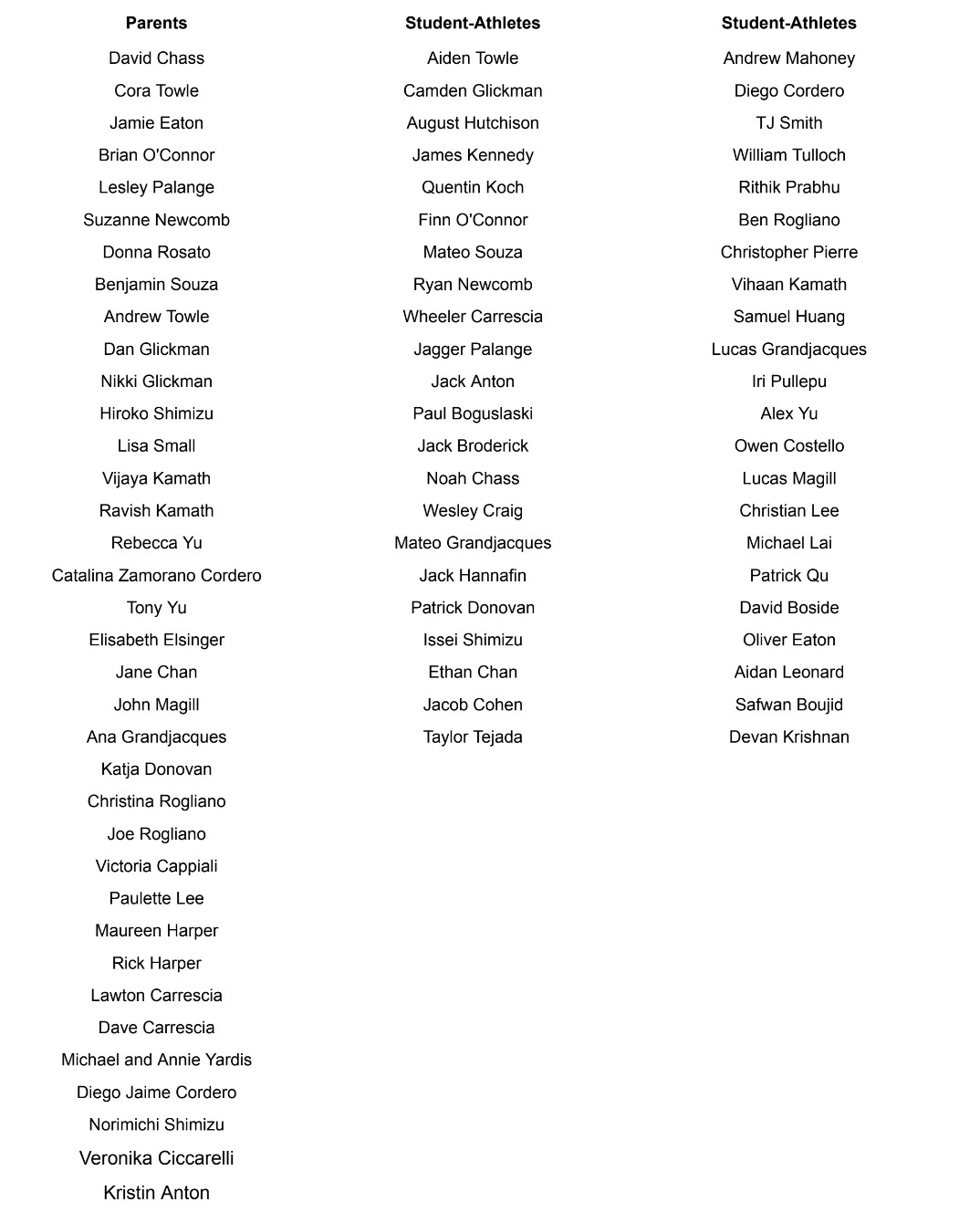
Respectfully submitted by the following concerned Parents and Student-Athletes: