Second in a series by James Bonney
For many students at Greenwich High School, music classes mark a shift in how the school day feels. Instruments replace laptops, rehearsal replaces lectures, and progress is measured not by individual grades alone but by how well a group functions together.
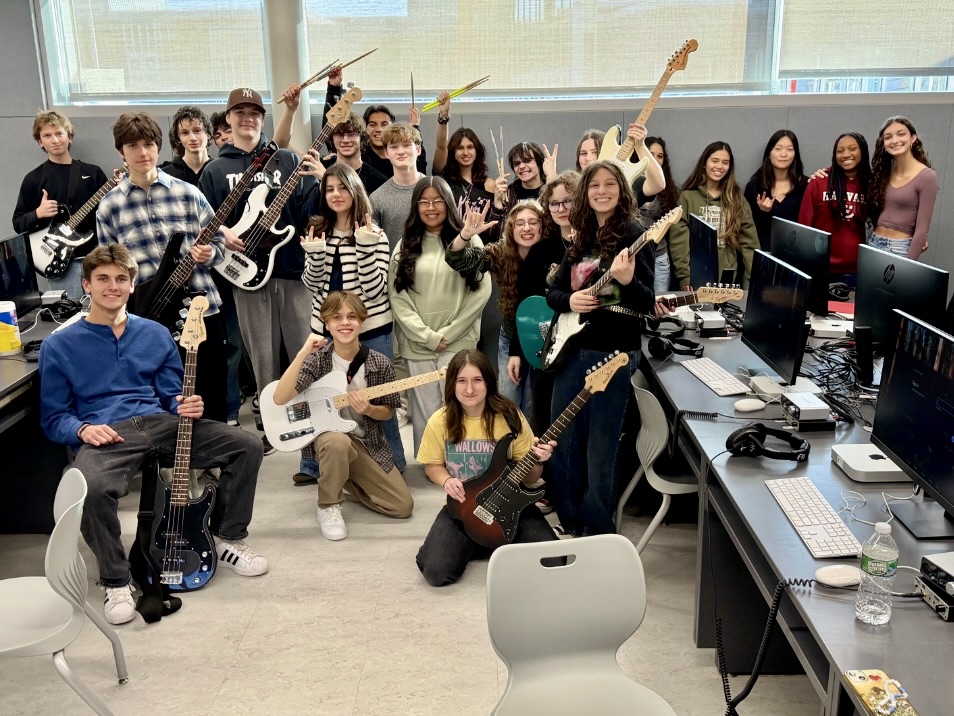
The GHS Modern Band after school program. Contributed photo: Jason Polise Jan 20, 2026
Students interviewed described music classes as spaces where expectations evolve over time, shaped by years of repetition, shared responsibility, and peer influence. From freshman year to senior year, teachers and students said the experience often becomes less about learning an instrument and more about learning how to function within a collective.
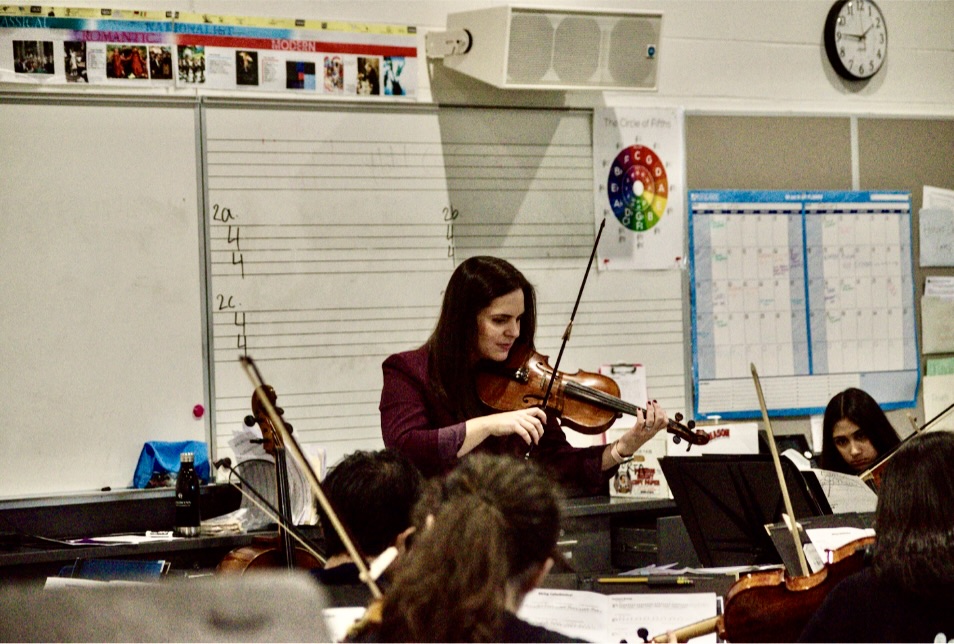
Students rehearse together during an orchestra class, practicing their instruments as part of a larger ensemble. Jan 4, 2026 Photo: James Bonney
Entering the program
Students arrive in the music program with varied backgrounds. Some begin high school after years of private lessons or middle school ensembles. Others join through introductory electives with little prior experience.
Ethan Shie, a freshman clarinetist, said he joined band in fifth grade after watching his sister play. He described the early learning process as challenging but rewarding.
“When I was just starting the instrument, it was kind of a challenge to produce any sound,” Shie said. “But once I got started, it all felt pretty natural.”
Shie said the transition from middle school band to high school band brought a change in focus. While middle school emphasized individual technique, high school placed more emphasis on
collective sound.
“In high school, it’s a lot more about how you can work to create the best sounds possible collectively,” he said. He described learning to adjust dynamics, such as playing softer when another section carries the melody.
For Nicole Kosinski, a junior who has participated in choir since fourth grade, the shift to high school also changed the role music played in her daily routine.
“In middle school, it wasn’t really a class,” Kosinski said. “Now it’s a class, and I see these people every day.”
She said that change helped turn choir into a central part of her school experience.
“Once I got to high school, this program has become almost like my family,” she said.
Teachers said that ensemble-based instruction accelerates growth by placing students in situations where preparation and consistency matter every day.
Michael Breaux, the band director, said students are expected to arrive rehearsed and ready, because ensemble rehearsal depends on everyone’s preparation.
“We each have our own responsibilities as musicians,” said Michael Donovan, a senior who has been in band for four years. “If you don’t know your part, it affects everyone.”
Donovan said those expectations became clearer as he progressed through the program. Early on, he said, teachers focused on building foundational skills. Over time, the emphasis shifted toward independence.
“You learn that nobody’s going to chase you,” he said. “You have to be ready.”
Bethany Fuscaldo, the orchestra director, said the mix of grade levels in upper ensembles creates natural opportunities for peer learning.
“They’re not all in the same math class or English class,” Fuscaldo said. “They come from different places, and they have to learn how to work together.”
She said older students often help younger ones navigate technical challenges, from bowing technique to rehearsal etiquette.
As students move into later years, teachers said expectations expand beyond personal performance.
Kosinski said that as a junior, she is more aware of how younger students observe older singers.
“When I was younger, the older kids gave me someone to look up to,” she said. “Now I try to be someone the younger kids can look up to.”
She said performing alongside middle school students in honor choir settings reinforces that responsibility.
“They see us and think, ‘They’re still singing, so maybe I should stick with it too,’” she said.
Donovan said peer influence played a significant role in his own development. He described watching older musicians during his early years and striving to match their level of preparation and performance.
“They were way above what I could do at the time,” he said. “It made me want to go home and practice more.”
Teachers said this informal leadership is an intentional part of ensemble design.
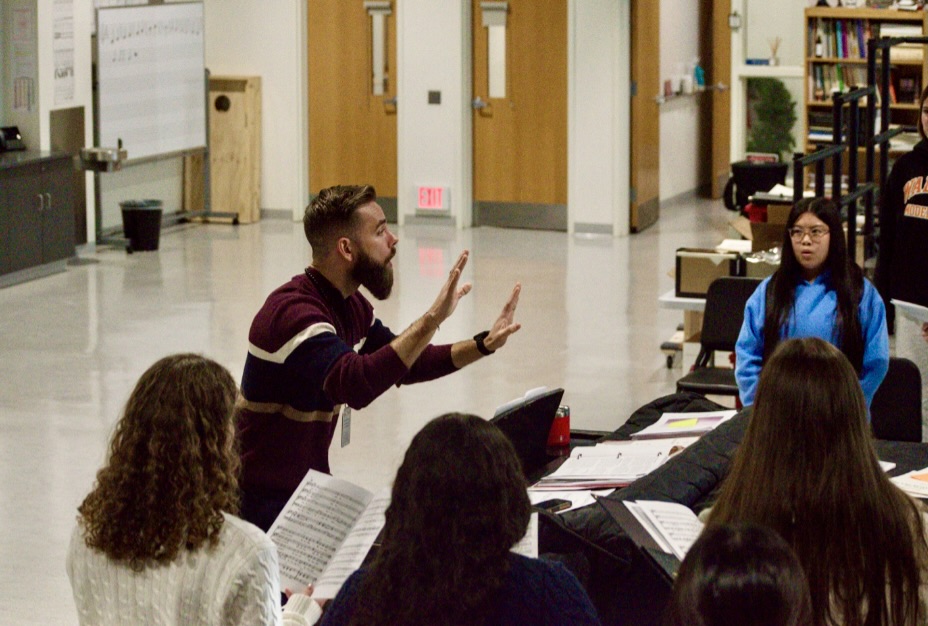
Students rehearse together lead by Rosenberg during a music class, practicing for choral performance. Jan 6, 2026 Photo: James Bonney
Luke Rosenberg, director of choral music, said mixed grade ensembles allow younger students to learn by observation.
“Younger students see what consistency looks like,” Rosenberg said. “They see how older students prepare and behave in rehearsal.”
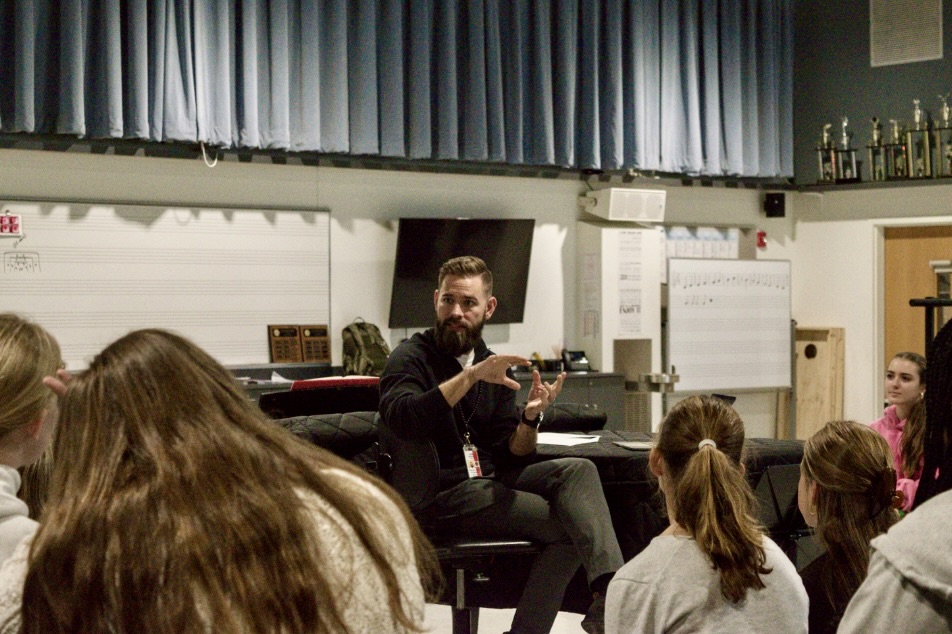
Rosenberg directs the honor choir in preparation for the Saturday performance. Jan 7, 2026 Photo by: James Bonney
See part 1 in James Bonney’s series on the GHS music program:
From Rehearsal Rooms to Responsibility: Classroom Culture Shapes Student Action at Greenwich High School Feb 25, 2026